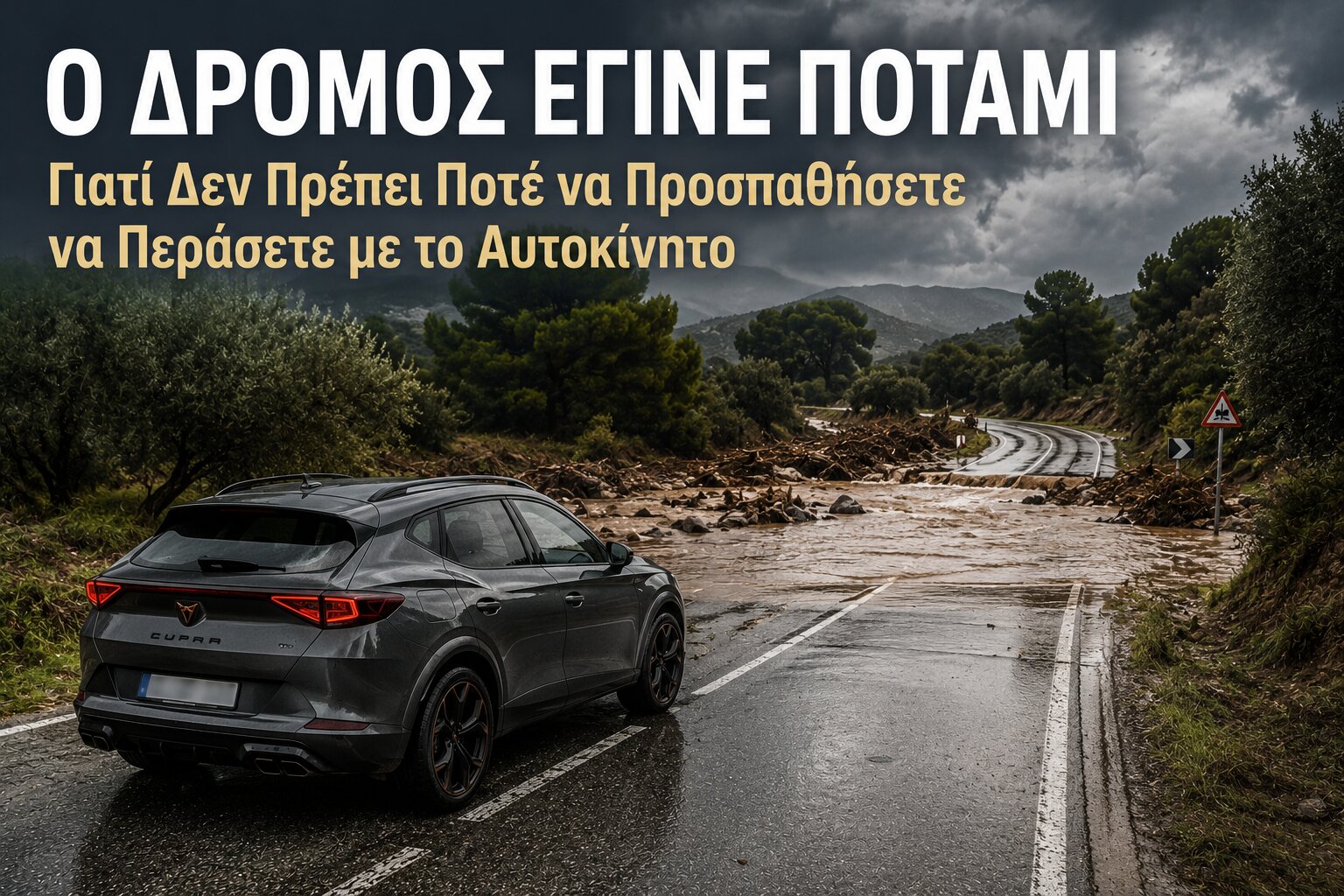
A powerful storm can transform a familiar road within minutes. Where there was asphalt moments earlier, there may suddenly be water, mud, rocks and a strong current.
For a driver, the critical moment comes when they reach a flooded section of road and have to decide whether to continue.
The safest answer is much simpler than many people think:
Do not drive through. Stop and find another route.
Greece’s Civil Protection authorities explicitly advise people not to cross streams on foot or by vehicle during flooding. The Hellenic Fire Service gives similarly clear advice: if you encounter a flooded road, stop and change direction.
The Water May Be Much Deeper Than It Looks
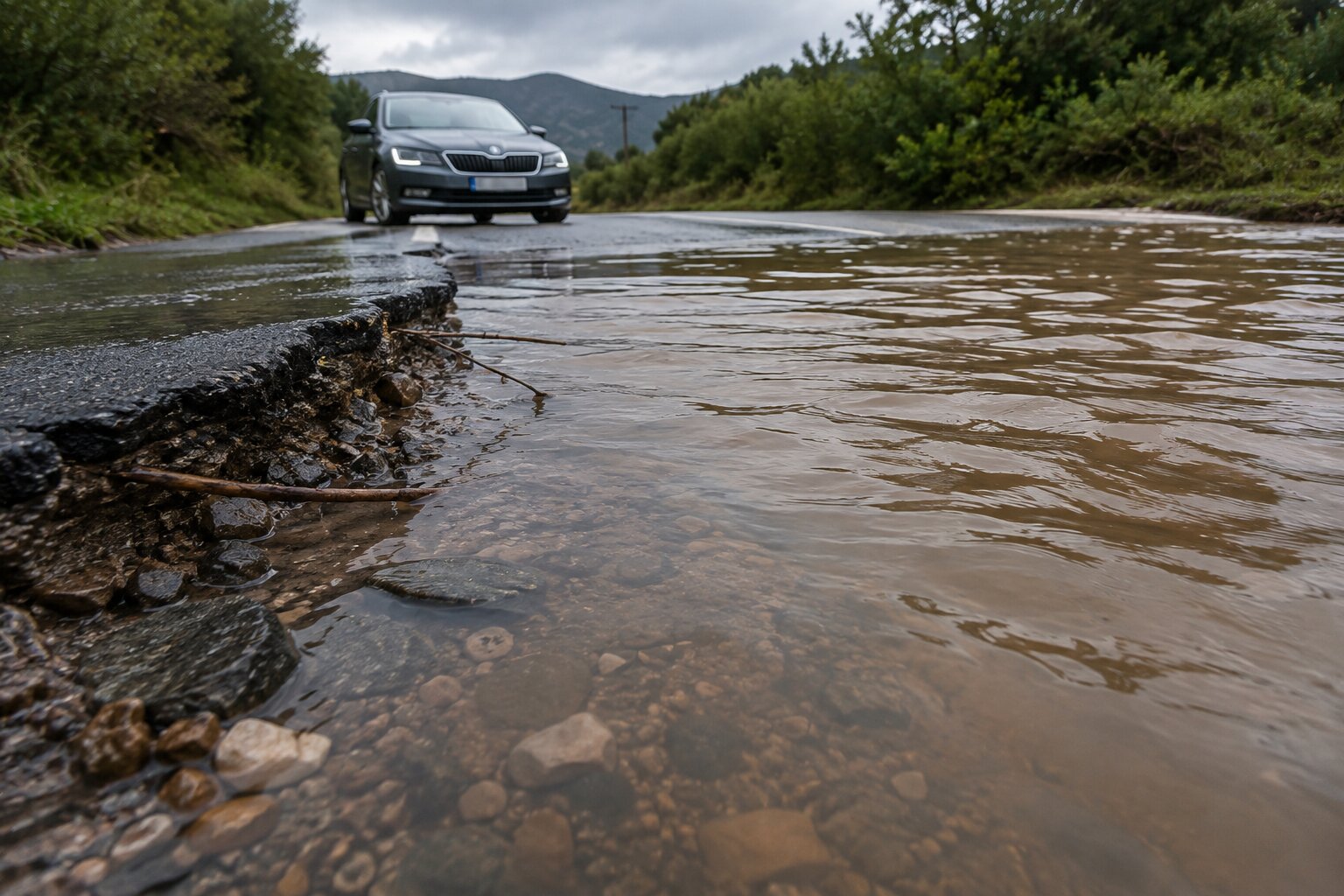
One of the biggest problems is that, from behind the wheel, you cannot reliably determine how deep floodwater actually is.
Its surface may conceal potholes, damaged asphalt, a collapsed section of road, rocks or other debris.
Even a road you have driven hundreds of times may have changed after intense rainfall.
Official road-safety guidance also warns that floodwater can conceal hazards that are impossible for a driver to see from the surface.
That means “it looks shallow” is not a reliable safety assessment.
Depth Is Not the Only Danger — Flow Matters Too
A car is heavy, but that does not mean moving water cannot affect it.
Water exerts force against the side of a vehicle. As its depth and speed increase, so does the risk of the vehicle losing traction, becoming unstable or being moved by the current.
UK government flood-safety guidance has warned that around 30 centimetres of moving water can be enough to float a car. This figure should never be treated as a safe threshold or something drivers should attempt to measure themselves.
Quite the opposite.
It illustrates why trying to calculate whether your particular vehicle can “make it through” is the wrong approach.
Greek Civil Protection does not provide drivers with a permissible depth to cross. Its advice is straightforward: do not attempt to cross a stream by car.
“The Car in Front Made It” Does Not Mean You Will
This is one of the easiest traps to fall into.
If the vehicle ahead successfully crosses the water, that does not prove the road is safe.
That vehicle may have different ground clearance, weight or construction. Water levels may also be rising, and the strength of the current can change quickly.
Most importantly, you do not know what happened beneath the surface while the other vehicle was crossing.
The fact that another driver accepted the risk is not evidence that you should do the same.
The same applies even if several vehicles appear to have crossed successfully.
Official advice remains unchanged: avoid flooded roads and flowing water.
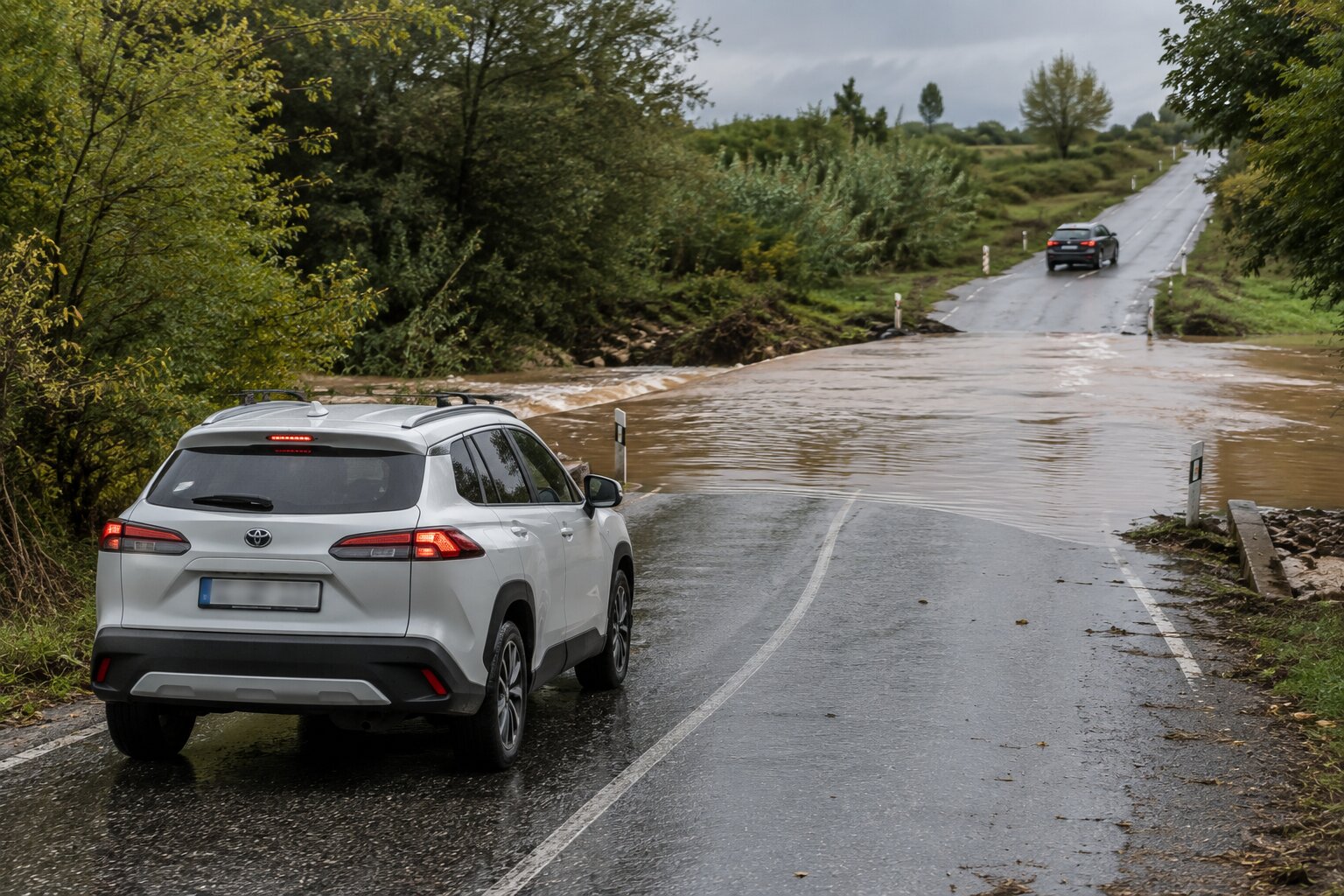
An SUV or 4×4 Is Not a Licence to Enter Floodwater
The additional ground clearance of an SUV can create a false sense of security.
But a flood is not an off-road trail.
You still do not know what lies beneath the surface, whether part of the road has collapsed or how powerful the current actually is.
A taller vehicle can still become stranded, lose traction or be moved by water.
Greek Civil Protection guidance does not create an exception for SUVs, four-wheel-drive vehicles or larger cars.
The safest principle applies regardless of what you are driving:
Do not attempt to cross flowing floodwater.
Floodwater Can Also Cause Serious Mechanical Damage
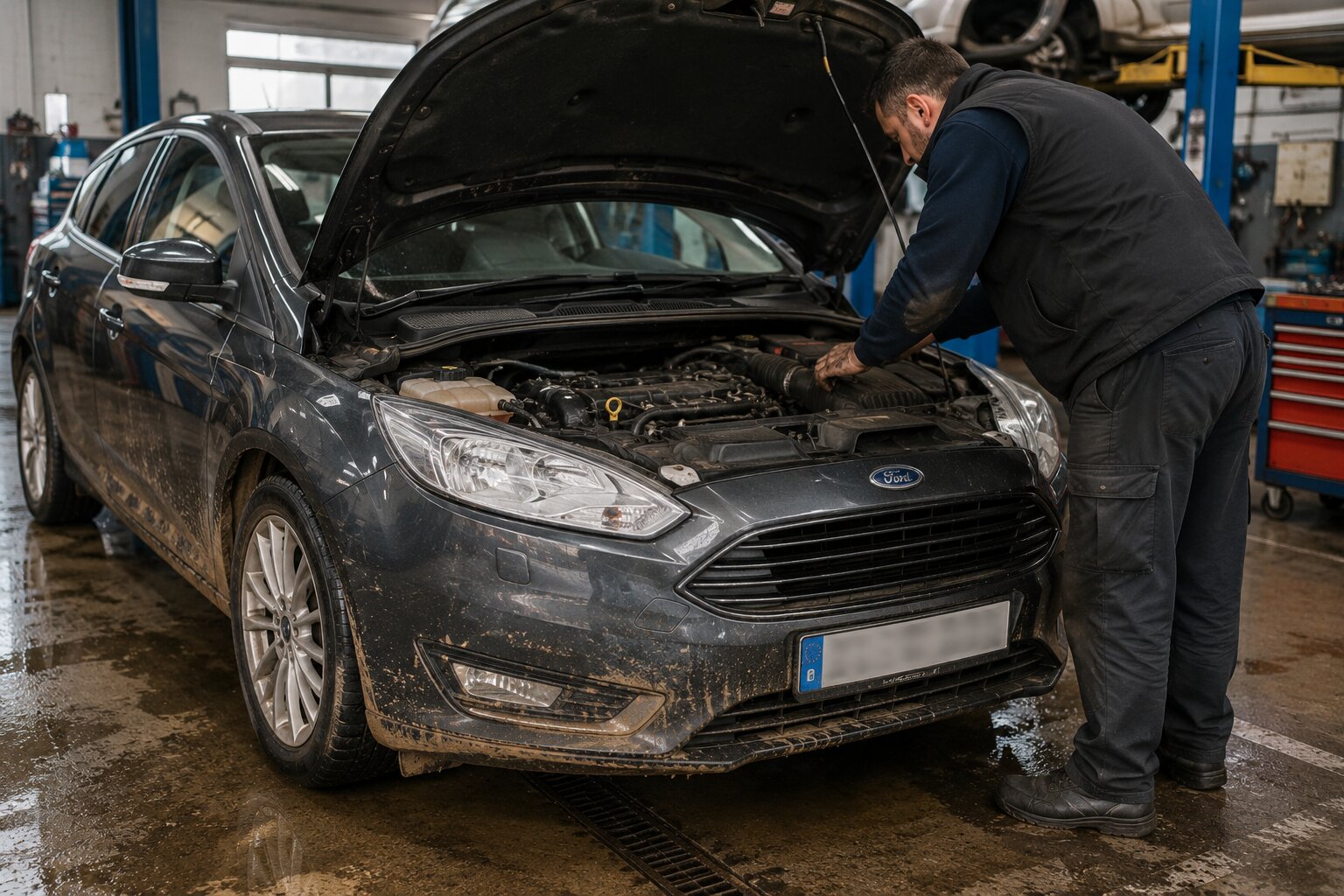
Even if a vehicle is not swept away, driving into sufficiently deep water can cause expensive mechanical damage.
One particularly serious risk is water entering the engine’s air intake.
Unlike air, water cannot be compressed in the same way. If enough water reaches the cylinders, severe engine damage can result.
Official UK flood-driving guidance has warned about the risk of water being drawn into a vehicle’s engine and causing major damage.
That is another reason why simply saying “I’ll drive through slowly” does not make a flooded road safe.
Low speed cannot reveal a collapsed road surface, remove a strong current or prevent every possible mechanical consequence.
If Navigation Tells You to Continue, Ignore It
Navigation apps are extremely useful, but the map on the screen should never take priority over the conditions directly in front of you.
If your navigation system says the road continues but you can clearly see floodwater covering it, reality takes priority over the route guidance.
Turn around and find another route.
During flooding, the Hellenic Fire Service advises people to follow routes and instructions provided by the authorities.
A 20- or 30-minute detour is insignificant compared with becoming trapped in floodwater.
And if a road has officially been closed, do not use navigation to search for a small local road that appears to bypass the closure.
There may be a very good reason why access to the wider area has been restricted.
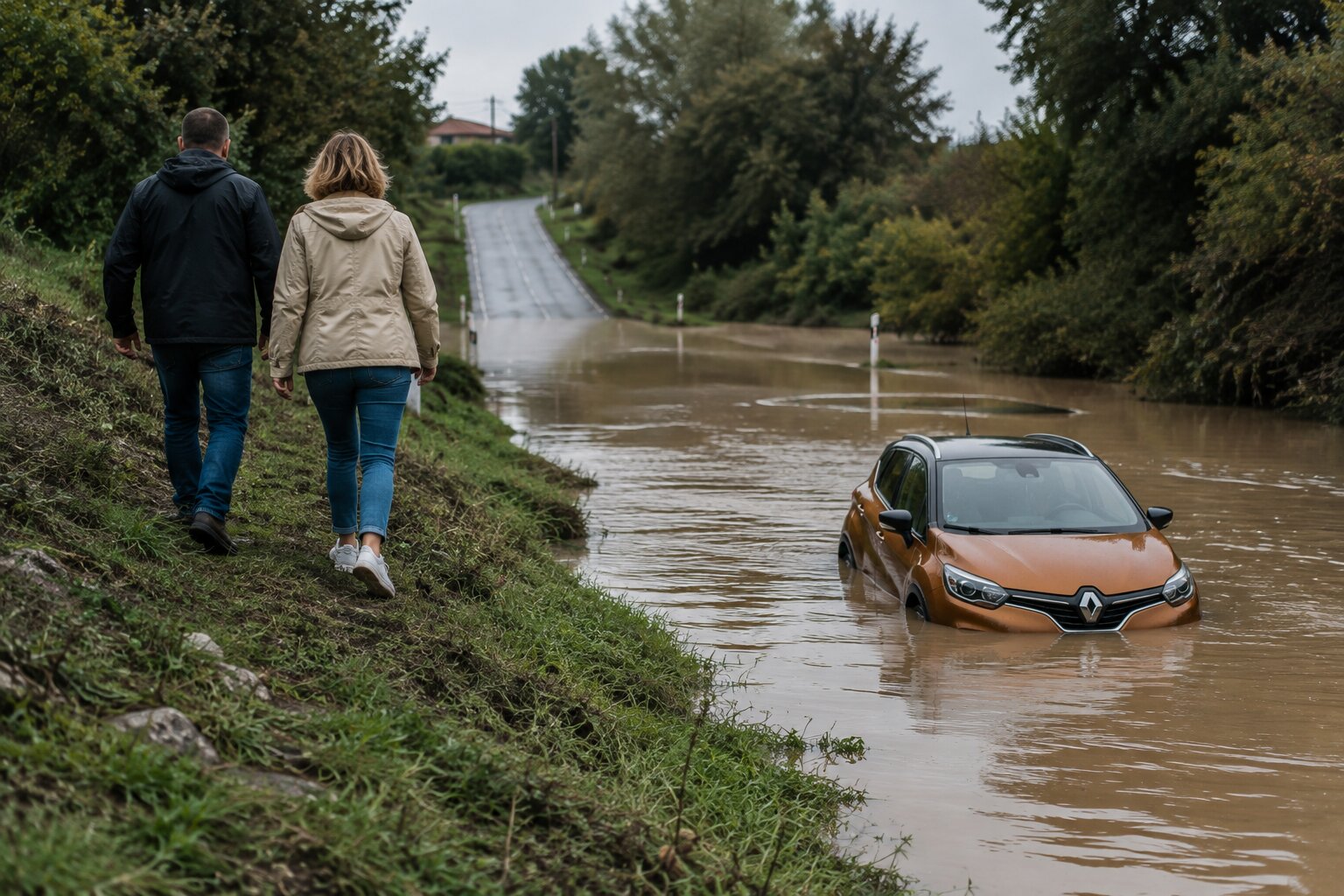
What If the Car Is Already Stranded?
At this point, the situation becomes significantly more serious.
Greek Civil Protection and the Hellenic Fire Service advise abandoning a vehicle if it becomes immobilised during flooding because it may be swept away or inundated.
If it is safe to do so, move towards a safer, higher location and stay away from flowing water.
In an emergency, 112 is available free of charge in Greece and throughout the European Union.
The exact circumstances of a real flood can vary enormously, so instructions from emergency services and 112 should always take priority over general advice.
Do not remain with a vehicle simply because you are worried about leaving it behind.
A car is replaceable.
Your priority is getting yourself and your passengers away from immediate danger.
Do Not Approach a Closed Road “Just to Have a Look”
The danger does not necessarily disappear when the rain stops.
Water from higher ground may continue travelling downstream, slopes can become unstable and roads may have suffered damage that is not immediately visible.
Greek Civil Protection also advises people to stay away from areas where landslides have occurred.
If police, firefighters or another competent authority has closed a route, do not attempt to bypass the closure using another nearby road because your navigation app shows an alternative.
Use the routes indicated by the authorities.
The situation beyond a closure may be very different from what a digital map suggests.
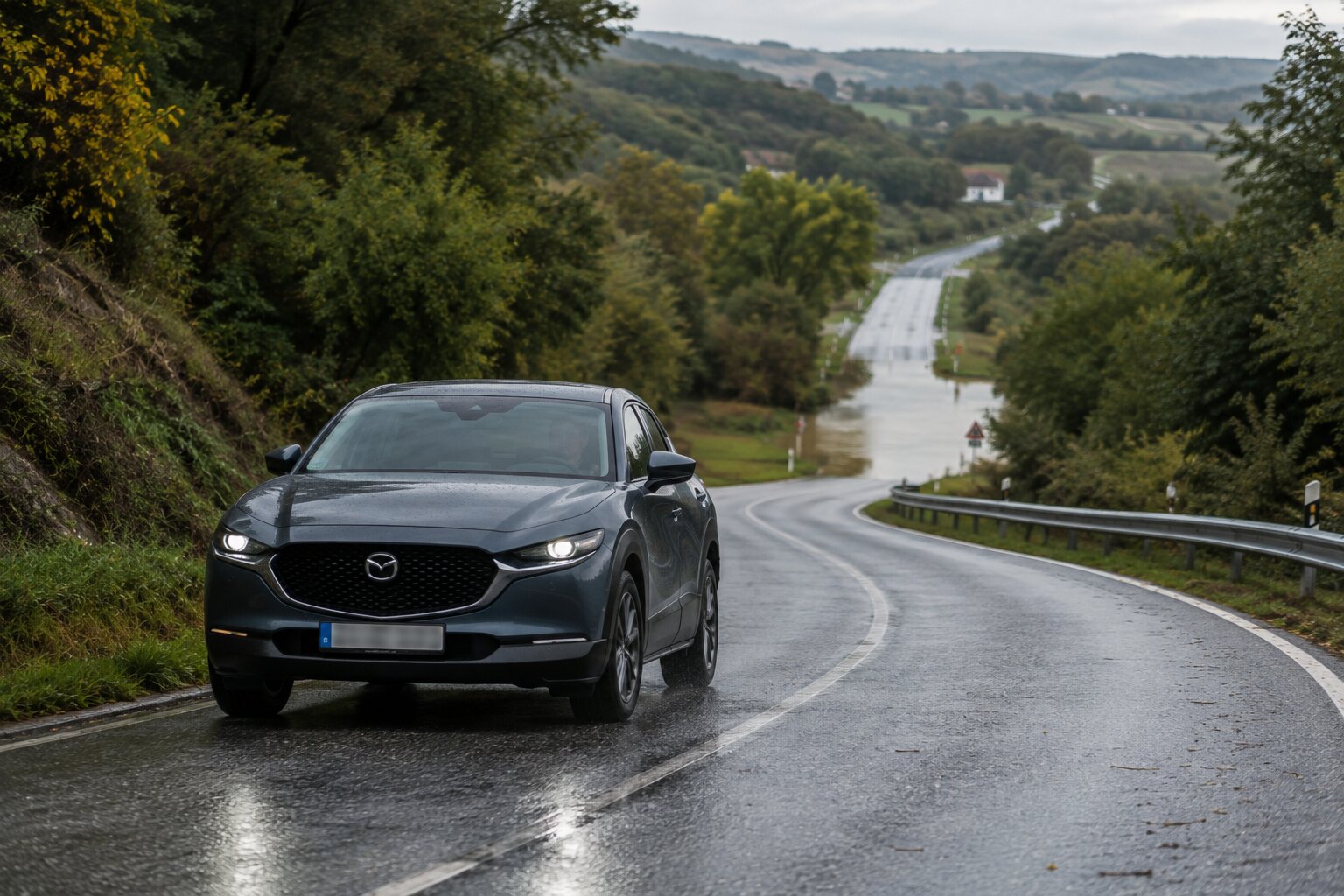
The Safest Decision Can Feel Almost Too Simple
When drivers reach a flooded road, it is easy to start making calculations:
“It doesn’t look very deep.”
“It’s only 20 metres.”
“My SUV is high enough.”
“The other car got through.”
“Turning around will add half an hour.”
The problem is that none of these observations tells you what is underneath the water, how strong the current really is or how conditions might change in the next few minutes.
Official guidance is much clearer than any of those calculations:
Stop. Turn around. Do not drive through the water.
The car can wait.
Your destination can wait.
Your route can change.
A flooded road is not the place to find out what your vehicle is capable of.