
Returning to an empty parking space is one of the most stressful situations a traveller can face. When the missing vehicle is a rental car, however, the incident involves more than a police report. The rental company, the insurance coverage, the rental agreement and the driver’s possible financial liability must all be addressed.
What you do during the first few minutes matters. Reporting the theft promptly, informing the rental company correctly and keeping clear records can reduce disruption and protect you against unnecessary charges.
First, Make Sure the Car Has Actually Been Stolen
Before reporting a theft, quickly confirm that you are standing at the correct location. In an unfamiliar city, airport, port or multi-storey car park, it is easy to confuse the parking level, street or entrance.
Ask the car park operator, local police or a nearby business whether the vehicle may have been removed because of a parking violation. This check should be brief. If there is no immediate and reliable explanation, treat the incident as a possible theft and act without delay.
If the rental company has informed you that the vehicle is equipped with a tracking system, do not attempt to locate or recover it yourself. Give any available information to the police and the rental company.
Contact the Police Immediately
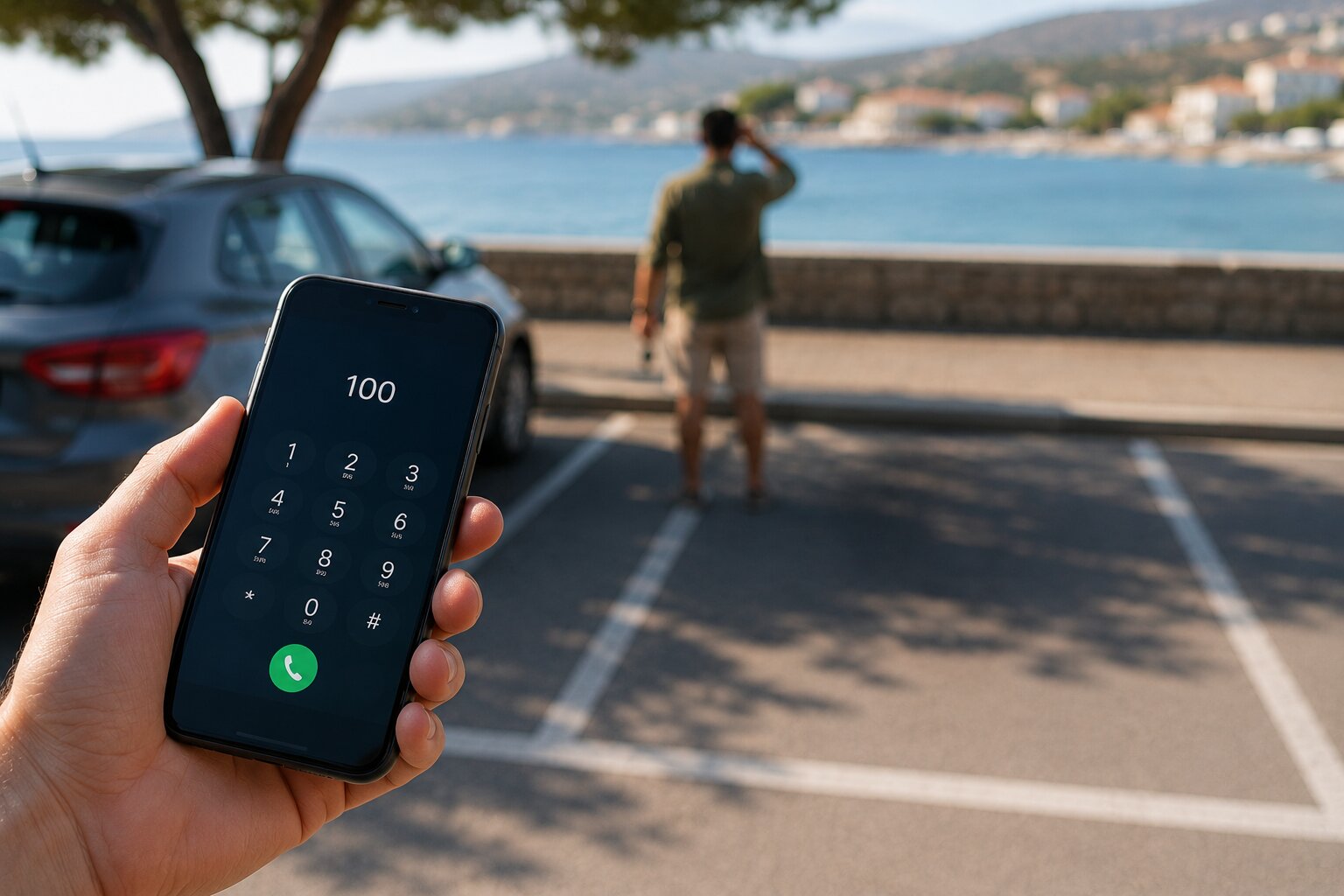
For immediate police assistance in Greece, call 100. It is also possible to send a free SMS to 100.
The European emergency number 112 should be used when there is an immediate danger or an active emergency, such as a theft in progress, violence, threats or a risk to personal safety.
Do not chase the vehicle or confront anyone you suspect may be involved.
Be prepared to provide:
- the vehicle’s registration number,
- its make, model and colour,
- the exact or most likely parking location,
- the time you last saw the vehicle,
- the time you discovered it was missing,
- whether you still have the keys,
- and whether documents or personal belongings were inside.
File an Official Theft Report
A telephone call to the police may not be enough on its own. An official theft report will normally be required by the rental company and for any insurance or liability procedure.
According to the Hellenic Police, the owner, legal possessor or authorised user of the vehicle should report the theft in person to the competent local police authority. If that is not practical, the report may be made at the nearest police station.
Bring a valid identity document, such as:
- a passport,
- a national identity card,
- or another accepted form of identification.
You should also know the vehicle’s registration number. If the registration certificate was not left inside the vehicle, take it with you.
It is also useful to have:
- the rental agreement,
- the booking confirmation,
- the rental company’s contact details,
- photographs taken when the vehicle was collected,
- and every key or key card still in your possession.
Ask for a copy of the report or its official reference number. You may need it for the rental company, an insurer, your card provider or a later dispute.
Inform the Rental Company Without Delay
Call the emergency number shown in the rental agreement, booking confirmation or vehicle documents.
Do not rely only on contacting the booking platform or intermediary. The company that supplied the car must also be informed directly.
Provide:
- your booking or rental agreement number,
- the vehicle details,
- the location and estimated time of the theft,
- the police report number,
- information about the keys,
- and a telephone number or email address where you can be reached.
After the telephone call, send a written notification by email or through the company’s application. Keep copies of all messages.
Write down the time of the call, the name of the representative and the instructions you received. Clear documentation can be important if there is later disagreement about whether the incident was reported correctly or on time.
Basic Insurance Does Not Automatically Cover Theft
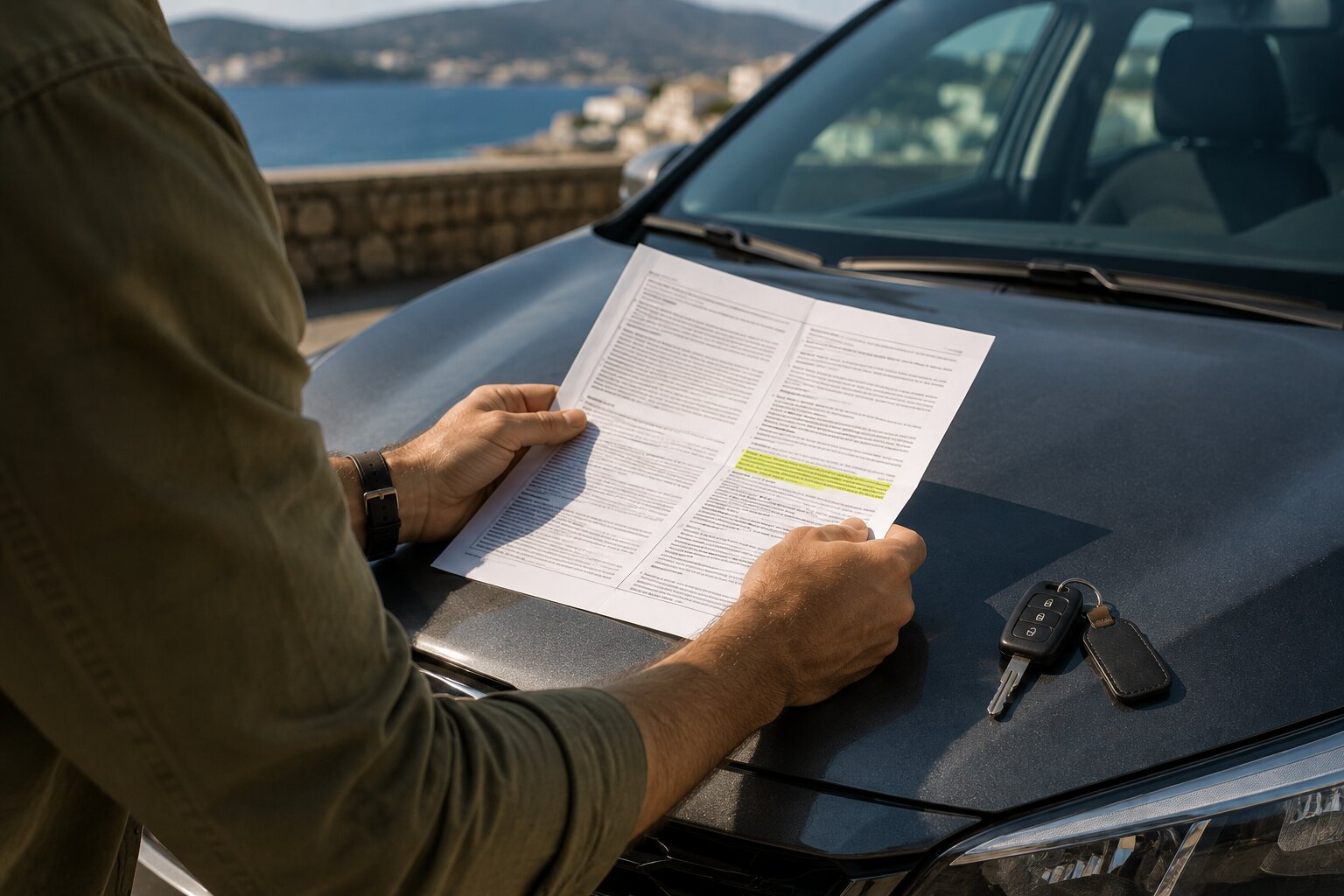
Rental vehicles in the European Union must include third-party liability insurance. This protects against injury or damage caused to other people, but it does not automatically remove the renter’s financial responsibility if the rental vehicle is stolen.
Theft protection is normally a separate form of cover. It may appear in the agreement as:
- TP — Theft Protection
- TW — Theft Waiver
- TPC — Theft Protection Coverage
Even when theft protection is included, an excess or deductible may still apply. This is the maximum amount the renter may have to pay, provided that all contractual requirements have been followed.
Your possible liability will depend on:
- the rental agreement,
- the protection package selected,
- the applicable excess,
- the exclusions,
- and whether you followed the required reporting procedure.
Do not assume that terms such as “full cover” or “complete insurance” automatically mean zero liability. Rental insurance products, waivers and excess-reimbursement policies are not always the same.
Read the agreement carefully, particularly the conditions relating to:
- returning the original keys,
- filing a police report promptly,
- informing the rental company immediately,
- securing the vehicle correctly,
- and prohibited or negligent use.
Failure to follow these conditions may affect the protection provided.
Why the Keys Matter
The rental company will normally ask whether you still have the vehicle’s original keys.
If the keys are safely in your possession, return them only according to the company’s instructions and ask for written confirmation that they were received.
If a key was lost, left inside the car or stolen together with the vehicle, state this accurately in both the police report and your communication with the rental company.
Do not hide or change details because you are worried about a possible charge. Any inconsistency between the police report and the rental company’s records can complicate the claim.
What Happens to Luggage and Personal Belongings?
Theft protection for the rental vehicle does not necessarily cover luggage or personal items left inside it.
Personal belongings may require separate travel insurance, home insurance or specific personal-effects coverage. Coverage may also be limited when valuables were left visible or when the vehicle was parked in an unsecured location.
List all stolen items in the police report as accurately as possible.
If the car contained bank cards, a mobile phone or travel documents, take immediate action:
- block bank cards,
- suspend mobile payment services,
- activate the device’s lost mode,
- contact your mobile provider,
- and report stolen passports or identity documents to the appropriate authority.
Passports, identity cards, driving licences, cash and accommodation keys should never be left inside a parked rental car.
Will the Rental Company Provide a Replacement Car?
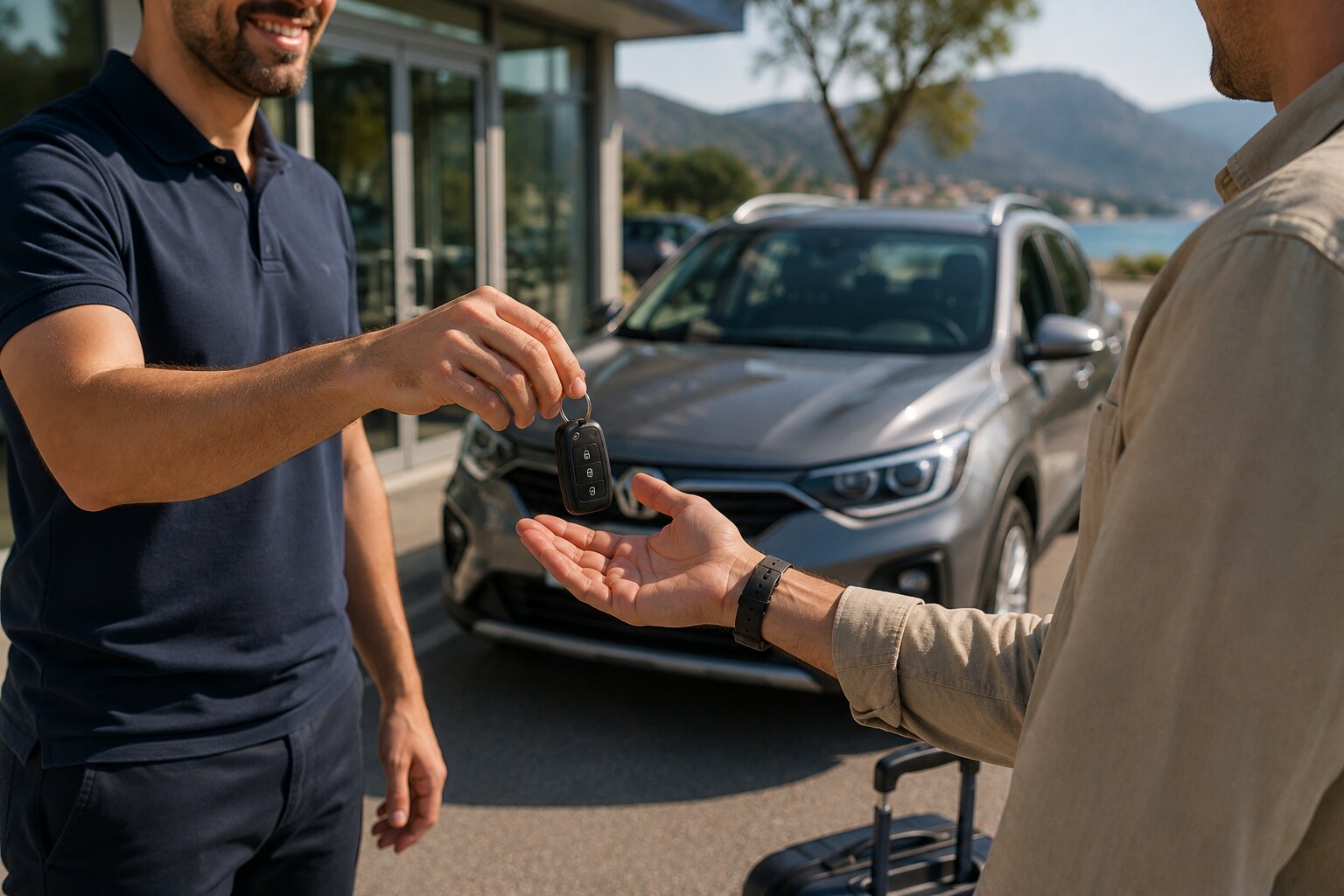
A replacement vehicle should not be considered automatic.
Whether another car will be provided depends on:
- the rental agreement,
- the company’s policy,
- vehicle availability,
- the circumstances of the theft,
- and the status of the police report.
Ask the company in writing:
- whether a replacement vehicle is available,
- where it can be collected,
- whether a new deposit is required,
- whether the insurance conditions will change,
- and whether any additional charge will apply.
Before signing a new agreement, clarify whether the original rental has been closed or remains active while the theft is investigated.
The replacement vehicle may belong to a different category from the original car, particularly during high-demand periods or on smaller islands.
What If You Have a Ferry or Flight to Catch?
Tell the rental company immediately if the theft affects a ferry, flight, accommodation booking or scheduled return of the vehicle.
The company may need to organise documents, arrange transport to another branch or provide instructions about returning the keys.
Keep receipts for reasonable additional expenses, such as taxis, public transport or an emergency hotel stay. Reimbursement is not guaranteed, but the receipts may be required for a travel insurance claim or later complaint.
Contact your airline or ferry operator separately if you are likely to miss your departure. A stolen rental car does not automatically entitle you to compensation from the transport provider.
What to Do If You Are Charged
Do not accept an unexplained charge verbally.
Ask the rental company to provide:
- the exact contractual clause,
- the amount of the applicable excess,
- a detailed calculation,
- the insurer’s or claims department’s decision,
- and any supporting documentation.
Raise your objection with the rental company in writing. Attach the police report, rental agreement, photographs, emails and any other relevant evidence.
If the rental was a cross-border consumer transaction within Europe and the dispute cannot be resolved directly, you may contact the European Consumer Centre in your country of residence. The European Consumer Centres Network offers assistance with eligible disputes between consumers and businesses based in different participating countries.
How to Reduce the Risk Before You Park
The Hellenic Police recommends that drivers:
- lock all doors,
- close every window,
- activate the alarm,
- never leave the engine running unattended,
- avoid leaving bags or valuables visible,
- and park in well-lit, populated areas whenever possible.
Never leave a spare key inside the vehicle.
Keep a photograph of the registration number, the rental agreement and the rental company’s emergency telephone number on your phone. Protect the device with a secure passcode, and avoid storing unprotected copies of passports or payment cards.
Before leaving the car, take a few seconds to check that it is properly locked. With keyless vehicles, pull the door handle after locking to confirm that the system has responded.

The Correct Order of Action
A stolen rental car can disrupt an entire trip, but the essential response is straightforward:
- Confirm that the vehicle has not been towed or misplaced.
- Contact the police.
- File an official theft report.
- Inform the rental company immediately.
- Keep the keys and all available evidence.
- Review the theft protection and excess conditions.
- Request every instruction and charge in writing.
Acting quickly and documenting each step will not guarantee that there will be no financial consequences. It will, however, place you in the strongest possible position to protect your rights and continue your journey safely.