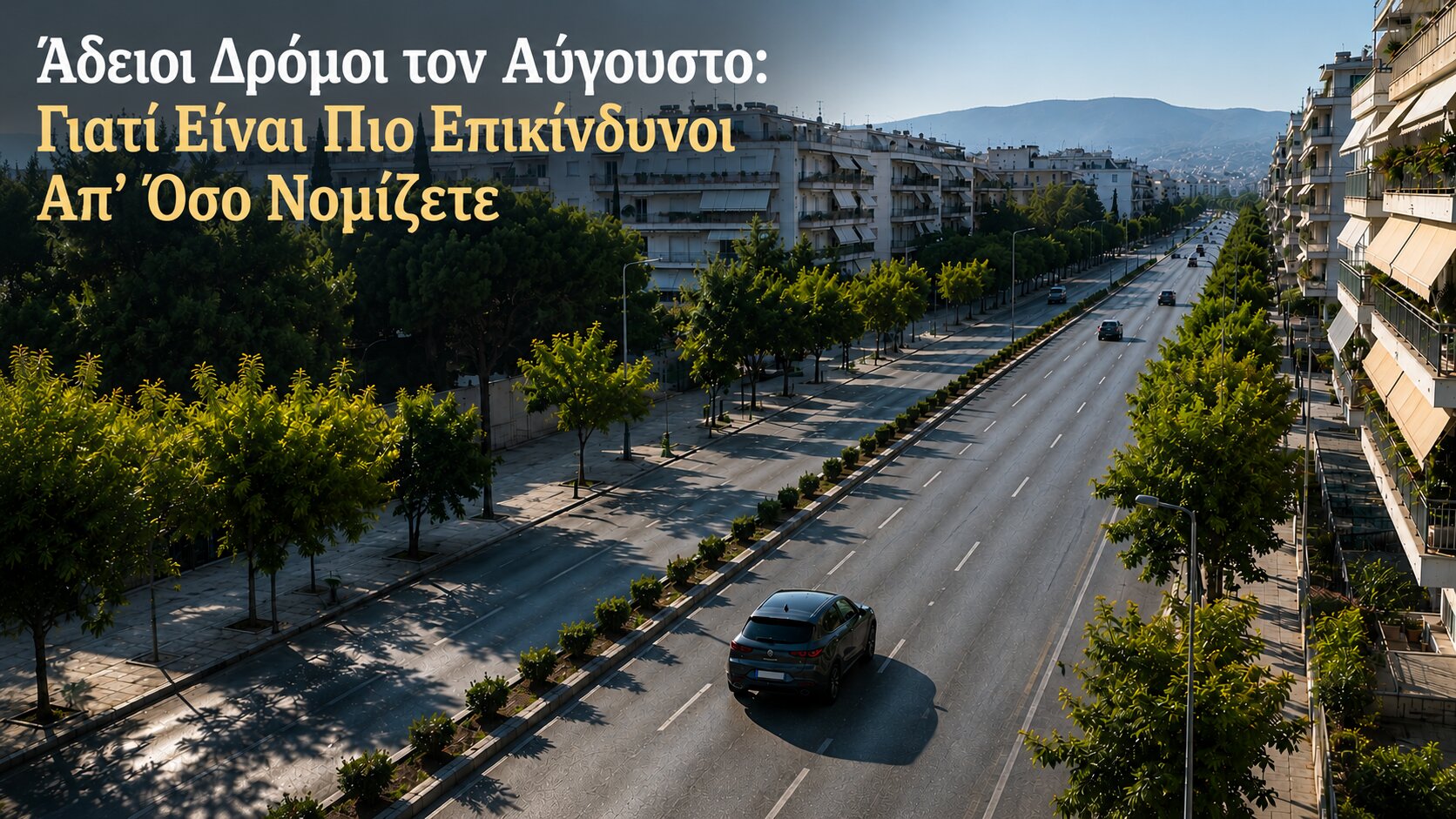
In August, particularly around the Assumption holiday period, the picture on many major roads in Athens changes dramatically. There are fewer cars, larger gaps between vehicles and much freer-flowing traffic.
That can easily create the impression that the road has become safer.
In reality, however, an empty road can create a different kind of danger: drivers may increase their speed because the environment gives them the false impression that there is more room for error.
Speed does not simply determine how quickly we reach our destination. It affects how much time we have to react, how far the vehicle travels before we even begin braking, and the severity of a potential collision.
Less Traffic Does Not Mean Less Risk
On a busy road, traffic itself often limits speed.
When most of those vehicles disappear, however, a wide urban avenue can begin to feel more like a motorway.
It isn’t.
The intersections are still there. So are pedestrians, motorcycles, bicycles, buses, parked cars and vehicles entering from side streets.
The fact that there is nobody ahead of you for several hundred metres does not mean that somebody cannot suddenly appear.
And the faster you are travelling, the less time you have to deal with that unexpected movement.
The European Commission notes that higher speeds reduce a driver’s opportunity to react in time because the vehicle travels farther during the same reaction period.
The Car Keeps Moving Before You Even Touch the Brake
When a hazard appears, your car does not begin stopping the instant you see it.
First, you have to recognise what is happening.
Then you have to decide that braking is necessary.
Finally, you have to move your foot and apply the brake.
Throughout this process, the vehicle continues travelling at its previous speed.
The higher that speed, the farther you travel before actual braking even begins.
This is one reason an empty road can be deceptive. The large open space ahead creates the impression that there is plenty of time.
That time can disappear remarkably quickly if a vehicle emerges from a side street or a pedestrian steps out from between parked cars.
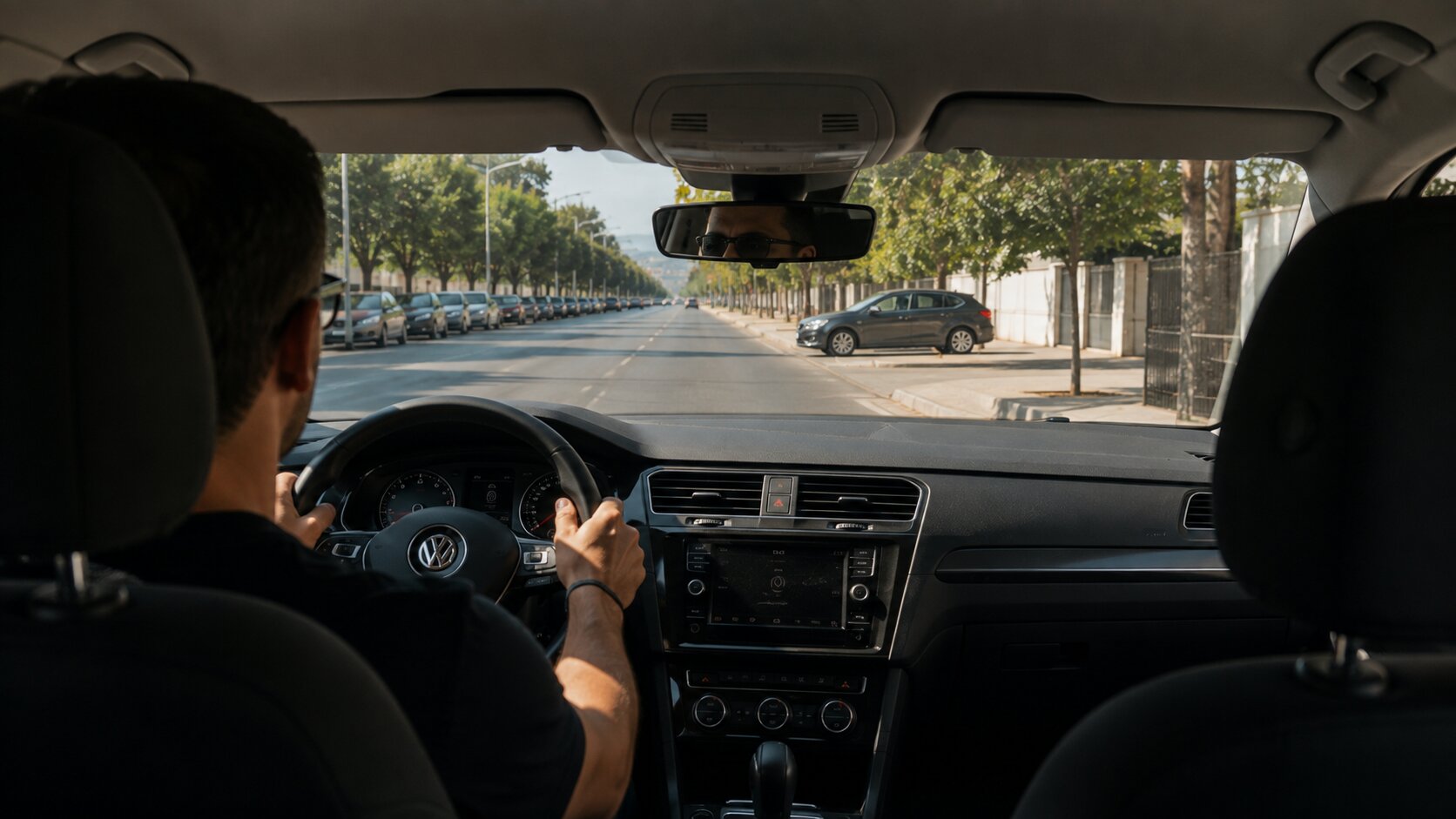
Braking Distance Does Not Simply Increase in Proportion to Speed
There is another important factor that drivers can easily underestimate.
According to the European Commission, braking distance increases approximately with the square of speed.
In practical terms, a significant increase in speed can result in a much greater increase in the distance required to stop than a driver might intuitively expect.
It is therefore not enough to think:
“I’m only going a little faster.”
That “little” increase can translate into considerably more distance before the vehicle comes to a complete stop.
And those additional metres can make the difference between hard braking and a collision.
30 km/h and 50 km/h Are Not Just 20 km/h Apart
The difference between lower and higher urban speeds illustrates the issue particularly well.
When discussing the road-safety philosophy behind Greece’s new Highway Code and lower speeds in built-up areas, the Ministry of Citizen Protection has highlighted how a vehicle travelling at 50 km/h requires substantially more distance to stop in an unexpected situation than one travelling at 30 km/h.
The reasoning behind lower urban speeds is not to delay drivers unnecessarily.
It is to provide a greater safety margin in environments where cars share space with pedestrians, motorcycles, bicycles and other vulnerable road users.
The World Health Organization similarly emphasises that as speed increases, both the risk of a crash and the severity of its consequences increase.
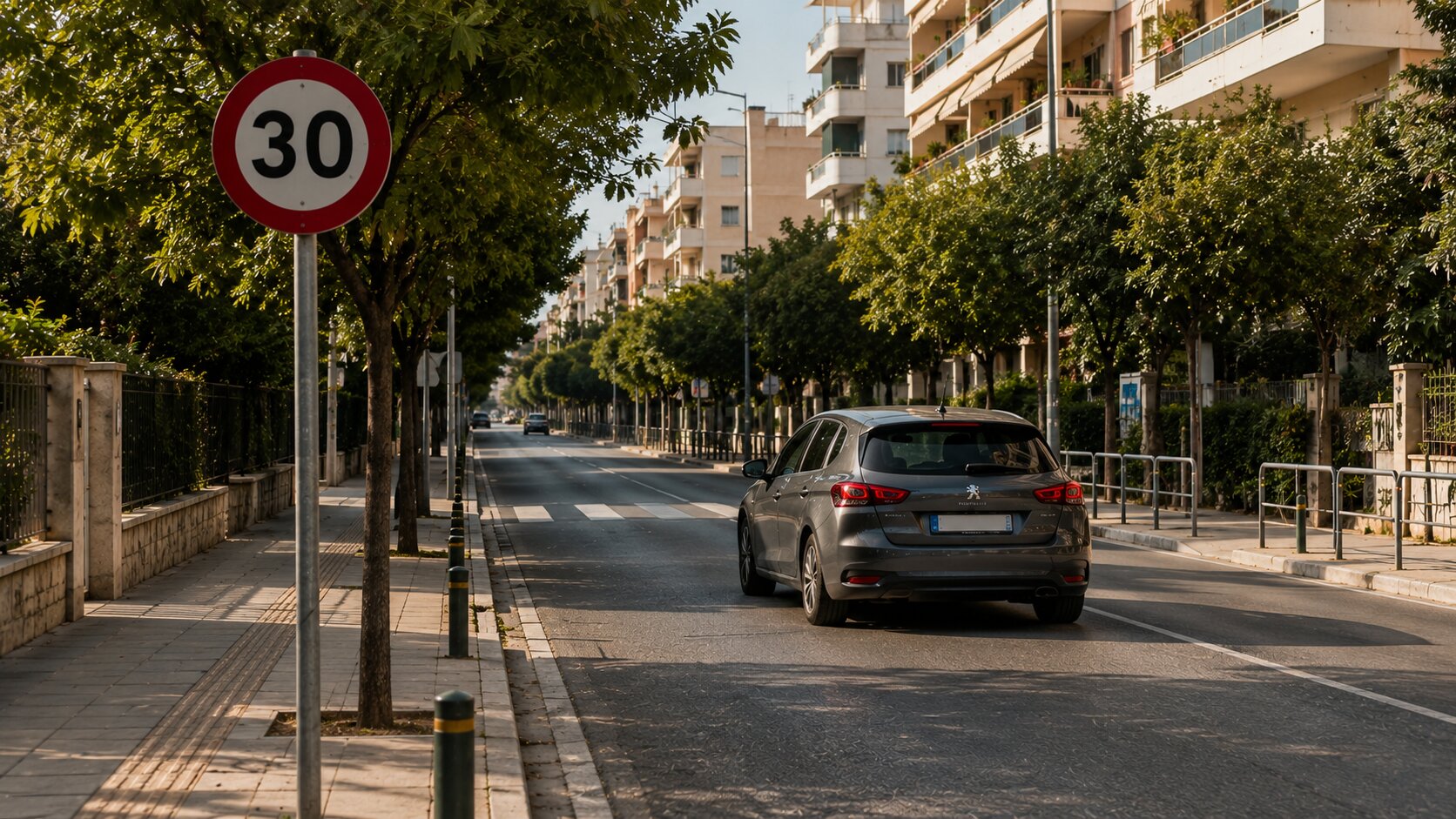
An Empty Road Can Change Your Perception of Speed
There is also a more human element involved.
When travelling among many other vehicles, we constantly have visual reference points around us.
On an almost deserted road, many of those references disappear.
A modern road with good asphalt, wide lanes and a quiet, comfortable car can make 70 or 80 km/h feel considerably slower than it actually is.
This makes checking the speedometer particularly important when traffic is light.
We should not drive according to how fast we feel we are travelling.
We drive according to our actual speed, the posted limit and the conditions around us.
A Pedestrian May Not Expect a Car Approaching That Fast
Empty roads can also influence the behaviour of other road users.
A pedestrian looking at an almost deserted street may decide there is enough time to cross.
A driver waiting at a side street may believe there is enough space to pull out.
A motorcyclist may change lanes.
All of these people make judgements based partly on the distance and perceived speed of approaching vehicles.
When a car is travelling considerably faster than expected, those judgements can be wrong.
That is why speed is not only about how much control you believe you have.
It also affects the ability of everyone else to predict where your vehicle will be a few seconds later.
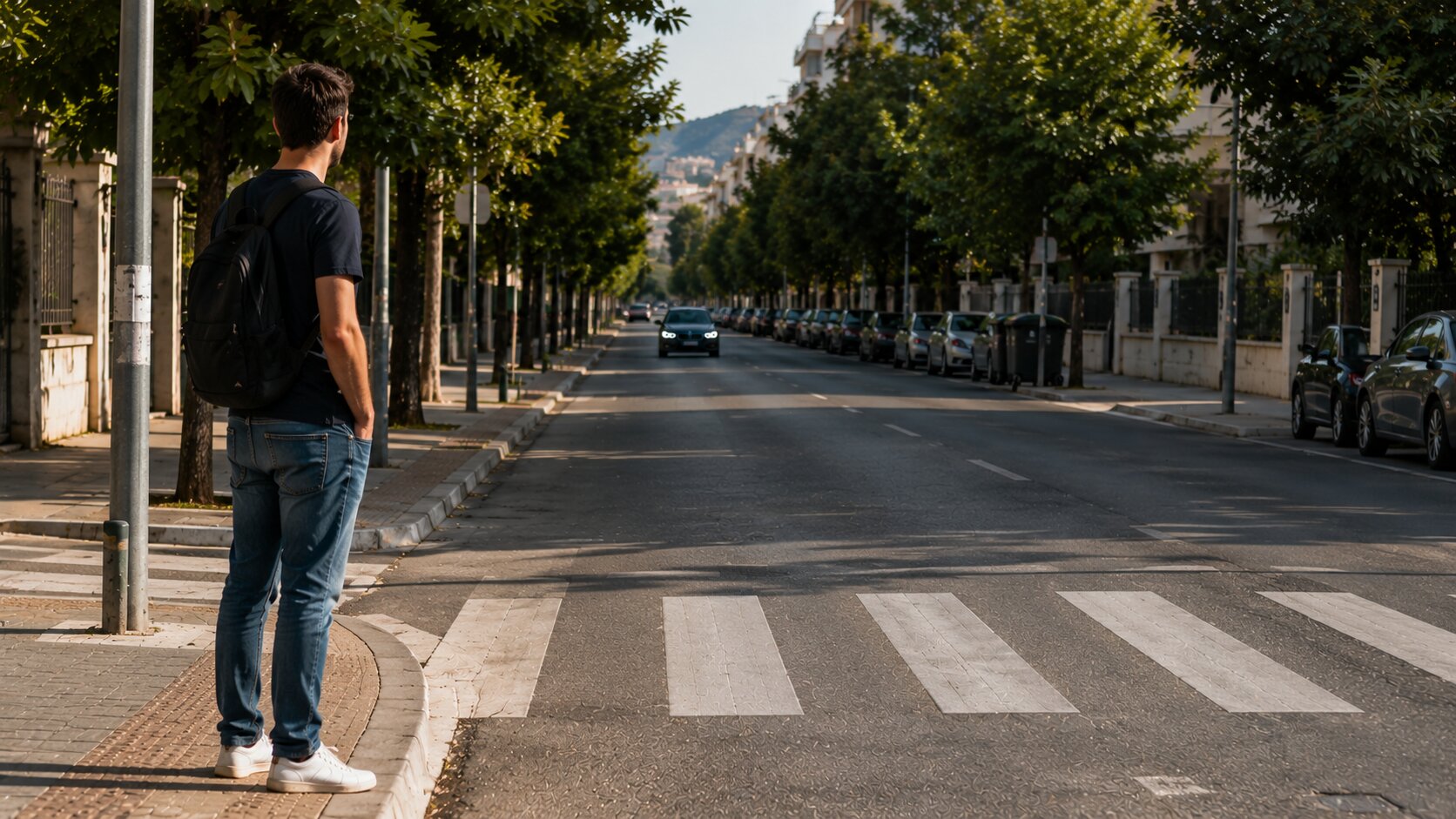
Major Avenues Do Not Become Racetracks in August
A major Athens avenue may be almost deserted at 8:00 on an August morning.
It is still an urban road.
There are traffic lights, side streets, bus stops, pedestrian crossings, motorcycles and people who may emerge from places that are not immediately visible.
Road safety is not determined solely by how busy a street looks at a particular moment.
It also depends on what could happen during the next few seconds.
That is one of the fundamental reasons speed limits do not disappear when the traffic does.
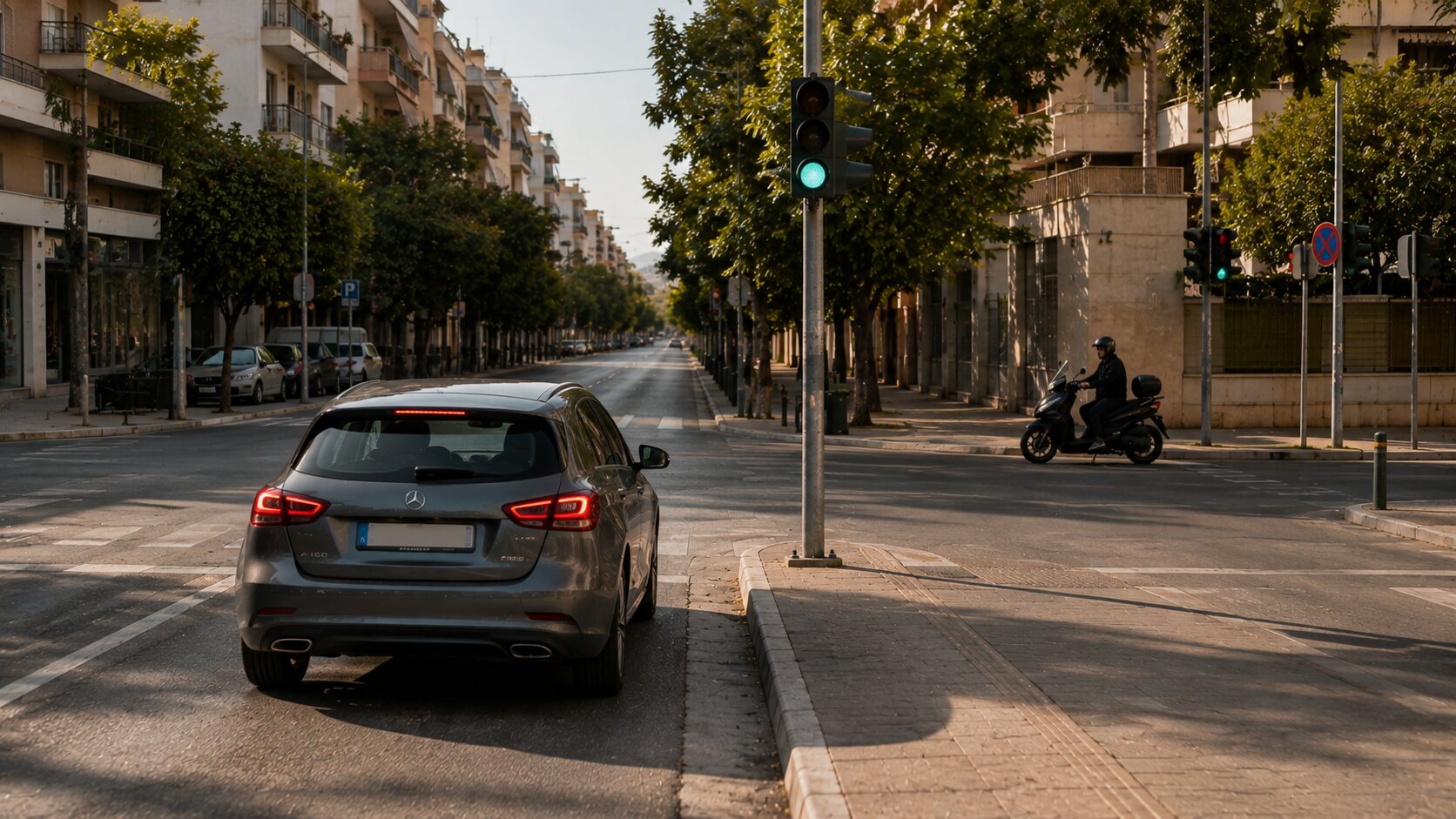
A Green Light Does Not Mean You Can Stop Paying Attention
Very light traffic can create another problem: overconfidence.
A driver sees a green light and an empty intersection and continues without properly scanning the surroundings.
But another driver may run a red light. A motorcycle may appear from a side road. A pedestrian may already be crossing.
Appropriate speed is not useful only when we make a mistake.
It gives us more time when someone else makes one.
That distinction is important.
Defensive driving means leaving enough margin to respond not only to your own decisions but also to unexpected actions by other road users.
Technology Does Not Change the Laws of Physics
Modern cars can have sophisticated driver-assistance systems, emergency braking, stability control and increasingly capable sensors.
These technologies can make driving safer.
They do not make excessive speed harmless.
Sensors still operate within physical and technical limits. Tyres still need grip. Brakes still require distance to slow the vehicle. And an unexpected event can still develop faster than a driver or safety system can compensate for it.
Driver-assistance technology should therefore be treated as an additional layer of protection, not permission to drive faster because the road appears empty.
The same applies to powerful cars.
A vehicle capable of accelerating rapidly is still travelling through the same urban environment as every other road user.
The Best Time to Watch Your Speed Is When Nobody Is Ahead of You
The quiet roads of August can be genuinely pleasant.
Less traffic means fewer delays, less stop-and-go driving and generally more comfortable journeys.
But it does not need to mean higher speeds.
Quite the opposite.
When the road opens up ahead, we have an opportunity to drive more smoothly, maintain an appropriate and steady speed and leave an even greater margin for the unexpected.
There is no need to follow the pace of congested traffic. There is no pressure to accelerate aggressively and brake repeatedly.
An empty road can therefore become an opportunity for better driving, rather than faster driving.
The important thing is not to confuse the absence of traffic with the absence of danger.
An empty road is not an invitation to discover how fast your car can go.
It is simply a road with fewer vehicles on it.
And the laws of physics remain exactly the same.