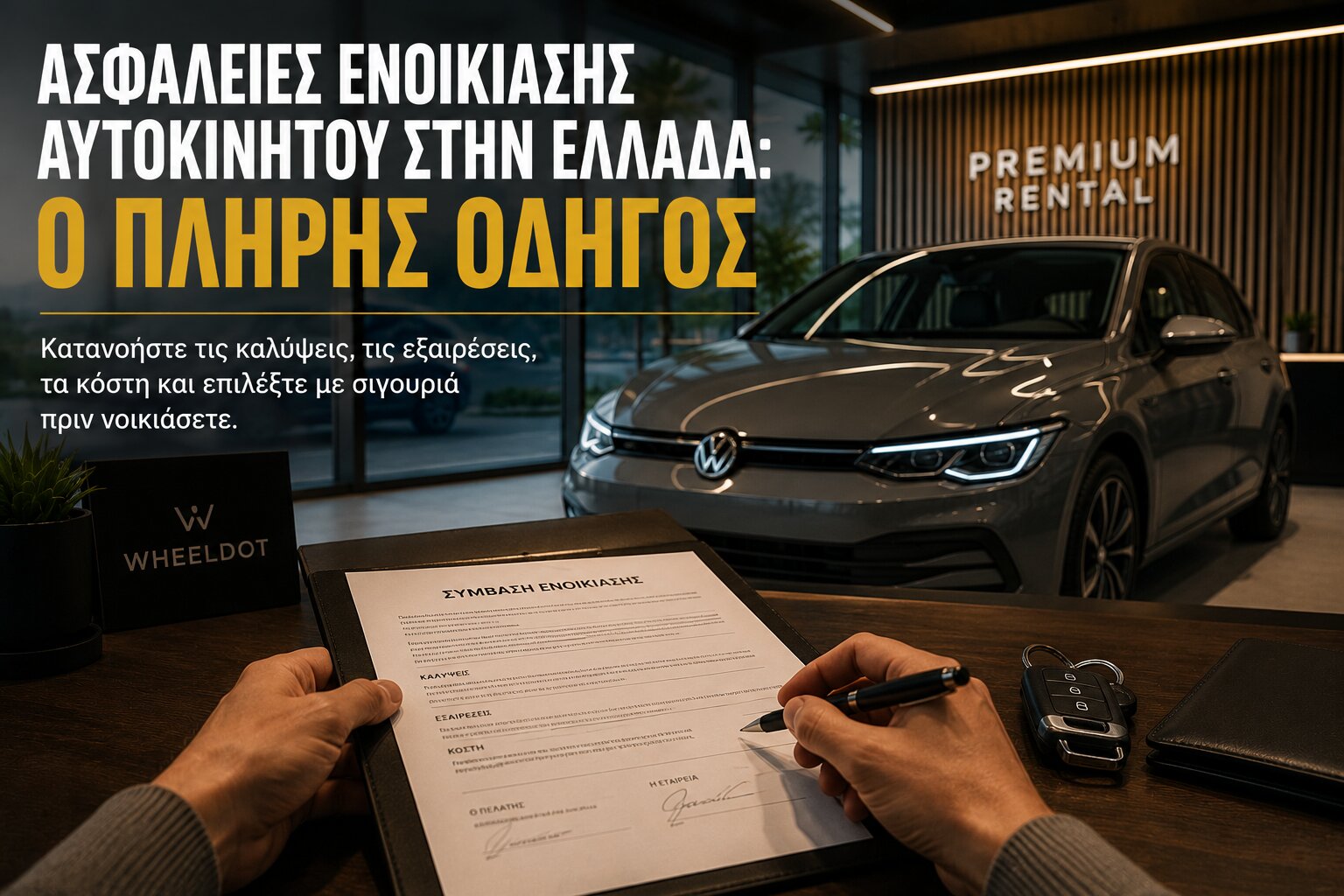
Renting a car in Greece is one of the best ways to explore the country, from the winding coastal roads of Crete to the mountain villages of Epirus and the islands of the Aegean. Yet, before collecting the keys, most travellers face one confusing question:
Do I really need extra car rental insurance?
Terms such as CDW, SCDW, FDW, Zero Excess, Theft Protection, and Deposit appear during the booking process, often accompanied by different prices and vague descriptions. To make things even more confusing, these terms are not standardised across the car rental industry. Two companies may use the same name for completely different levels of protection.
This guide explains how car rental insurance works in Greece, what the different coverages usually mean, what they often exclude, and how to compare two rental offers with confidence.
Important: Terms such as CDW, SCDW, FDW, Full Cover, Premium Protection, and Zero Excess are commercial names rather than legally standardised insurance products. Always read the specific terms and conditions of your rental agreement.
Every Rental Car Already Has Basic Insurance
Every rental car legally operating in Greece must have third-party liability insurance. This mandatory coverage is included in the rental price and is valid throughout the European Union.
Third-party liability insurance covers damage or injuries you cause to other people or their property while driving the rental vehicle.
However, it does not automatically cover:
- Damage to the rental car itself
- Theft of the vehicle
- Your own medical expenses
- Personal belongings
- Contractual charges defined in the rental agreement
This is why rental companies offer additional protection products that reduce your financial responsibility if something happens to the vehicle.
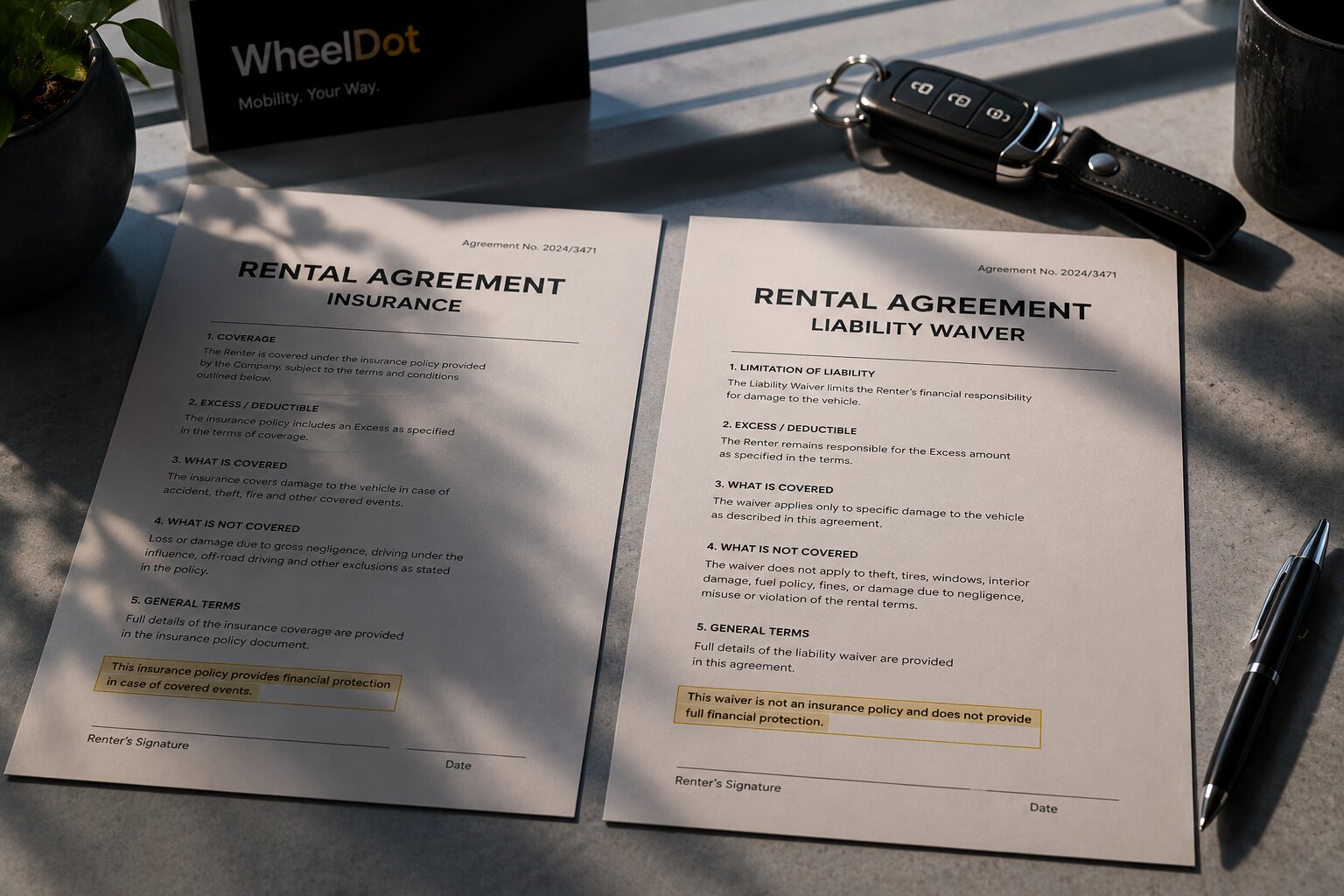
Insurance vs Liability Waivers

One of the biggest misunderstandings concerns the difference between insurance and liability waivers.
Many products offered by rental companies are not traditional insurance policies. Instead, they are contractual agreements that reduce the amount the rental company may charge you after certain types of damage.
For travellers, the practical question is simple:
How much could I still have to pay if something goes wrong?
Understanding that answer is far more important than memorising product names.
What is CDW?

Collision Damage Waiver (CDW) is the most common protection offered by rental companies.
In most cases, CDW limits your financial responsibility for damage to the rental vehicle, but it does not eliminate it completely.
CDW usually comes with an excess (also called a deductible).
For example:
- Damage repair costs €400.
- Your excess is €900.
- You may be responsible for the €400.
If repair costs reach €3,000 and your excess is €900, your liability may be limited to €900, provided the damage is covered and all rental conditions have been respected.
CDW does not automatically mean:
- unlimited protection
- zero liability
- coverage for tyres
- coverage for wheels
- coverage for glass
- coverage for the underbody
- coverage for roof damage
Every rental agreement defines its own exclusions.
Understanding Excess
The excess is the maximum amount you may have to contribute towards a covered claim.
It is not:
- the insurance premium
- the security deposit
- the maximum possible charge under every circumstance
The excess only applies to incidents covered by the agreement.
If certain types of damage are excluded—for example tyres or the underbody—the excess may not apply to those repairs.
Excess vs Security Deposit
Travellers often confuse these two concepts.
They are related, but they are not the same thing.
Excess
The maximum financial responsibility for covered damage.
Security Deposit
The amount temporarily blocked on your credit card when you collect the vehicle.
The deposit may also cover:
- fuel shortages
- missing keys
- traffic fines
- late return
- additional cleaning
- contract breaches
- uncovered damage
Depending on the rental company, the security deposit may be lower than, equal to, or higher than the excess.
What is SCDW?
Super Collision Damage Waiver (SCDW) usually offers better protection than standard CDW.
Depending on the company, it may:
- reduce the excess significantly
- eliminate the excess for certain damage
- reduce the security deposit
- include additional exterior components
However, SCDW is not an internationally standardised product.
One company may include tyres and glass, while another simply lowers the excess without adding any extra protection.
Always compare the actual coverage—not the product name.
What is FDW?

Full Damage Waiver (FDW) is another commercial product name commonly used by rental companies.
It generally represents a higher level of protection than basic CDW, although its exact meaning varies between providers.
FDW may include:
- very low or zero excess
- broader exterior damage protection
- reduced financial liability
- lower security deposits
Even so, FDW rarely means everything is covered.
Many FDW packages still exclude:
- tyres
- wheels
- underbody
- roof damage
- interior damage
- lost keys
- incorrect fuel
- negligence
- unauthorised drivers
The safest approach is to ignore marketing names and read the list of included and excluded items.
What Does Zero Excess Really Mean?
Zero Excess usually means that your financial contribution for covered damage has been reduced to zero.
It does not necessarily mean:
- zero financial responsibility in every situation
- every type of damage is included
- every additional charge disappears
Charges may still arise if:
- excluded vehicle parts are damaged
- the agreement has been breached
- an unauthorised driver was driving
- incorrect fuel was used
- the keys are lost
- the required reporting procedure was not followed
In other words, Zero Excess does not mean Zero Responsibility.
Theft Protection
Theft Protection (TP) usually limits your financial responsibility if the rental vehicle is stolen or if someone attempts to steal it.
Like CDW, Theft Protection often includes its own excess.
It generally does not cover:
- personal belongings
- laptops
- cameras
- mobile phones
- cash
- passports
Protection may also be refused if:
- the keys were left inside the vehicle
- the theft was not reported correctly
- contractual obligations were ignored
Always ask what documentation is required if theft occurs.
Personal Accident Insurance (PAI)
Personal Accident Insurance provides benefits for the driver and, depending on the package, the passengers.
It may include:
- accidental death benefits
- permanent disability compensation
- limited medical expenses
- emergency assistance
However, PAI is not a replacement for:
- travel insurance
- private medical insurance
- the European Health Insurance Card
If you already have comprehensive travel insurance, you may already enjoy similar protection.
Additional Coverages You May Find

Many rental companies also offer optional protection for specific risks.
Common examples include:
Glass Cover
Protection for windscreen or window damage.
Tyre & Wheel Cover
Protection against accidental damage to tyres and alloy wheels.
Undercarriage Protection
Protection for damage underneath the vehicle, often excluded from standard CDW.
Key Cover
Protection against replacement costs for lost or damaged electronic keys.
Misfuelling Cover
Protection if the wrong fuel is accidentally used.
Roadside Assistance Plus
Extended roadside assistance for incidents such as:
- flat batteries
- locked keys
- flat tyres
- running out of fuel
Personal Effects Cover
Protection for personal belongings inside the vehicle, subject to limits and exclusions.
Comparing Car Rental Protection Packages

Looking only at the daily rental price can be misleading.
A slightly more expensive rental may include significantly better protection and a much lower financial risk if something goes wrong.
| Feature | Package A | Package B |
|---|---|---|
| Rental Price | €280 | €340 |
| Excess | €1,200 | €200 |
| Theft Protection | Standard | Enhanced |
| Tyres & Wheels | Not Included | Included |
| Glass Protection | Not Included | Included |
| Undercarriage | Not Included | Not Included |
| Roadside Assistance | Basic | Extended |
| Security Deposit | €1,200 | €300 |
The cheapest option is not always the best value.
A package that costs €60 more could reduce your potential liability by €1,000 or more.
When comparing offers, always look beyond the headline price.
Which Protection Is Right for You?
There is no universal answer. The best choice depends on your trip.
City Driving
If you’ll be driving mainly in cities, where parking spaces are tight and minor scratches are more common, reducing your excess may offer valuable peace of mind.
Greek Islands
Island roads can be narrow, steep and occasionally uneven. Consider checking whether tyres, wheels and roadside assistance are included.
SUVs and Premium Vehicles
Larger or more expensive vehicles often come with higher repair costs and larger security deposits. Additional protection may be worth considering.
Travellers Using Credit Cards
If your credit card includes rental car protection, verify exactly what it covers before declining the rental company’s protection package.
Common Exclusions
Every rental agreement is different, but the following situations are commonly excluded from standard protection.
Unauthorised Drivers
Only drivers listed in the rental agreement are usually covered.
Alcohol or Illegal Behaviour
Driving under the influence of alcohol or drugs, reckless driving or illegal use of the vehicle may invalidate protection.
Off-Road Driving
Many rental agreements prohibit driving on unpaved roads, beaches or tracks not intended for normal traffic—even if you’re driving an SUV.
Wrong Fuel
Misfuelling is frequently excluded unless separate protection has been purchased.
Lost Keys
Electronic car keys can be expensive to replace and are often excluded from standard packages.
Negligence
Leaving windows open during heavy rain, ignoring dashboard warning lights or leaving the keys inside the vehicle may be considered negligence and could affect your protection.
If You Have an Accident

If an accident happens, staying calm is essential.
A typical procedure includes:
- Make sure everyone is safe.
- Call 112 if emergency assistance is required.
- Contact the rental company immediately.
- Follow their instructions.
- Take photographs of the vehicles and surroundings.
- Collect the other driver’s details.
- Keep copies of all reports and documents.
- Never arrange repairs without the rental company’s approval.
Following the correct procedure is often just as important as having the right protection.
What About Credit Card Insurance?
Some premium credit cards offer rental car protection.
However, the coverage varies significantly between card issuers.
Before relying on your credit card, check:
- whether the rental must be paid entirely with that card
- maximum rental duration
- excluded vehicle categories
- excluded countries
- whether reimbursement is automatic or requires a claim afterwards
Never assume every credit card provides the same benefits.
Ten Common Myths About Car Rental Insurance
Myth 1: Full Insurance Covers Everything
Not necessarily. Every package has its own exclusions.
Myth 2: Zero Excess Means Zero Responsibility
Only for covered incidents.
Myth 3: CDW Is the Same Everywhere
Every rental company defines its own terms.
Myth 4: FDW Always Means Complete Protection
FDW is a commercial name, not an international standard.
Myth 5: If the Accident Isn’t My Fault, I Can’t Be Charged
Temporary charges may still apply until responsibility is determined.
Myth 6: Third-Party Protection Is Identical to the Rental Company’s Protection
Not always. Some providers reimburse you only after you’ve already paid the rental company.
Myth 7: My Credit Card Automatically Covers Everything
Coverage depends entirely on your card’s terms.
Myth 8: Theft Protection Covers Personal Belongings
Usually, it only applies to the vehicle itself.
Myth 9: SUVs Can Be Driven Anywhere
Rental agreements often prohibit off-road driving regardless of vehicle type.
Myth 10: The Security Deposit Is Always the Same as the Excess
They are separate concepts and may differ significantly.
Before You Sign the Rental Agreement
Take a few minutes to check:
- What exactly is included?
- What is your excess?
- What is excluded?
- How much will be blocked on your credit card?
- Who provides the protection?
- What should you do if an accident occurs?
These simple questions can prevent expensive surprises later.
Frequently Asked Questions
Is additional insurance mandatory?
No. Every rental car already includes mandatory third-party liability insurance. Additional protection is optional unless required by specific rental conditions.
Does Full Cover really cover everything?
No. “Full Cover” is a marketing term rather than a standard insurance product. Always read the exclusions.
Are scratches covered?
It depends on your protection package and the circumstances of the damage.
Are tyres included?
Not always. Tyres and wheels are among the most common exclusions.
Can someone else drive the rental car?
Only if they are authorised and listed in the rental agreement.
Does third-party insurance reduce my security deposit?
Usually not. The rental company may still block its standard security deposit.
Final Thoughts

Choosing car rental protection isn’t about buying the most expensive package—it’s about understanding your financial risk.
The names CDW, SCDW, FDW, Zero Excess and Full Cover don’t tell the whole story. What really matters is:
- what is covered,
- what is excluded,
- how much you could still pay,
- what happens if an accident occurs,
- and how the claims process works.
Before collecting your rental car in Greece, take a few extra minutes to read the terms and ask questions if anything is unclear.
A well-informed decision today can save you significant stress, time and money during your trip.