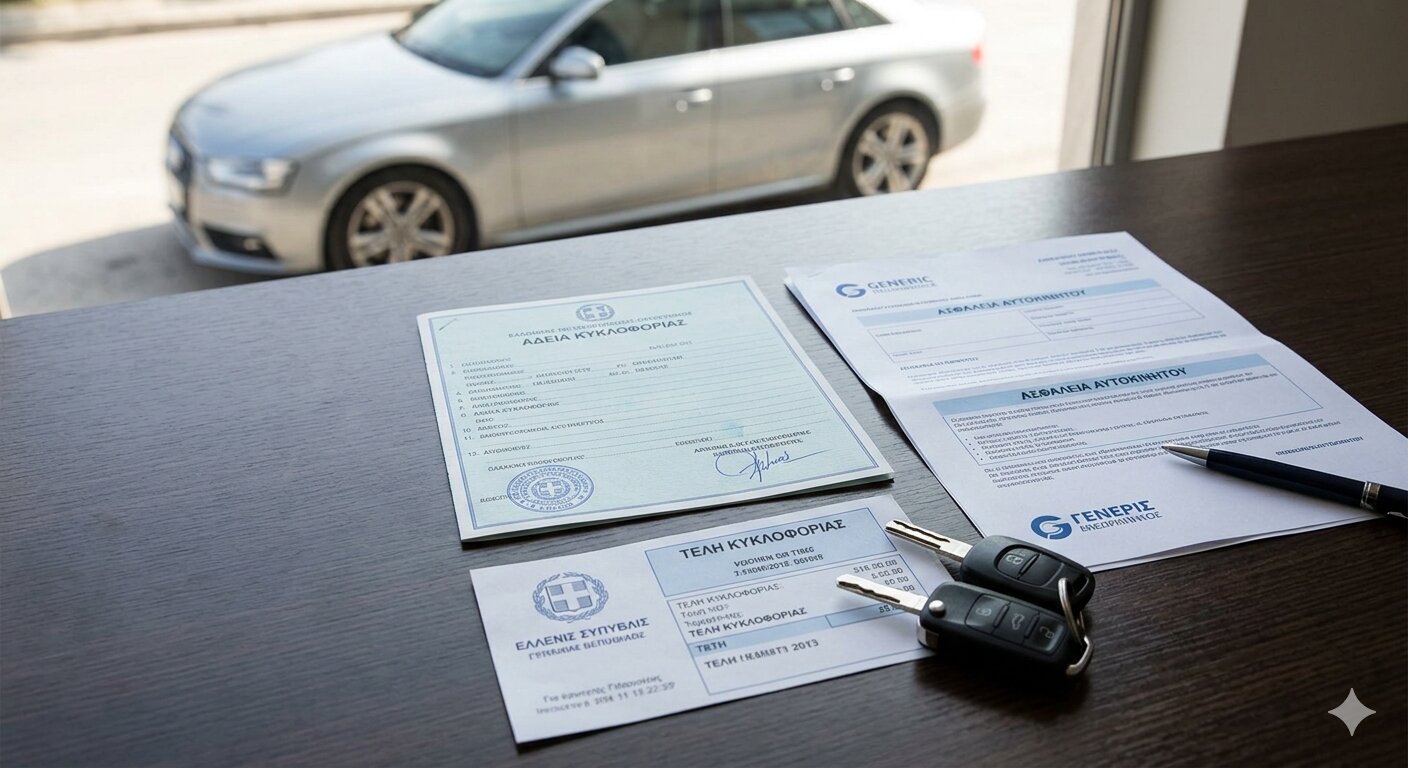
Driving in Greece comes with specific obligations for every driver and vehicle owner. Carrying a vehicle registration document, proof of insurance, and having road taxes paid are considered essential requirements for legally driving on public roads.
However, there are certain cases where drivers are not required to carry all of these documents with them. So, what exactly does the Greek Highway Code state, and which vehicles are exempt?
What Does the Greek Highway Code Require?
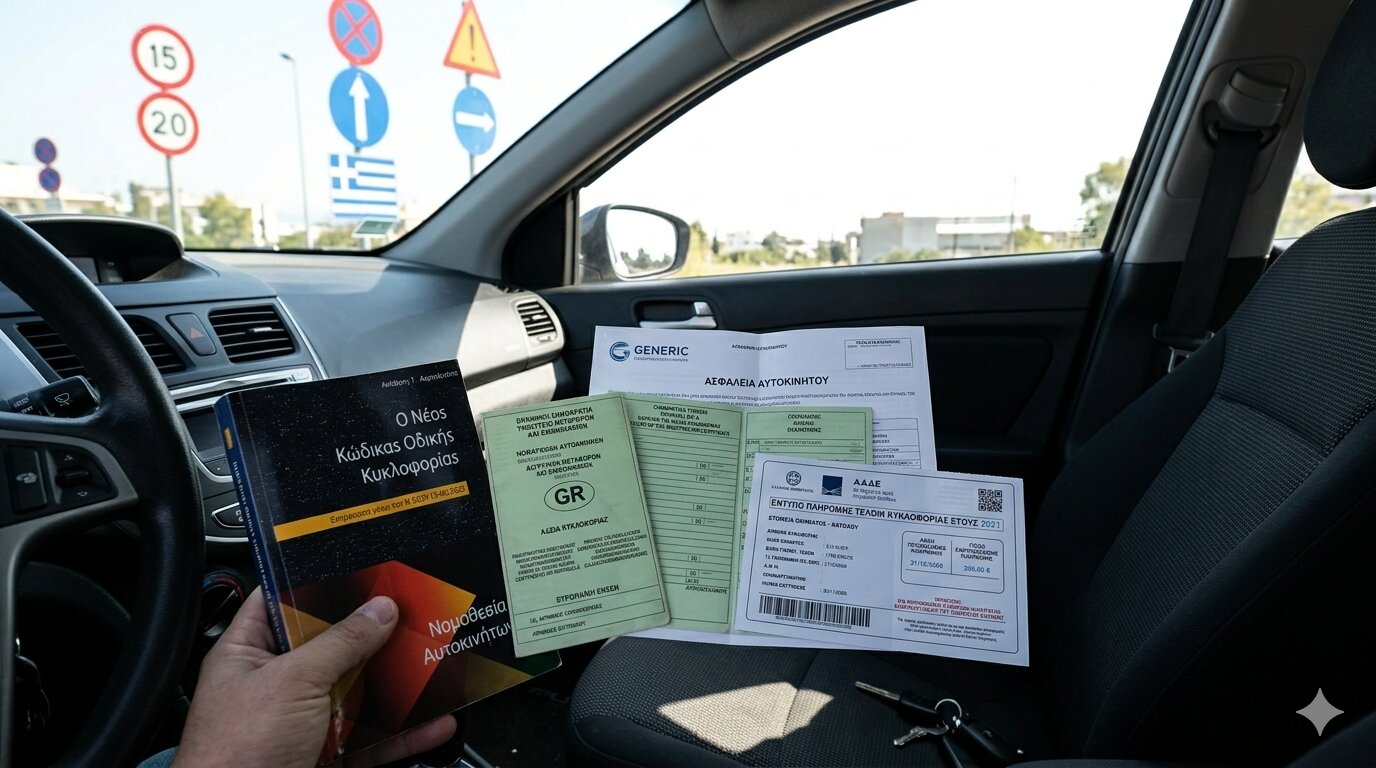
According to the Greek Highway Code, every driver must have the following while driving:
- A valid driver’s license
- The vehicle registration document
- Proof of valid insurance coverage
- Evidence that road taxes have been paid
Traffic police and other authorities may carry out inspections at any time, and failure to provide the required documents can lead to fines and administrative penalties.
Which Vehicles Are Exempt?
There are specific categories of vehicles for which the driver is not required to carry all the standard documents normally associated with privately owned cars.
The main exceptions include:
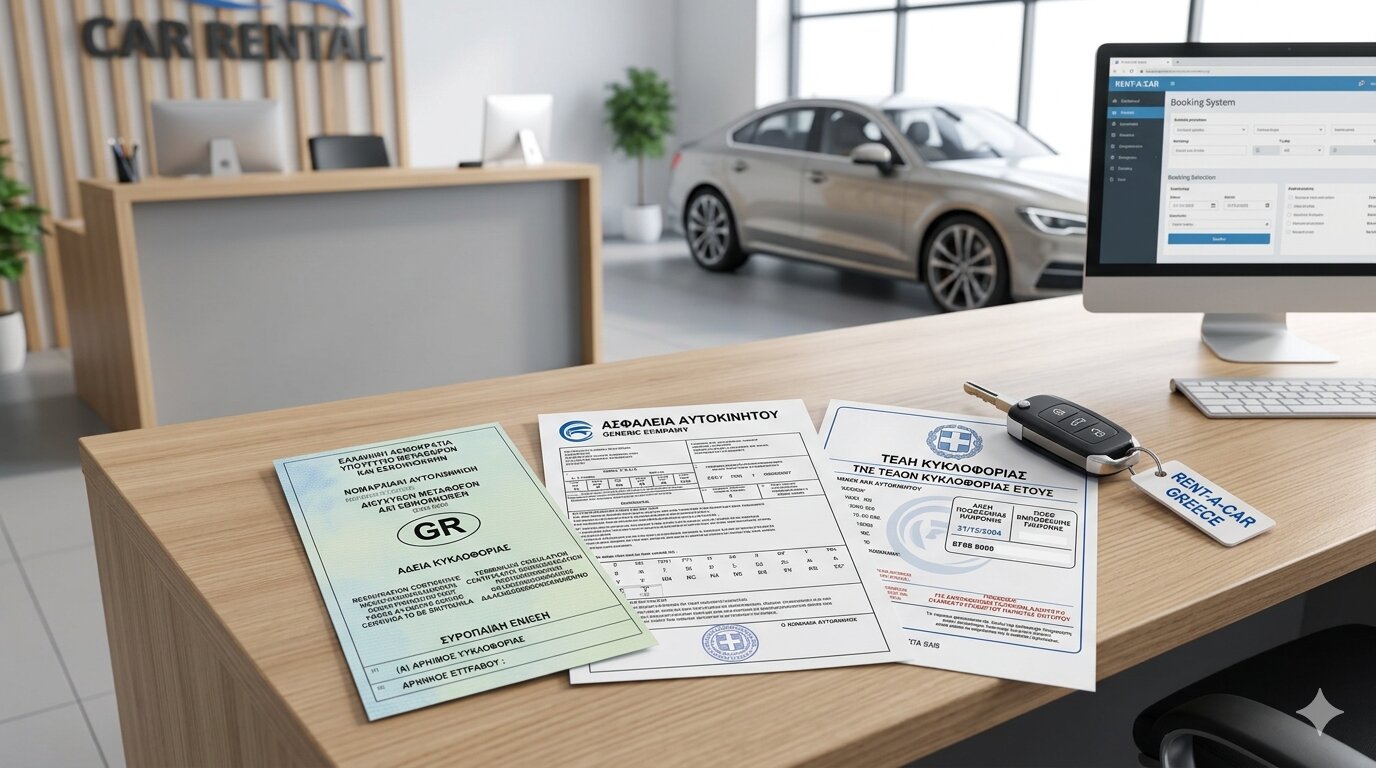
Rental Cars
For rental vehicles, responsibility for insurance, road tax payments, and official documentation belongs to the rental company.
For this reason, drivers are usually not required to carry:
- The insurance policy document
- Proof of road tax payment
Instead, it is generally sufficient to have the rental agreement or authorization document, along with a copy of the vehicle registration.
Leasing Vehicles
A similar rule applies to leased or long-term rental vehicles.
In these cases:
- The leasing company is considered the legal owner of the vehicle
- The company handles insurance and tax obligations
- The driver is not required to carry all original documents
In practice, the user of the vehicle only needs the essential paperwork proving lawful use of the car.
What Applies to Road Taxes?
Road taxes are the responsibility of the vehicle owner. This means that:
- For privately owned vehicles, the owner is responsible
- For rental and leasing vehicles, the responsibility lies with the company
Today, most of this information can be verified electronically through digital systems used by public authorities and insurance providers.
What About Vehicles Declared Off the Road?
A vehicle that has officially been declared off the road:
- Is not allowed to circulate on public roads
- Does not require active insurance
- Is exempt from road taxes for the period it remains inactive
However, if such a vehicle is found operating illegally, the penalties can be severe and may include:
- Heavy fines
- Removal of license plates
- Suspension of the vehicle registration
Electronic Checks and Digital Verification
In recent years, inspections have become stricter thanks to electronic verification systems. Authorities can now instantly confirm:
- Whether a vehicle is insured
- Whether road taxes have been paid
- Whether the vehicle has been declared inactive
This means that even if carrying physical documents is not always required, all legal obligations must still be properly fulfilled.
Conclusion
Although most drivers in Greece are required to carry registration, insurance, and road tax documentation, there are exceptions mainly concerning rental and leasing vehicles.
In these cases, the obligations are transferred to the companies that legally own the vehicles. However, this does not mean the vehicle may operate without valid insurance or proper tax compliance.
Modern electronic verification systems now allow authorities to quickly confirm the legal status of every vehicle, helping reduce violations and uninsured cars on Greek roads.