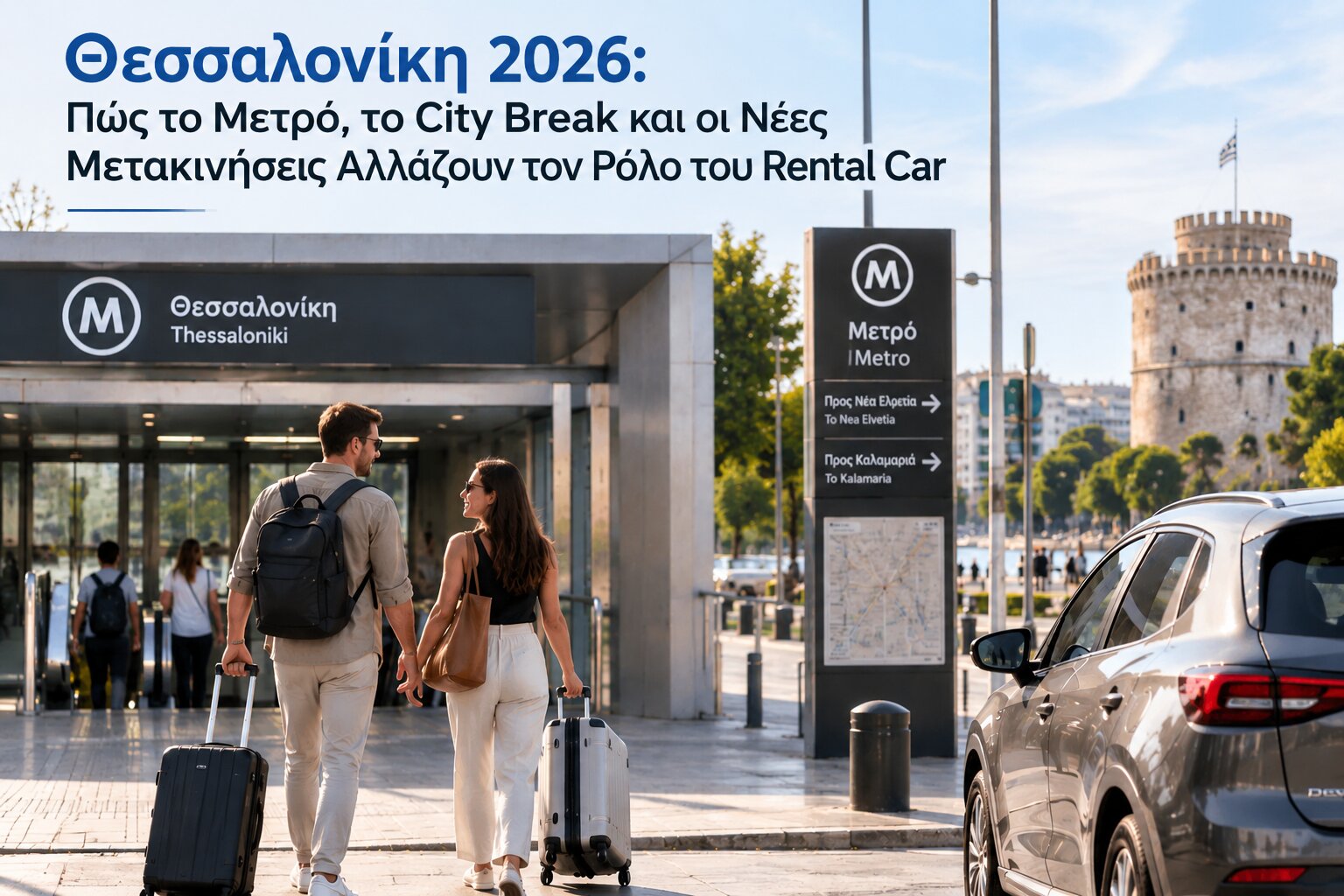
Thessaloniki is entering a different era of tourism and mobility. The city is gradually strengthening its position as a standalone European city-break destination, while at the same time gaining new infrastructure, better connectivity and more ways for visitors to move around without relying exclusively on a car.
That does not mean the rental car is losing its role.
It means that its role is changing.
On 8 September 2026, that shift is especially relevant as Thessaloniki hosts Reimagine Tourism 2026, focused on the city’s evolution into a new European metropolitan destination. Connectivity, infrastructure, gateways, culture, wine tourism and the wider opportunities of Northern Greece are all part of the discussion.
Thessaloniki No Longer Wants to Be Just a Stopover
The Greek Ministry of Tourism is increasingly presenting Thessaloniki as a destination with strong city-break potential.
Recent official discussions have linked that potential with three major factors: the upgraded airport, the Metro and continued investment in hospitality infrastructure.
That matters because it changes the way visitors structure their trips.
For many years, having a car was almost taken for granted by travellers who wanted flexibility in Thessaloniki and the surrounding region. Today, an increasing share of urban journeys can be covered more efficiently by public transport.
This does not remove the need for a rental car.
It makes that need more specific.
The Metro Is Redrawing the City’s Mobility Map
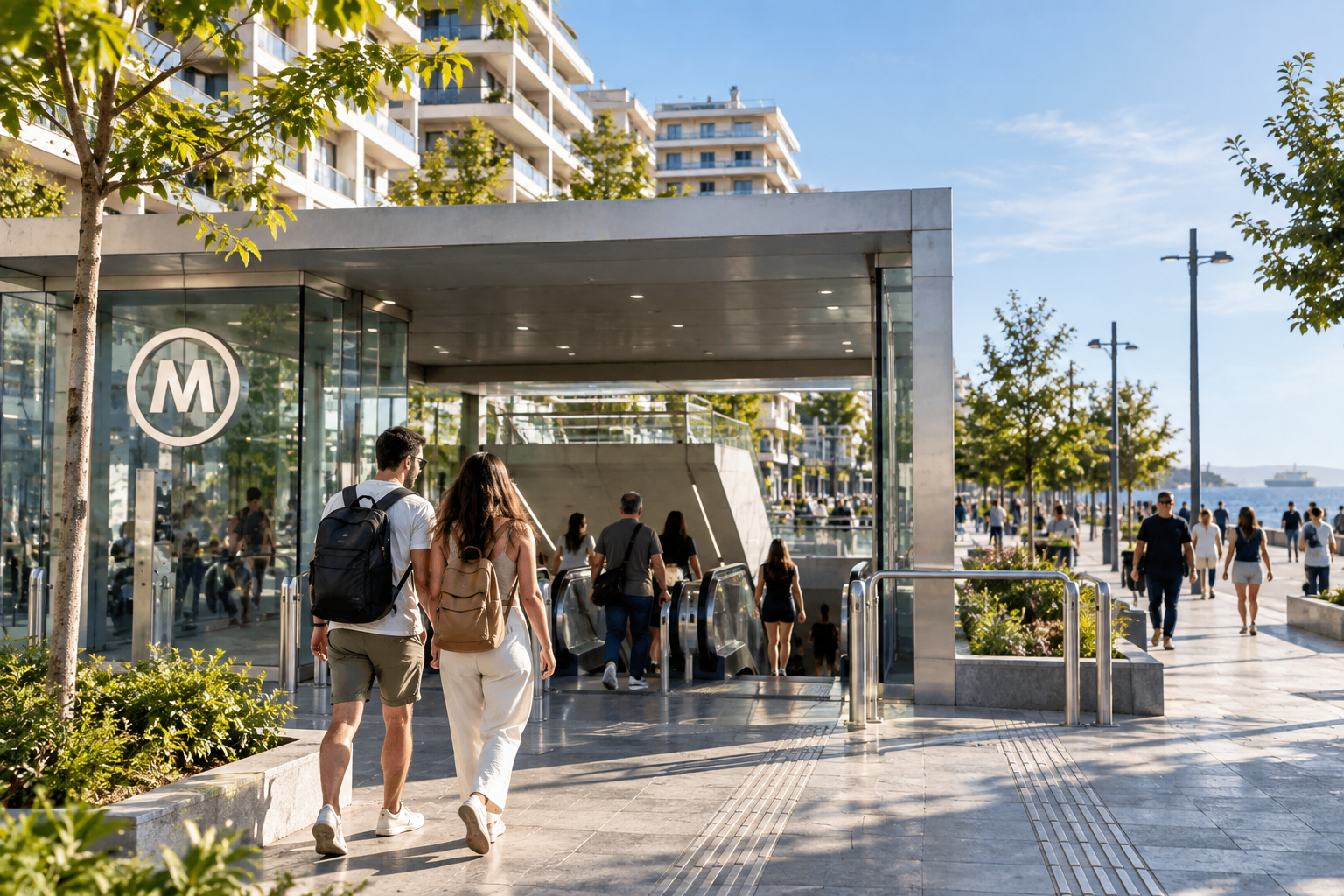
On 27 August 2026, the Thessaloniki Metro extension to Kalamaria entered operation, adding five new stations: Nomarchia, Kalamaria, Aretsou, Nea Krini and Mikra.
The extension significantly improves access to the eastern parts of the city and creates a very different model of everyday mobility.
For visitors, this means that journeys which previously depended more heavily on taxis or cars can increasingly be handled through an organised public transport network.
And this is where an important change begins for the car rental market.
A rental car no longer needs to be the default mode for every journey within the city.
Instead, it can become the mode used when it delivers the most value.
Less Car Use in the City, More Value Beyond It
Thessaloniki has one major advantage over many other city-break destinations: it sits at the centre of a wide and highly diverse tourism region.
A visitor may spend two days exploring the city and then want to continue to Halkidiki, Pieria, archaeological sites, wineries, mountain destinations or other parts of Northern Greece.
At that point, the car takes on a different role.
It is not necessarily needed from arrival to departure.
It may only be needed for one or two days, for a specific part of the trip, or for travel beyond the urban transport network.
That creates a more multimodal travel model:
the plane for arrival, the Metro for the city and the rental car when the traveller wants to go further.
The Airport Strengthens Thessaloniki’s Role as a Gateway
This shift is happening in a city with significant and growing air traffic.
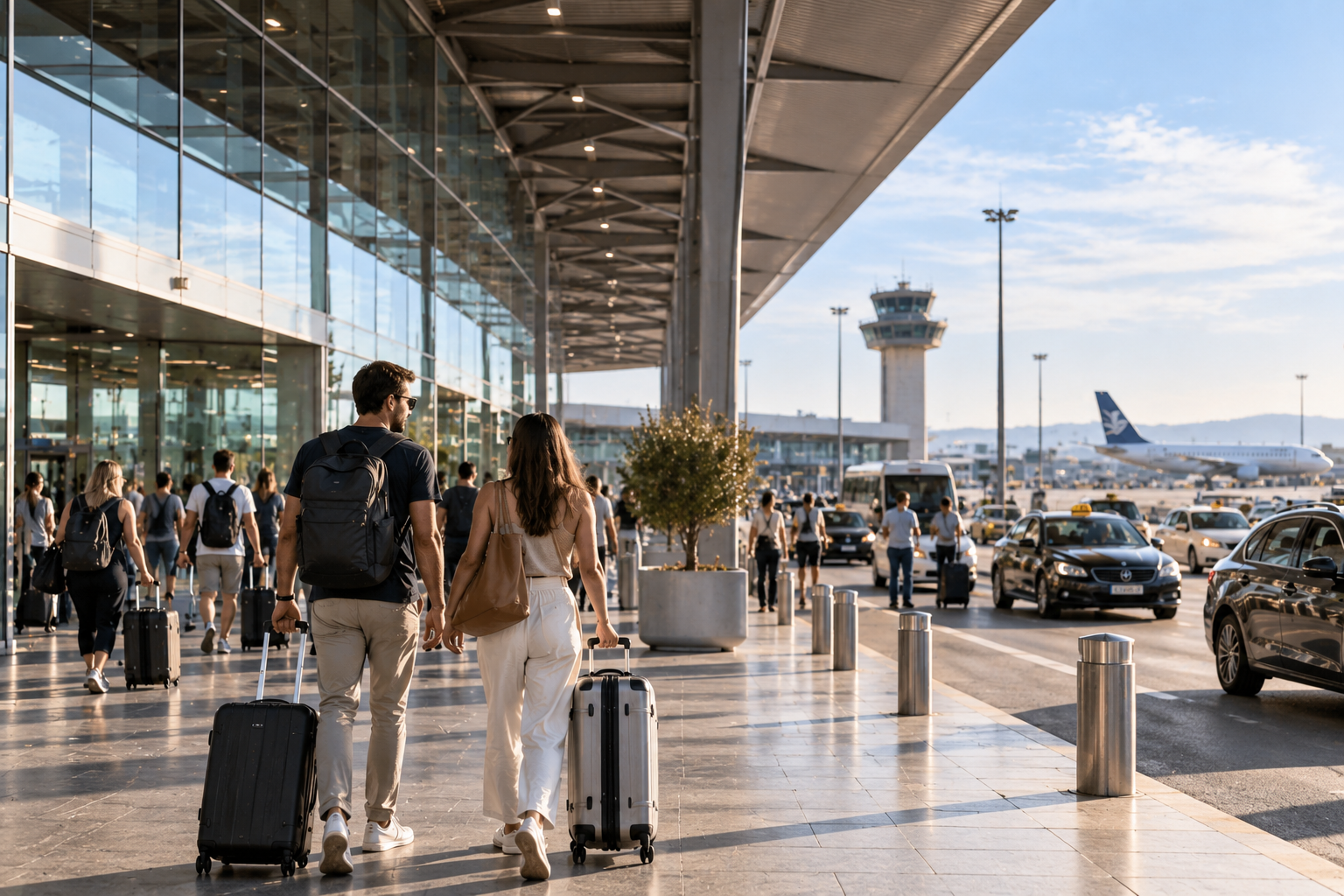
According to official Fraport Greece figures, Thessaloniki Airport “Makedonia” handled nearly 8 million passengers in 2025, with year-on-year growth of 8.2%.
The airport is becoming an increasingly important point of entry for both domestic and international travellers.
That trend has remained positive in 2026 as well.
As more visitors arrive by air and the city itself becomes easier to navigate, the pattern of rental demand becomes more varied.
From “I Need a Car for the Whole Trip” to “I Need It When It Adds Value”
This may be the most important change of all.
The traditional rental model was straightforward: arrive at the airport, pick up a car, keep it for the entire stay and return it before departure.
The newer model can look very different.
A visitor may arrive in Thessaloniki, spend two days moving around by Metro and then rent a car for a trip outside the city.
That can create new operational demands for rental companies:
different pickup and drop-off locations, shorter rental periods, higher expectations of immediate availability and better coordination between airports, city branches and regional stations.
Major Events Show Why Demand Is Never Static
At the same time, Thessaloniki is hosting the 90th Thessaloniki International Fair from 5 to 13 September 2026.
The event brings businesses, organisations, professionals and visitors from Greece and abroad into the city.
Events like these can create sharp changes in mobility demand over a very short period.
For rental companies, that means knowing how many cars exist is no longer enough.
They need to know where those cars are, when they are returning, which are ready for the next customer and where demand is likely to appear next.
Fleet Management Becomes the Competitive Advantage
As travel becomes more flexible and multimodal, fleet operations also become more complex.
A vehicle may return from one customer in the morning, require inspection and cleaning, and then need to be available at a different location only a few hours later.
In that environment, the value of technology goes far beyond digitising a booking.
It lies in having a real operational picture of the fleet:
which vehicle is available, which is rented, which is waiting for inspection, which needs to be moved and which can serve the next reservation.
Digital fleet management is therefore becoming part of the customer experience itself, not just a back-office tool.
Rental Cars Do Not Necessarily Compete With the Metro
It is easy to assume that better public transport automatically means less demand for rental cars.
The reality may be more interesting.
A well-functioning transport network makes a destination easier to visit. And a city that is easier to visit can attract more city breaks, more short stays and more travellers who then choose to explore the wider region.
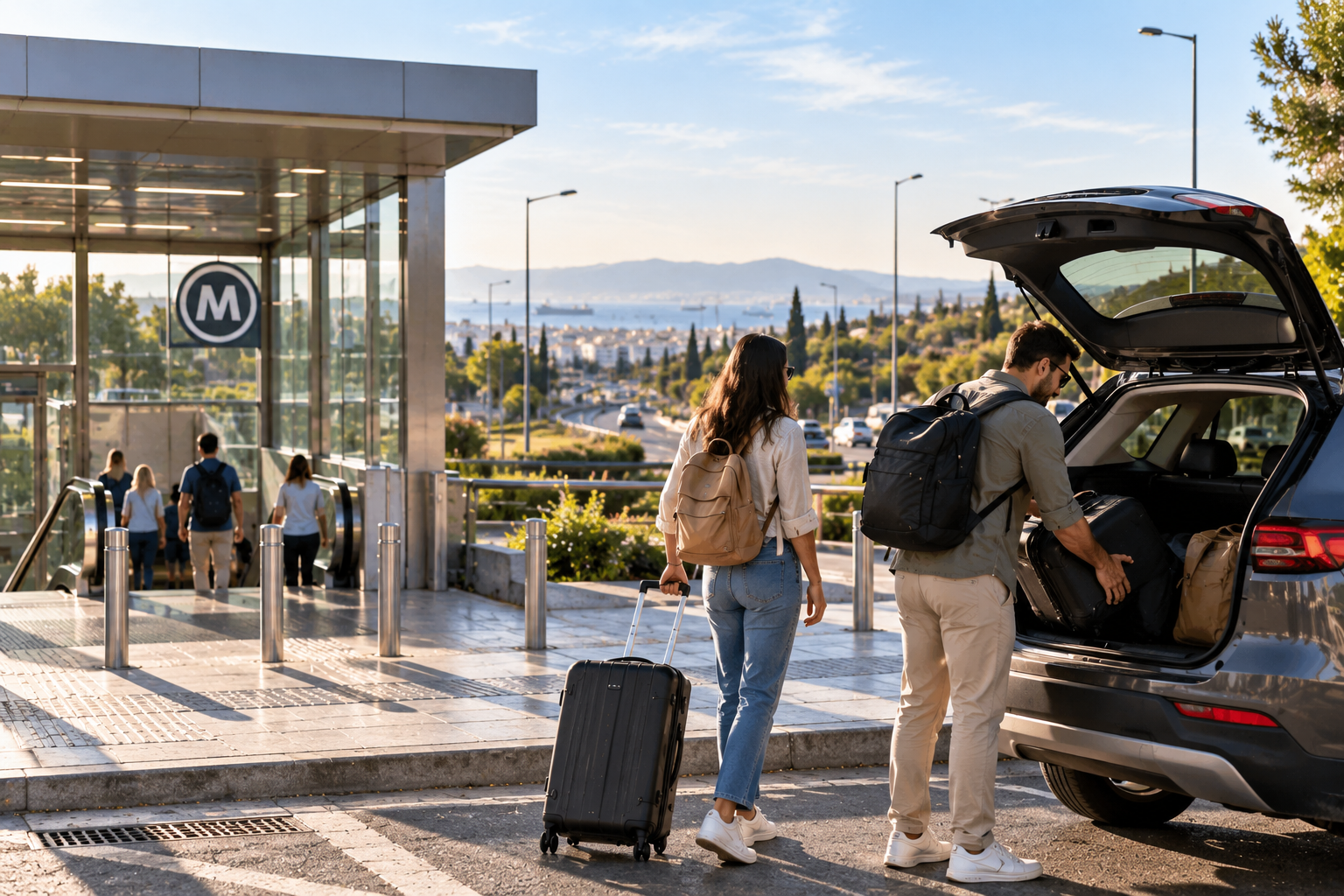
In that sense, the Metro and the rental car can work together.
One serves dense urban movement.
The other provides freedom when the city network ends.
Thessaloniki Is Becoming a Hub, Not Just a Destination
The discussion around Thessaloniki as a new European metropolitan destination has a wider meaning.
The city can increasingly function as both a destination and a gateway.
The airport brings visitors into Northern Greece.
The Metro makes the city easier to explore.
And the rental car can unlock the next part of the journey.
For the car rental industry, that does not mean becoming less relevant.
It means becoming part of a broader mobility ecosystem.
And the more flexible that ecosystem becomes, the more valuable accurate fleet visibility, operational coordination and real-time decision-making become.
That may be the key message of Thessaloniki’s new mobility era:
the car is not disappearing from the journey. It is simply being used more intelligently.