
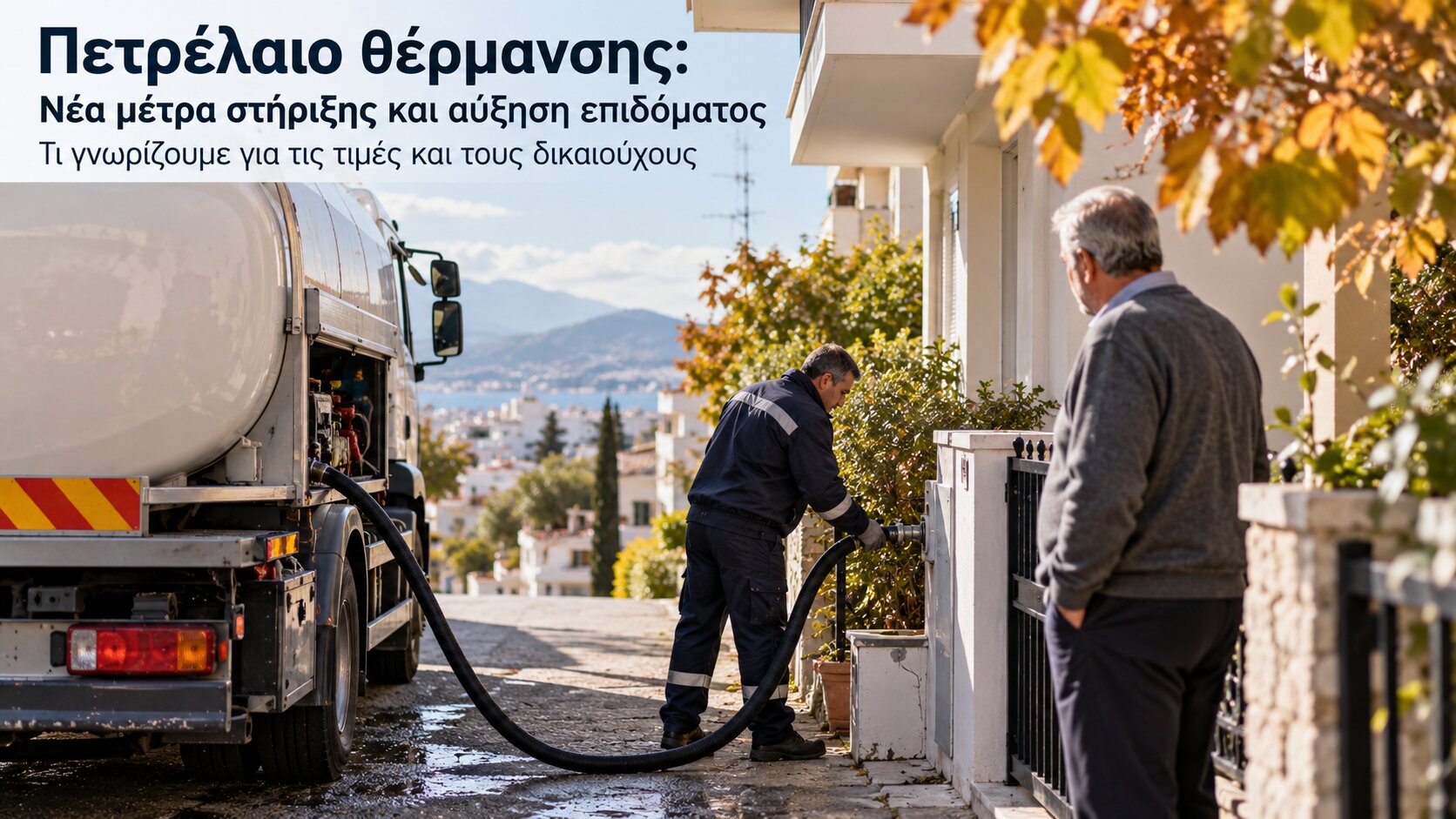
Greece is preparing new measures to help households manage heating costs ahead of winter. A higher heating allowance, intervention in heating oil prices, and a possible cap on profit margins are under discussion. Here is what has been announced, what remains uncertain, and what consumers should watch for.
Greek households are facing renewed uncertainty over heating costs as winter approaches, prompting the government to prepare additional financial support.
On September 17, 2026, Prime Minister Kyriakos Mitsotakis announced that a package of measures would be presented the following week. The proposals include an increase in the heating allowance, action to reduce the cost of heating oil, and consideration of a renewed cap on profit margins.
However, the final amounts, eligibility requirements, and implementation details have not yet been announced.
For households planning their winter budgets, the distinction between confirmed announcements and measures still under consideration is particularly important.
Heating Oil Prices: What Has Been Announced?
The government has indicated that it wants heating oil to become available at a price below €1.75 per litre, the level at which the previous heating oil sales season ended.
The proposed intervention is expected to involve contributions from both the government and domestic oil refineries.
However, the precise mechanism, the amount of financial support, and the contribution expected from each party have yet to be clarified.
The reference to €1.75 per litre should not be interpreted as a guaranteed nationwide retail price.
Actual prices may vary depending on location, distribution costs, market conditions, and the final structure of the intervention.
Until the measures are formally presented, households cannot accurately calculate how much they will pay for a heating oil delivery during the upcoming winter season.

Higher Heating Allowance: What Do We Know So Far?
An increase in Greece’s heating allowance is one of the central elements of the proposed support package.
The government has indicated that the allowance will be increased across the board, but the exact financial details remain outstanding.
Several important questions have yet to be answered:
How much will the heating allowance increase?
Will income and property eligibility criteria change?
Which households will qualify?
When will applications open?
When will payments be made?
The final decisions will determine how much each eligible household receives and whether the new allowance differs from the previous scheme in other ways.
Households that received support last winter should not automatically assume that they will qualify under identical conditions this year.
Similarly, no specific increase should be treated as confirmed until the government publishes the relevant decisions.
How Many Households Received Support Last Winter?
Official figures from the 2025–2026 heating season provide an indication of the scale of the existing support programme.
According to figures published by Greece’s Ministry of National Economy and Finance on May 29, 2026, heating allowance payments had been made to 868,466 beneficiaries.
The total amount distributed by that date reached €165.26 million.
Of this amount, approximately €124.2 million consisted of advance payments made in December 2025.
These figures relate exclusively to the previous heating season.
They should not be interpreted as a forecast of the number of beneficiaries or the total budget for the upcoming 2026–2027 programme.
Which Heating Sources Are Covered by the Allowance?
Greece’s heating allowance is not limited to households using heating oil.
Under the existing administrative framework, eligible heating sources may include:
Heating oil and kerosene.
Natural gas and liquefied petroleum gas.
Firewood and biomass pellets.
District heating.
Electricity.
Eligibility depends on the specific conditions applicable to each heating source and the relevant allowance period.
The scheme generally concerns properties used as a household’s primary residence at the time of application.
However, the government has not yet clarified how the announced increase will apply to different heating sources during the new season.
Consumers should therefore wait for the updated eligibility rules before assuming that every type of heating will receive the same increase.

Profit Margin Cap: What Is the Government Considering?
Another possible intervention involves reinstating a cap on profit margins.
The government has confirmed that the measure is under consideration, but its final structure has not been announced.
A cap on profit margins is not the same as imposing a single fixed retail price.
Such a measure would require detailed rules specifying which businesses are covered, how the permitted margin is calculated, how long the restrictions remain in force, and how compliance will be monitored.
Until these details are published, the potential return of a profit margin cap should be regarded as a proposal rather than a measure already in effect.
Its eventual impact on retail heating oil prices will depend on the specific rules adopted and wider market conditions.
When Will the Final Measures Be Announced?
The government has indicated that the support package will be presented during the week beginning September 21, 2026.
A complete implementation timetable has not yet been provided.
The upcoming announcements are expected to clarify the final increase in the heating allowance, eligibility requirements, application deadlines, payment dates, and the mechanism intended to reduce heating oil prices.
For consumers, these details will be essential when estimating their winter heating expenses.
Until the relevant decisions are published, reports containing specific new allowance amounts or payment dates should be treated with caution.
How Can Households Apply for the Heating Allowance?
The official application process is managed through myΘέρμανση, the digital heating allowance platform operated by Greece’s Independent Authority for Public Revenue.
Applicants access the service using their personal TAXISnet credentials.
The platform is used to manage heating allowance applications and related information.
However, the existence of the online service does not mean that applications for the 2026–2027 heating season are already open.
Households should wait for the official announcement of the new application period and check the eligibility conditions that apply specifically to the upcoming season.
Consumers should also avoid assuming that previous application deadlines or payment schedules will automatically apply again.
What About Outstanding Payments From the Previous Heating Season?
The new support package should be distinguished from payments and administrative procedures relating to the previous winter.
In May 2026, the relevant ministries and tax authorities announced a special correction procedure for incomplete or incorrect heating oil purchase documents.
The procedure covered purchases made between January 1 and March 31, 2026.
Corrected documents could be issued and submitted until August 31, while the associated payments were scheduled to be completed by September 30, 2026.
This deadline concerns specific outstanding cases from the 2025–2026 heating season.
It is not an application deadline for the new heating allowance.
Households should distinguish between payments relating to an earlier application and any new financial assistance announced for the coming winter.

Is There a Longer-Term Heating Support Plan?
Separate from the immediate measures, Greece has also outlined a longer-term support initiative under the Social Climate Fund.
The relevant programme includes plans for additional annual heating assistance of at least €100 for approximately 780,000 households during the 2027–2032 period.
The published programme refers to an annual budget of €325 million.
This initiative has a different implementation period from the support package announced in September 2026.
Households should not assume that the amounts from the two programmes can automatically be combined or that they will qualify for both.
The applicable rules and implementation arrangements will need to be examined separately.
What Should Households Do Now?
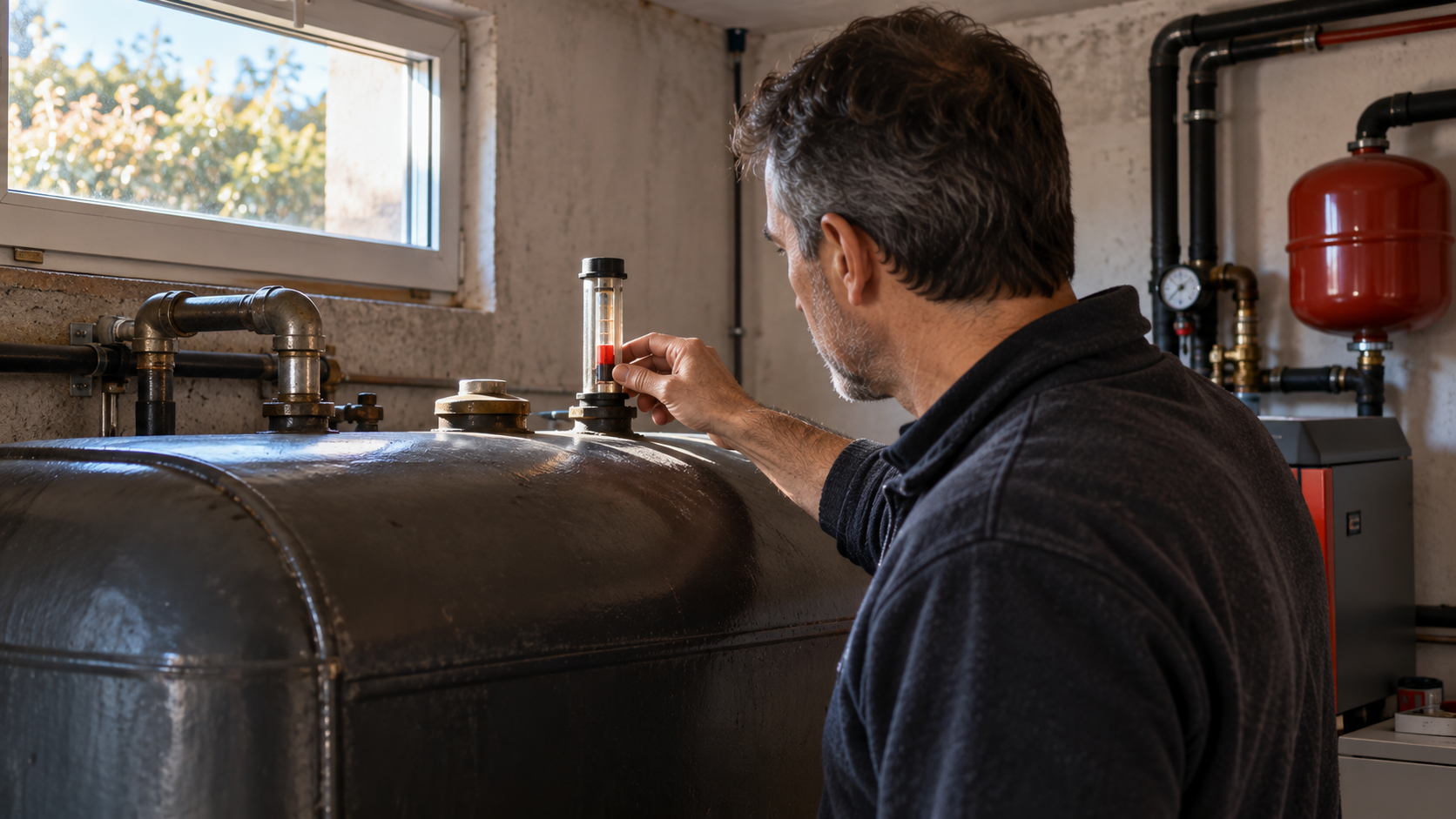
With the final measures still pending, households can begin preparing for the upcoming heating season without making financial decisions based on unconfirmed figures.
Reviewing last winter’s consumption is a useful starting point.
Consumers can also estimate how much heating oil or other energy they may need, taking into account the size of their home, insulation, and typical winter usage.
Those planning to purchase heating oil should monitor actual local prices rather than treating the government’s price objective as a confirmed retail offer.
For the heating allowance, households should follow official announcements concerning eligibility, applications, and payments.
Keeping previous purchase records and checking that personal information is accurate may also help with administrative preparations, although the specific documentation requirements for the new season have not yet been confirmed.
Most importantly, consumers should distinguish between the support measures already announced in principle and the details that remain subject to formal decisions.
Conclusion
Greece is preparing a new package of heating support measures ahead of winter, focusing on three main areas: lower heating oil costs, an increased heating allowance, and a possible cap on profit margins.
The government is expected to provide further details during the week beginning September 21, 2026.
For households, the central question is how these measures will translate into actual savings.
The direction of the support package has been announced, but the precise financial benefit for individual households remains unknown.
Final prices, allowance amounts, eligibility criteria, and payment dates should be confirmed through official decisions before consumers rely on them when planning their winter budgets.