
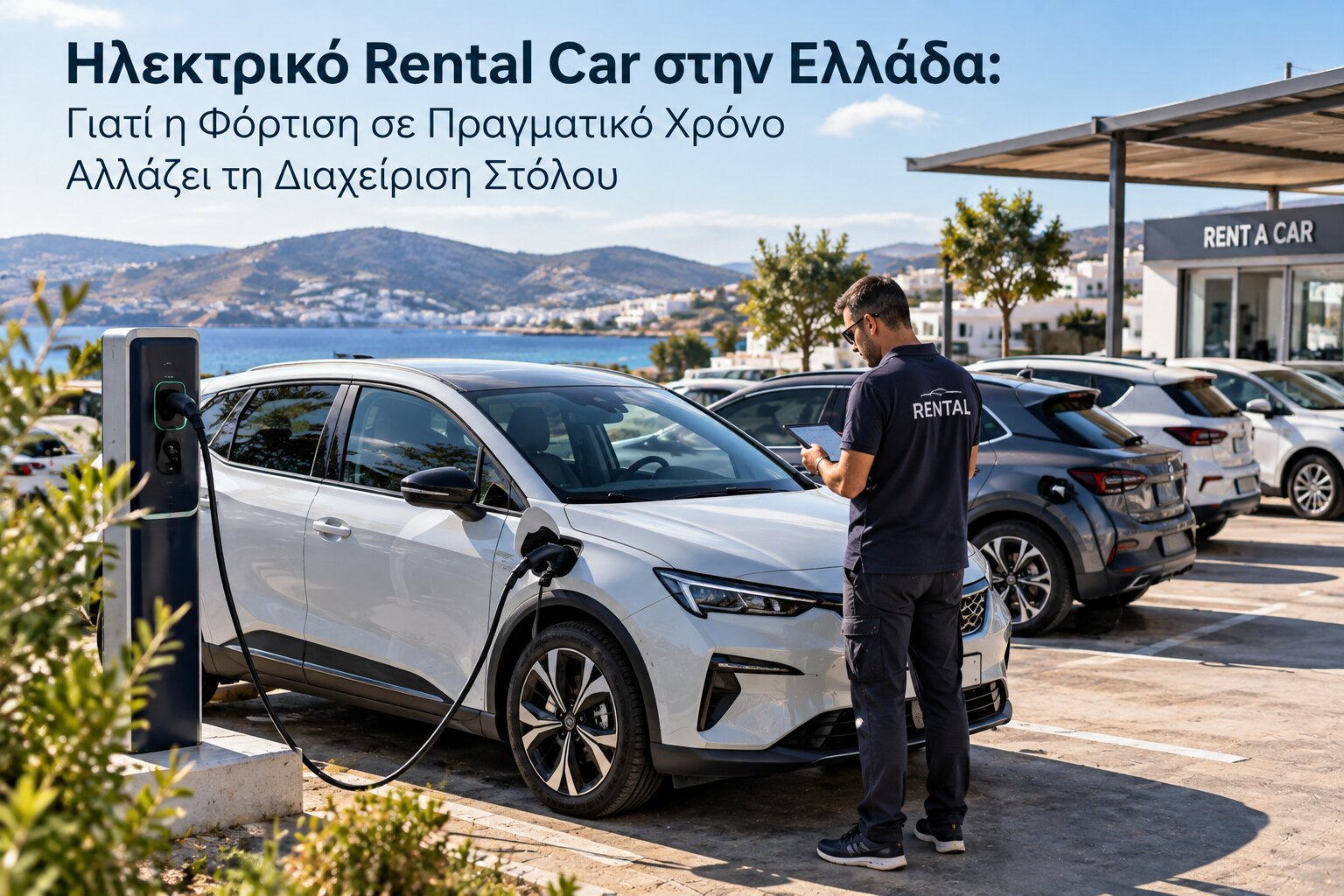
For a car rental company, the transition to electric mobility does not end with adding electric vehicles to the fleet.
The real operational change begins when an EV needs to be handed over to the next customer with sufficient charge, driven through an unfamiliar destination and returned in time for its next reservation.
Until recently, the basic question was:
“Is there a charger nearby?”
In 2026, the question is becoming much more specific:
“Is it available now, is it working, how fast can it charge the vehicle, and what will charging cost?”
That is where public charging infrastructure begins to have a direct relationship with fleet management.
Greece Already Has Dynamic Charging Data
Greece operates the Registry of Electric Mobility Infrastructure and Market Participants (M.Y.F.A.I.), which records publicly accessible charging infrastructure and the organisations participating in the country’s electric-mobility market.
The system is not simply a static list of charging locations.
According to the official technical documentation, charging-point operators are required to update dynamic information in the registry at intervals of less than 10 minutes.
This includes whether an EV charging point is operational, whether an individual connector is available or occupied and information concerning ad-hoc charging prices.
The registry also supports static information such as location, charging technology, connector type, nominal charging power, opening hours, accepted payment methods and whether a charging point can be reserved.
That distinction is important.
We are moving from a world where drivers simply know where chargers are towards one where the current condition of charging infrastructure can become part of the journey itself.
For Tourists, the Problem Is Not Just Driving Range
“Range anxiety” is usually associated with how far an electric vehicle can travel before its battery needs to be recharged.
For a rental-car customer, however, there is another layer of uncertainty.
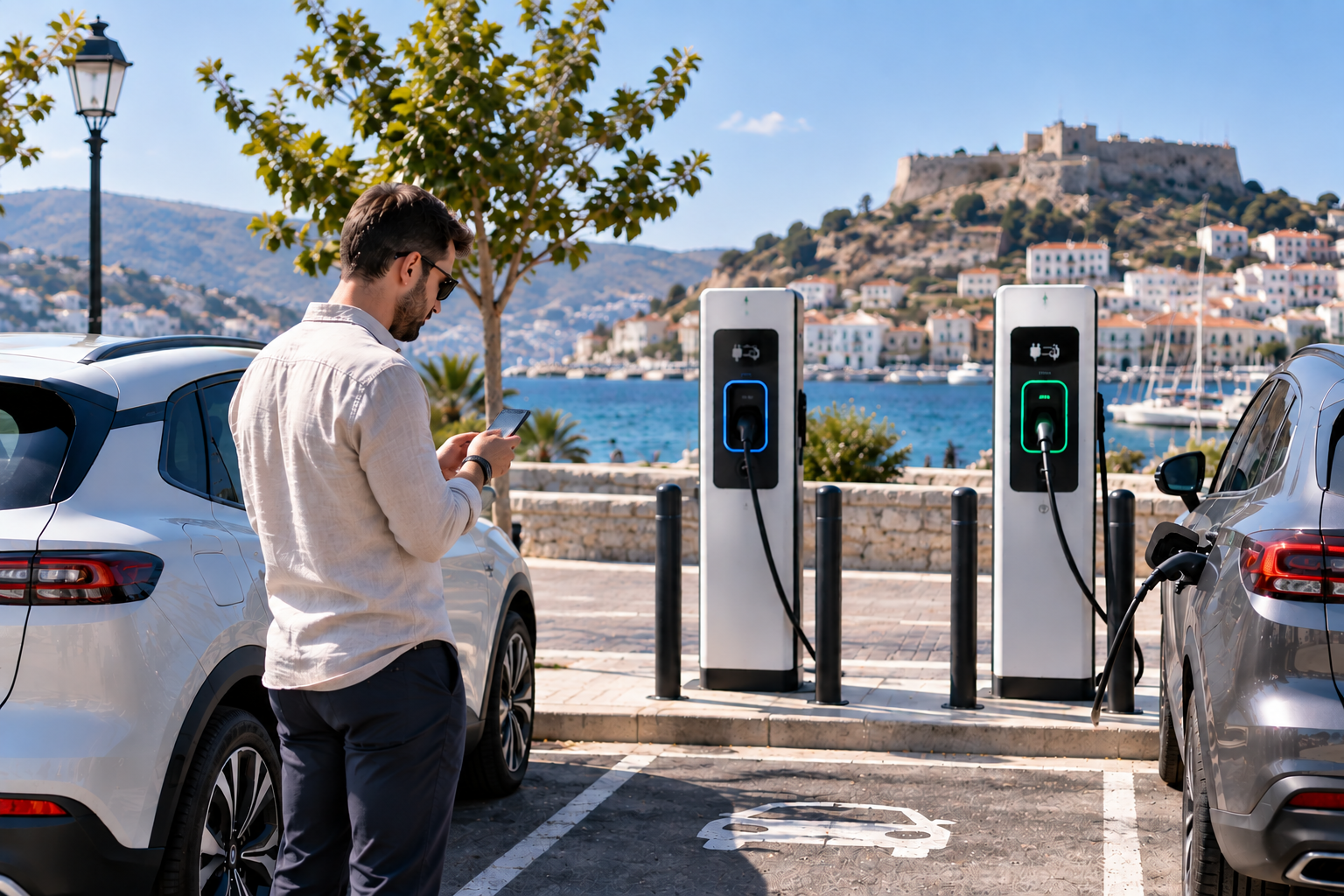
A visitor may not know the local area. They may not have an account with a particular charging provider. They may not know which charger is suitable for the vehicle they have rented, or they may reach a charger only to discover that it is already occupied.
For someone who owns an EV, these considerations can gradually become part of everyday driving.
For an international traveller renting an electric car in Greece for four or five days, every additional step can have a much greater impact on the overall experience.
That is why EV adoption in car rental depends on more than simply having more chargers.
It also depends on having better information about those chargers.
Europe Is Making Public Charging More Transparent
The European Union’s Alternative Fuels Infrastructure Regulation — AFIR, Regulation (EU) 2023/1804 — is pushing public charging towards greater interoperability, transparency and ease of use.
The regulatory framework covers information including charging-point location, connector and power characteristics, operational status, availability and pricing.
The direction is particularly important for mobility services.
Charging data does not necessarily need to exist separately from a rental reservation. As digital mobility develops, battery status, available charging time, charging infrastructure and the vehicle’s next booking can increasingly become different pieces of the same operational picture.
For car rental, that creates a very different definition of vehicle availability.
From “Where Is the Car?” to “Is It Ready for the Next Booking?”
With a conventional rental vehicle, a car can return with half a tank of fuel and be refuelled relatively quickly.
An electric vehicle introduces another variable: time.
Imagine an EV returning at 11:00 with a low battery while its next customer is scheduled to collect it at 13:00.
The rental company needs to know more than the vehicle’s physical location.
It needs to understand its state of charge, how much energy it requires, how much time is available before the next booking and what realistic charging options are available.
That means the traditional status:
Available / Rented
may no longer provide enough information.
For an electric fleet, another question becomes critical:
Available — but is it Ready?
That may become one of the most important operational distinctions of the electric-rental era.
Public Charging Can Affect Fleet Turnover
Consider a rental location operating five electric vehicles at a tourist destination.
Three cars return in the morning and two need to leave again within the next few hours.
If charging is managed manually, staff need to decide which vehicle should be prioritised, how much charging it requires, where it can be charged and whether it can be prepared before the next customer arrives.
As the number of EVs grows, so does the complexity.
Electric fleet management therefore is not simply about energy.
It is about four connected factors:
time, availability, location and the next reservation.
These are already fundamental elements of car-rental operations. Electrification simply adds another variable that has to be synchronised with them.
Real-Time Information Makes That Decision Easier
This is where Greece’s charging-data infrastructure becomes particularly relevant.
The official M.Y.F.A.I. specifications require dynamic charger information to be refreshed in less than ten minutes. The system uses the OCPI 2.2 protocol for communication between charging-point operators and the national access point.
That creates the technical foundation for much more useful mobility services.
Instead of simply showing a pin on a map, a digital service can potentially help determine whether a charging point is operational, whether it is currently occupied and what charging conditions apply.
For a rental operator, the practical value is straightforward.
If several EVs need charging before upcoming reservations, knowing the current state of nearby infrastructure can make fleet preparation more predictable.
Easier Payments Matter for Rental Customers
Charging an EV also needs to become easier for someone who does not normally use the local charging network.
That is particularly relevant to tourism.
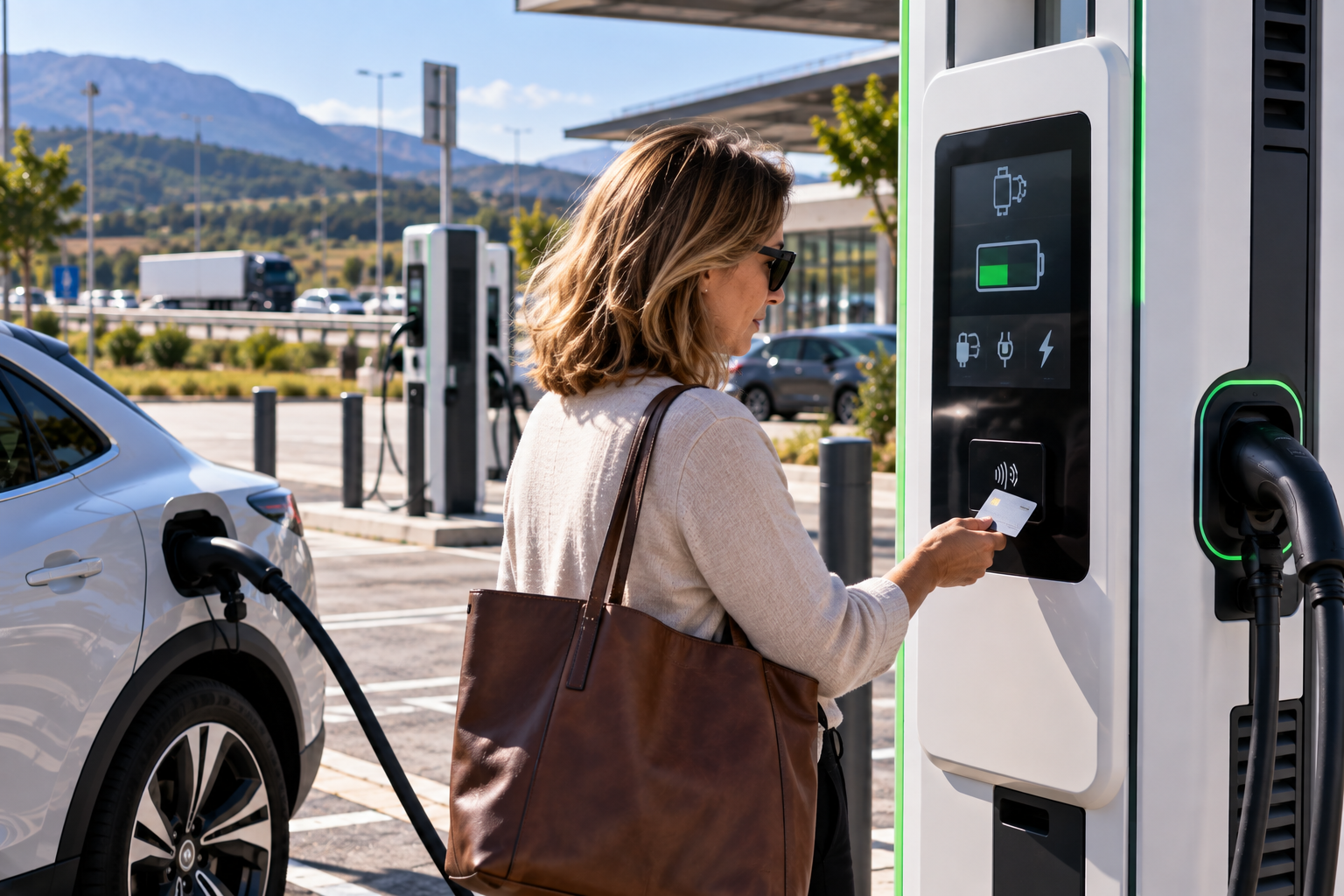
A traveller arriving in Greece does not want to discover at a charging station that they first need to download another application, create an account and establish a long-term relationship with a provider simply to charge a rental vehicle once.
AFIR therefore places significant emphasis on ad-hoc charging and electronic payment, reducing dependence on pre-existing contracts with individual charging providers.
This matters disproportionately to car rental.
A local EV owner may use the same networks repeatedly. A tourist might interact with a Greek charging network only once during an entire trip.
For that customer, simplicity is not an extra feature.
It is part of whether renting an EV feels practical in the first place.

The EV Changes the Meaning of “Available”
Electrification does not simply mean replacing petrol or diesel rental cars with electric ones.
It gradually changes how a rental company has to think about operational readiness.
A vehicle may be sitting in the parking area.
It may be clean.
It may have no outstanding maintenance issue.
It may technically appear as available in the reservation system.
But if its battery does not contain enough energy for the next rental, the vehicle is not truly ready.
Public charging infrastructure, dynamic availability information and more interoperable charging services can make that situation increasingly predictable.
And that may be one of the most important changes electric mobility brings to car rental:
future fleet management will not only need to know where each vehicle is and who has booked it. It will also need to know whether that vehicle has the energy — and the time — required for its next journey.
Greece already has a national system designed to collect dynamic information about publicly accessible charging infrastructure, while the European regulatory framework is pushing the market towards greater transparency, interoperability and simpler access.
For the rental-car industry, therefore, the next step is not simply more EVs.
It is smarter EV operations.