

August 12, 2026, is expected to become one of the most exciting dates of the decade for astronomy enthusiasts. On this day, a spectacular Total Solar Eclipse will take place, marking the first total eclipse visible across large parts of Europe in nearly three decades.
Although Greece will not be located within the path of totality, the event is expected to attract millions of skywatchers, scientists, photographers, and travelers from around the world.
What Is a Solar Eclipse?
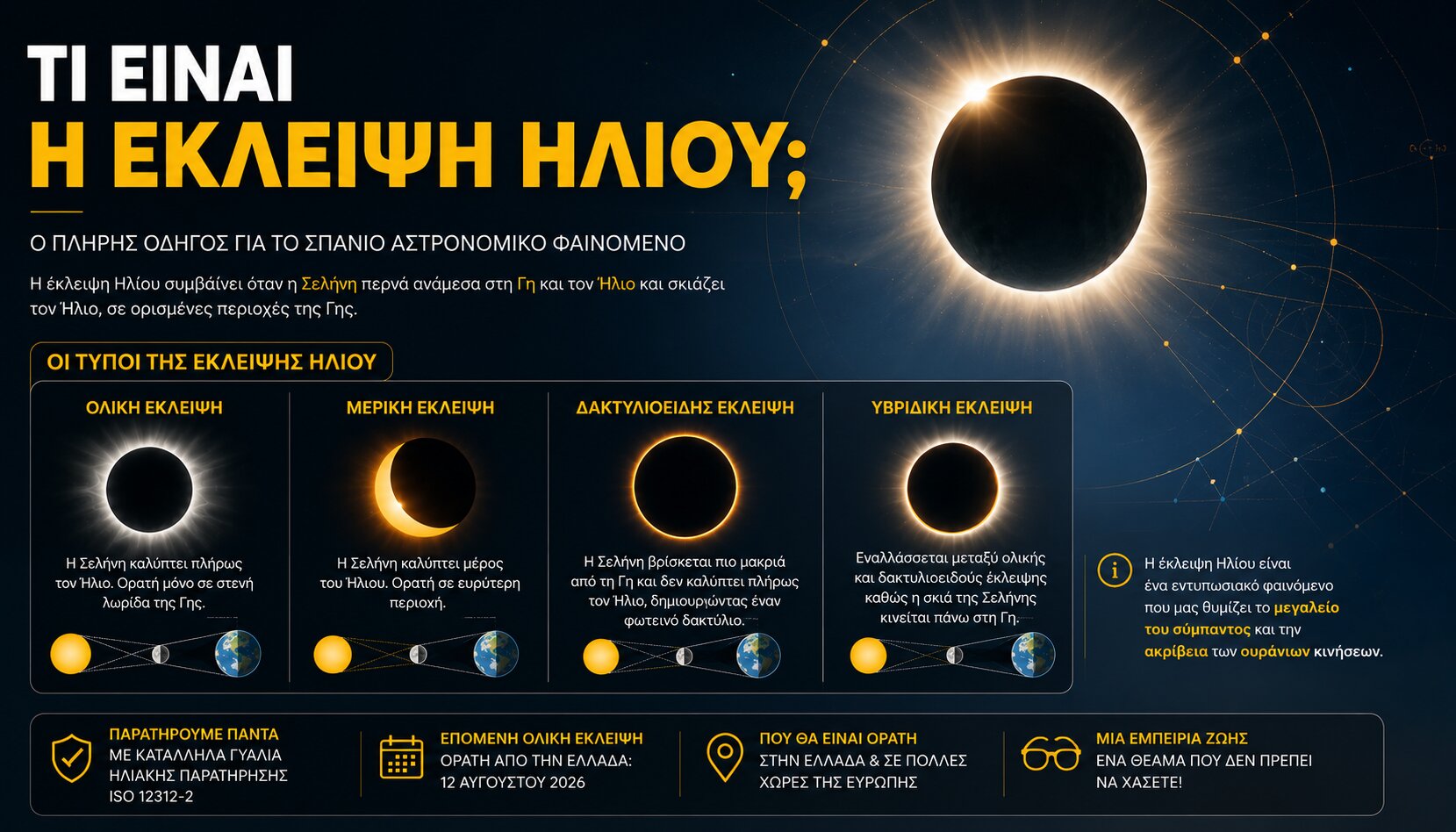
A solar eclipse occurs when the Moon passes directly between the Earth and the Sun, partially or completely blocking the Sun’s disk.
There are four main types of solar eclipses:
- Total Solar Eclipse
- Partial Solar Eclipse
- Annular Solar Eclipse
- Hybrid Solar Eclipse
The event on August 12, 2026 is a Total Solar Eclipse, the most spectacular type of eclipse.
Where Will the Total Eclipse Be Visible?
The Moon’s shadow will cross areas including:
- Greenland
- Iceland
- The North Atlantic
- Northern Spain
- A small part of northeastern Portugal
People located within the path of totality will experience daylight turning briefly into darkness while witnessing the breathtaking Solar Corona, visible only during a total solar eclipse.
Will It Be Visible from Greece?
Yes—but not as a total eclipse.
In Greece, observers will experience a partial solar eclipse, with the percentage of the Sun covered varying depending on the location. In many parts of the country, the eclipse will occur low on the western horizon shortly before sunset, creating a particularly beautiful natural spectacle.
Why Is This Eclipse So Important?
The August 12, 2026 eclipse is considered one of the decade’s most significant astronomical events because:
- It is the first major total solar eclipse affecting large parts of Europe in many years.
- Millions of people will have the opportunity to witness this rare celestial event.
- Scientists will be able to study the Solar Corona and solar activity under unique conditions.
- It occurs just one day before the peak of the annual Perseid Meteor Shower, creating an unforgettable week for astronomy enthusiasts.
What Happens During Totality?
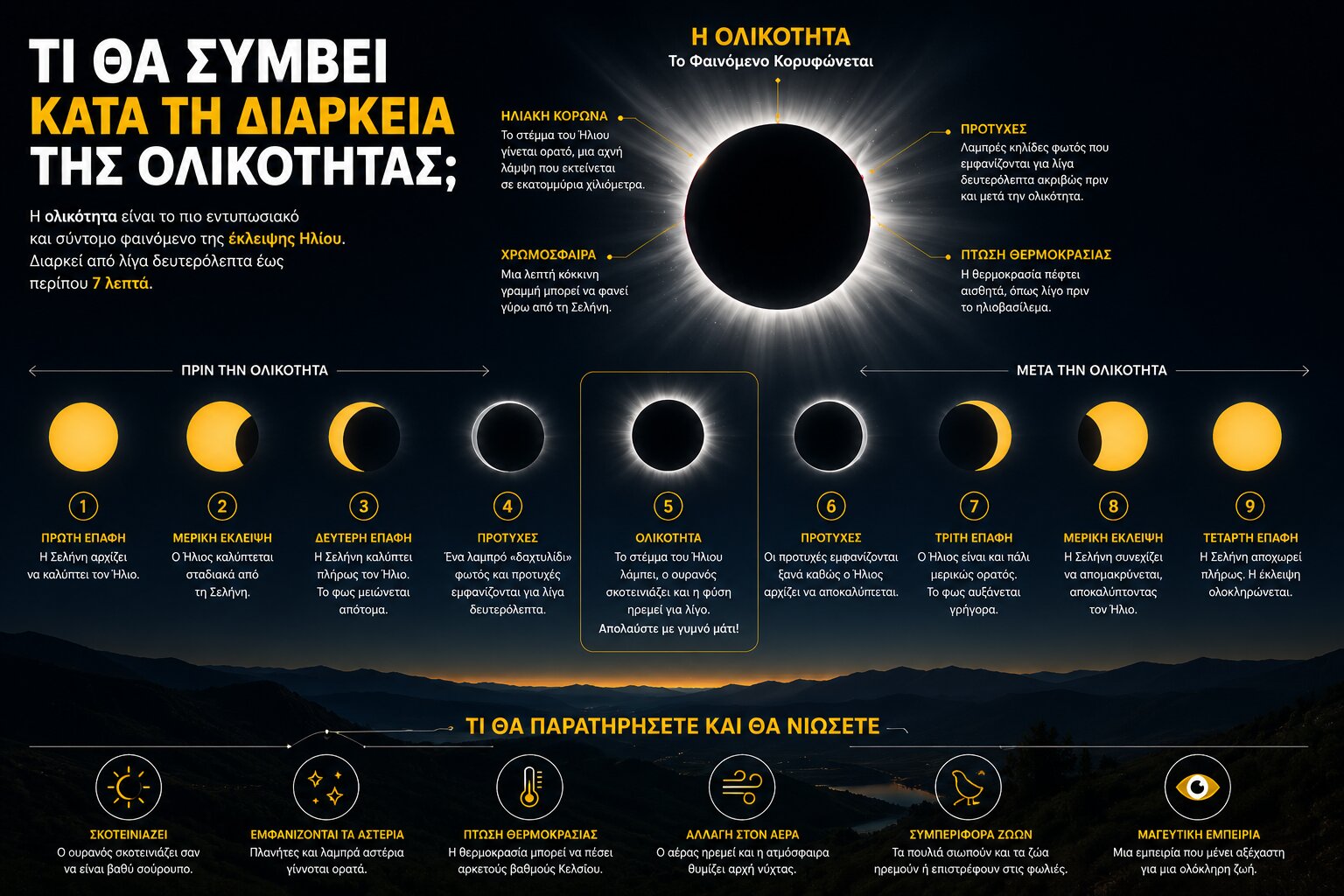
Observers inside the path of totality will witness:
- Sudden darkness during daytime.
- A noticeable drop in temperature.
- Bright planets and stars becoming visible.
- Changes in animal behavior.
- The spectacular Solar Corona surrounding the Moon.
Many eclipse chasers describe a total solar eclipse as one of the most extraordinary natural experiences on Earth.
The Best Places to Watch the Eclipse
If you are planning to travel, the top destinations include:
- Northern Spain
- Iceland
- Eastern Greenland
- Northeastern Portugal
Spain is expected to become Europe’s most popular eclipse destination, with thousands of visitors already planning their trips well in advance.
How to Watch the Eclipse Safely
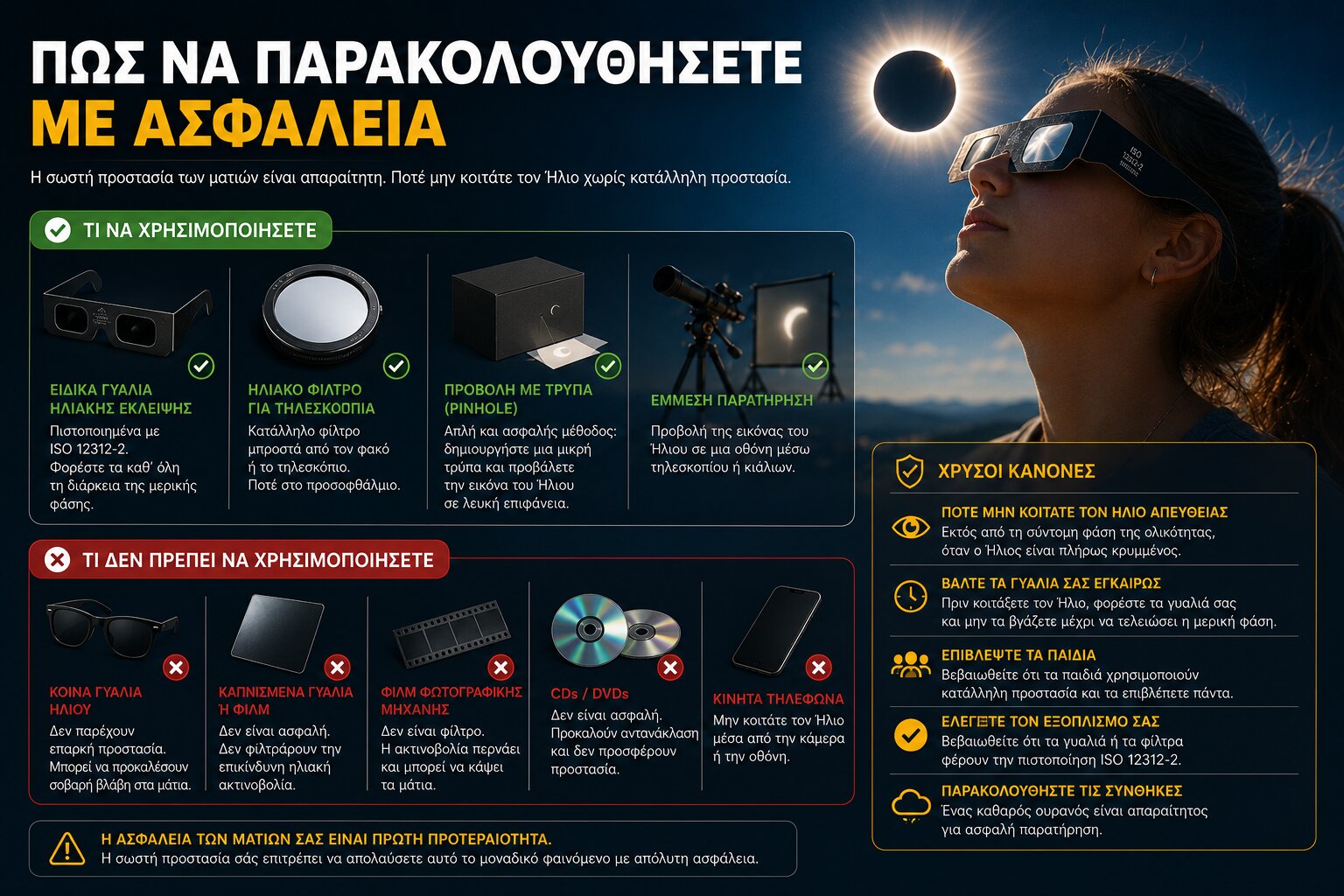
Looking directly at the Sun without proper protection can cause permanent eye damage.
Always use:
- Certified eclipse glasses meeting the ISO 12312-2 standard.
- Approved solar filters for telescopes, binoculars, and cameras.
- Safe indirect viewing methods.
Ordinary sunglasses do not provide adequate protection.
A Rare Celestial Event
Although several solar eclipses occur somewhere on Earth every year, witnessing a Total Solar Eclipse from the same location is extremely rare.
This is why thousands of travelers organize dedicated trips specifically to observe these events, contributing to the growing trend known as eclipse tourism.
Conclusion
The August 12, 2026 Total Solar Eclipse is expected to become one of the most remarkable astronomical events of the decade.
Although Greece will experience only a partial eclipse, millions of people across Europe will witness one of nature’s most spectacular phenomena as the Moon temporarily turns day into night.
Whether you are passionate about astronomy, photography, or unforgettable travel experiences, August 12, 2026 is a date worth remembering.
Frequently Asked Questions (FAQ)
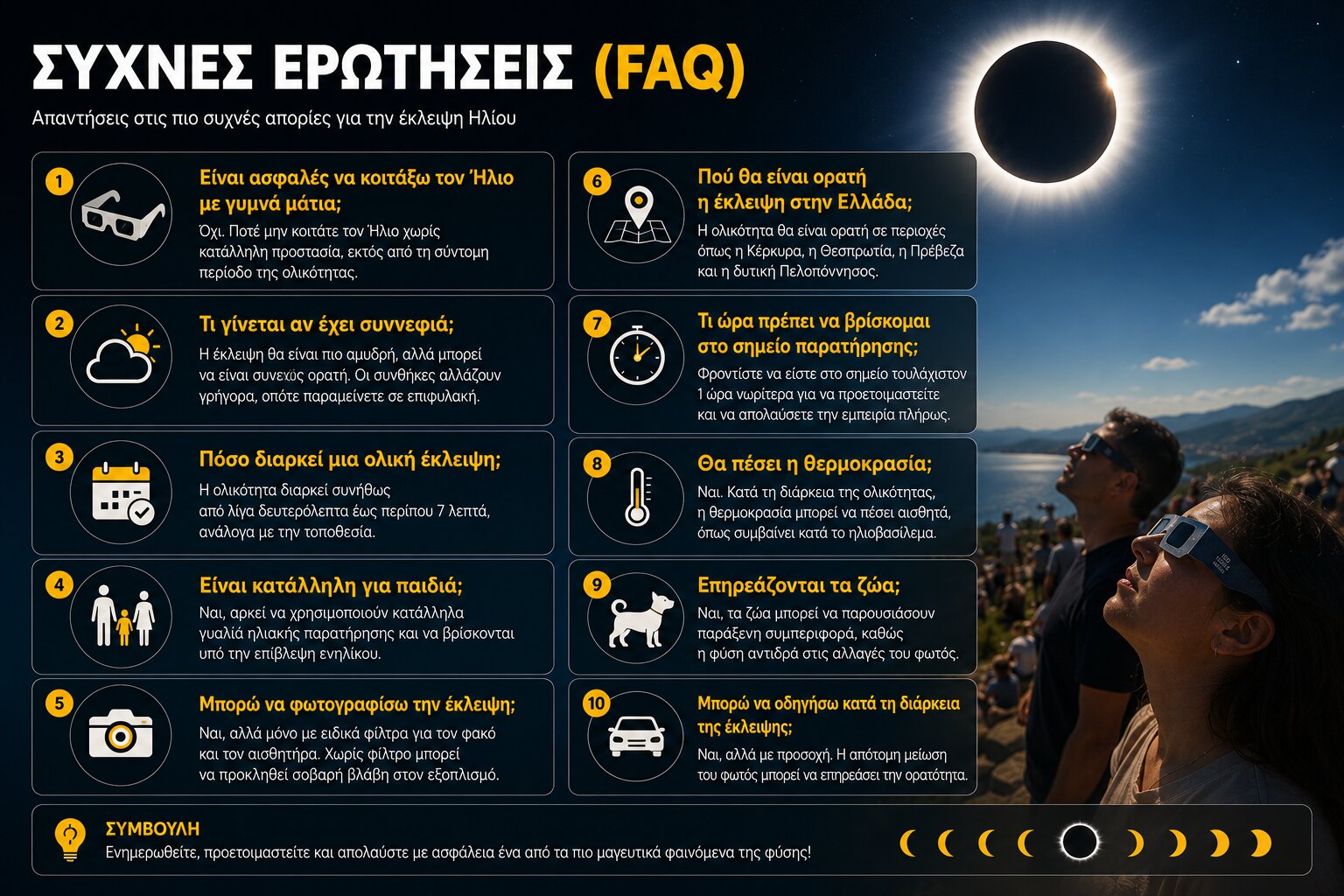
When is the 2026 Solar Eclipse?
The eclipse will occur on Wednesday, August 12, 2026.
Will it be visible from Greece?
Yes. Greece will experience a partial solar eclipse, with visibility varying depending on the region.
Will it become completely dark in Greece?
No. Total darkness will only occur inside the path of totality. Greece will experience only a reduction in daylight.
Which countries will experience the total eclipse?
The best viewing conditions will be found in Greenland, Iceland, Northern Spain, and a small part of Portugal.
Do I need special eclipse glasses?
Yes. You should only observe the Sun using certified ISO 12312-2 eclipse glasses or approved solar filters.
Can I photograph the eclipse with my smartphone?
Yes, but only with an appropriate solar filter, or during totality if you are inside the path of totality.
How often do total solar eclipses occur?
A total solar eclipse occurs somewhere on Earth approximately every 18 months, but a specific location may wait hundreds of years before seeing another one.
Why is the August 12, 2026 eclipse so important?
Because it will be one of the most significant total solar eclipses visible across Europe in decades, attracting millions of visitors and global scientific interest.