
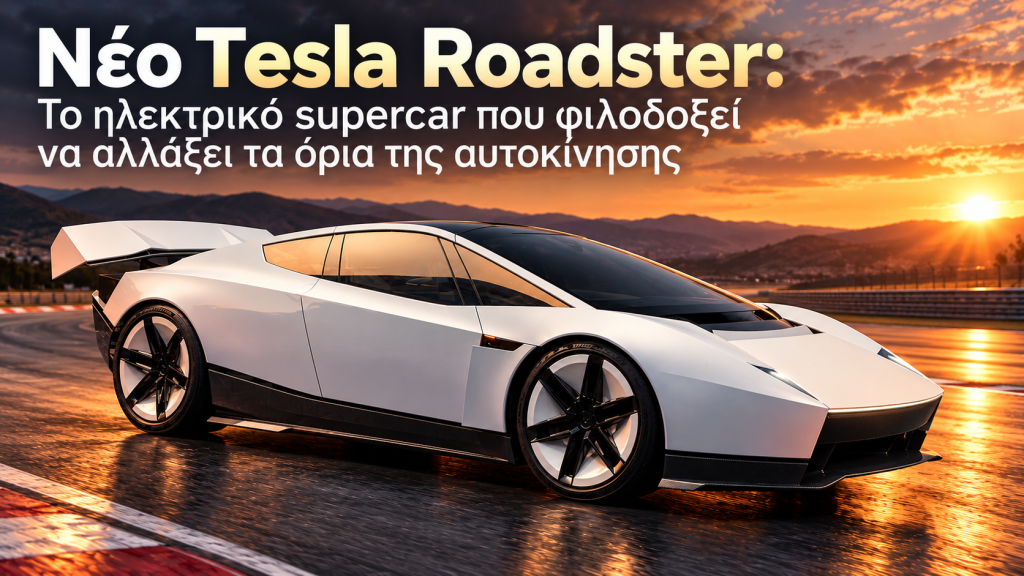
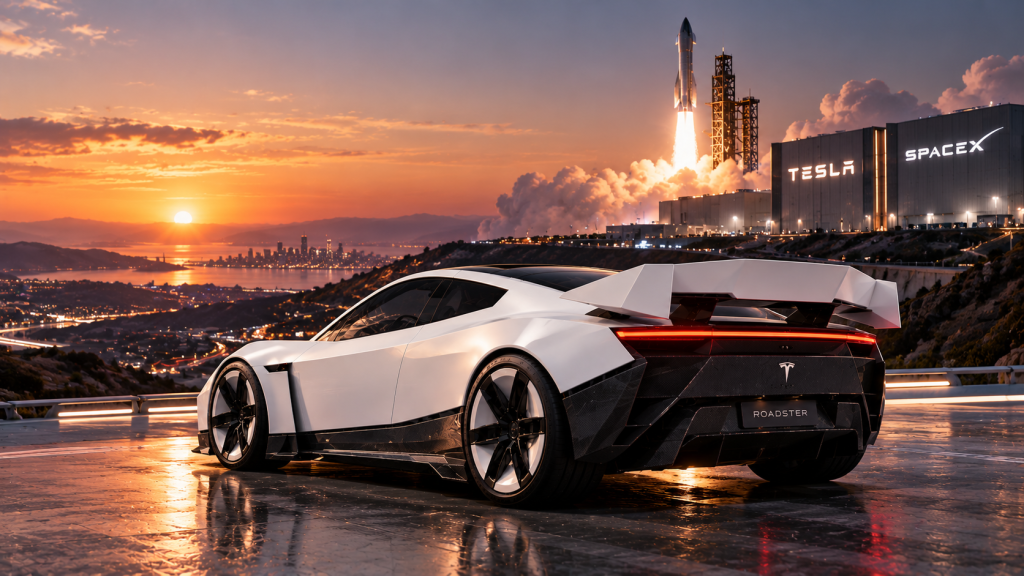
Tesla is bringing its long-awaited second-generation Roadster back into the spotlight, promising extraordinary acceleration, SpaceX-inspired technology, and a radically different approach to electric supercar engineering.
Tesla is attempting to redefine the electric supercar with its next-generation Roadster. Originally unveiled in 2017, the vehicle has become one of the most ambitious and widely discussed projects in the company’s history.
Unlike conventional electric vehicles designed primarily for everyday transportation, the Roadster focuses on extreme performance, advanced engineering, and an engaging driving experience.
The greatest interest surrounds its proposed propulsion technology, which could introduce capabilities rarely associated with road-going vehicles. However, the Roadster’s ultimate significance will depend on which technologies and performance figures make it into the production model.
A New Presentation Brings the Roadster Back Into Focus
On October 15, 2026, Tesla unveiled the latest version of the Roadster at SpaceX testing facilities in Texas. The presentation went beyond a conventional vehicle reveal, featuring demonstrations of technologies developed through the company’s collaboration with SpaceX.
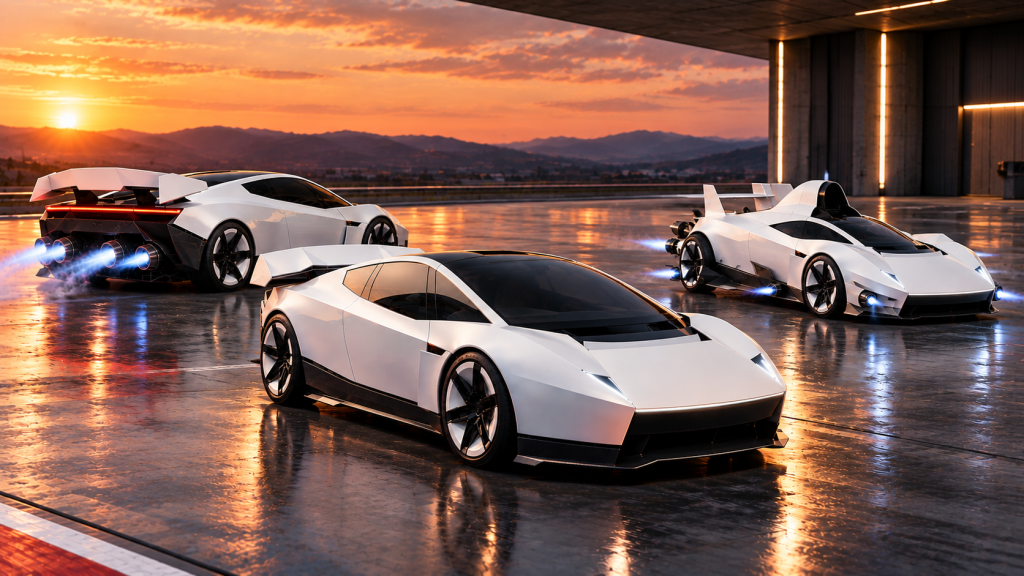
A white Roadster prototype reportedly navigated a specially designed ramp, maintained an inverted position, and performed controlled aerial maneuvers. Another demonstration showed the vehicle moving over parked cars using propulsion systems designed to generate thrust and maintain stability.
These demonstrations were intended to highlight the potential of the new technology. However, they took place under controlled conditions and do not establish that similar maneuvers will be permitted or practical on public roads.
How SpaceX-Inspired Technology Works
The next-generation Roadster incorporates two unconventional technologies that distinguish it from traditional high-performance electric vehicles.
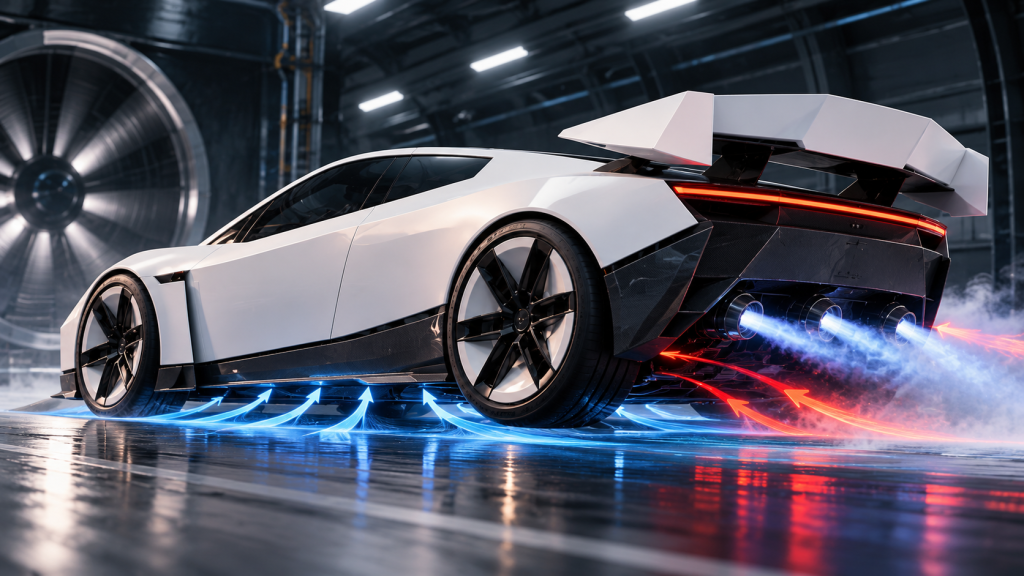
The first is an active suction system designed to generate additional downforce beneath the vehicle.
By removing air from the area between the underbody and the road surface, the system can increase tire grip, potentially improving acceleration, cornering, and braking performance even at relatively low speeds.
The second technology involves cold-gas thrusters.
Unlike conventional rocket engines, these systems use highly pressurized gas released through controlled outlets to generate thrust.
Depending on their configuration, the thrusters could supplement the electric drivetrain during acceleration or help control the vehicle’s position during brief aerial maneuvers.
Integrating such systems into a production vehicle presents significant engineering challenges, including additional weight, compressed-gas storage, reliability, safety, and regulatory compliance.
Acceleration Under One Second and a Top Speed Above 370 km/h
One of Tesla’s most ambitious claims concerns acceleration.
According to the company, the Roadster Thrust variant is designed to accelerate from 0 to 100 km/h in less than one second by combining electric propulsion with additional rear-mounted thrusters.
Such performance would go far beyond the capabilities of most conventional production cars.
Tesla has also indicated a potential top speed exceeding 370 km/h and an estimated driving range of more than 480 kilometers.
However, these figures should be understood as announced targets rather than independently verified production specifications.
Real-world performance will depend on the final vehicle configuration, operating conditions, battery technology, and the energy requirements of its advanced systems.
Three Versions of the New Tesla Roadster
Tesla has outlined three distinct versions of the next-generation Roadster, each targeting a different level of performance and technical complexity.
Roadster Performance
The Performance model represents the entry point to the new Roadster lineup.
Designed as a two-seat road-going electric supercar, it features active aerodynamic components and an advanced suction system intended to increase downforce and traction.
Its primary objective is to deliver exceptional performance while remaining suitable for conventional road use.
Roadster Thrust
The Thrust version introduces additional cold-gas propulsion technology.
Rear-mounted thrusters are designed to supplement the electric drivetrain, providing additional acceleration beyond what can be achieved through tire grip alone.
This variant focuses on extreme straight-line performance and track-oriented driving.
Roadster Rocket
The Rocket is the most unconventional version of the Roadster.
Designed as a single-seat vehicle, it incorporates thrusters positioned around the body to generate forces in multiple directions.
This configuration is intended to enable upward movement and controlled rotational maneuvers.
Tesla has indicated that the Rocket version would be available by invitation only.
Importantly, the vehicle has not received approval for operation on public roads, and its availability may be restricted in certain markets.
Can the New Tesla Roadster Really Fly?
The answer requires an important distinction.
The prototype demonstration suggests that the vehicle can perform brief aerial movements using its propulsion systems.
However, this does not make it a conventional flying car capable of sustained air travel.
Tesla has not established certified capabilities for continuous flight, practical airborne transportation, or operation within normal aviation environments.
Furthermore, road vehicles and aircraft operate under fundamentally different regulatory frameworks.
Describing the Roadster as a flying car may capture the excitement surrounding the project, but it should not suggest that future owners will be able to take off freely from public roads.
For now, the technology is better understood as an experimental system capable of supporting short, controlled maneuvers.
Lightweight Construction and Advanced Aerodynamics
The new Roadster combines a low-slung body with aggressive proportions and aerodynamic features designed to maximize efficiency and stability.
Tesla has emphasized the use of lightweight materials, including carbon fiber, titanium, and magnesium, to reduce overall vehicle mass.
Weight reduction is particularly important for an electric supercar, where battery systems and additional performance technologies can increase total vehicle weight.
Inside, the Roadster follows Tesla’s minimalist design philosophy.
The cabin emphasizes the driving position, supportive seats, and a relatively uncluttered layout.
Interestingly, the Roadster places greater emphasis on direct driver involvement at a time when Tesla is investing heavily in autonomous driving technology.
Rather than removing the driver from the experience, the Roadster aims to make driving itself the main attraction.
How Much Will the New Tesla Roadster Cost?
Tesla has not confirmed the final retail price of the next-generation Roadster.
However, the company has provided reservation arrangements in certain markets.
In Greece, Tesla’s reservation process has listed an initial payment of €5,000 followed by an additional €45,000 within ten days, bringing the total reservation amount to €50,000.
This amount is a reservation payment, not the vehicle’s final purchase price.
A reservation also does not constitute a completed vehicle order or guarantee a specific delivery date.
Final pricing, taxes, equipment specifications, and availability in European markets remain to be confirmed.
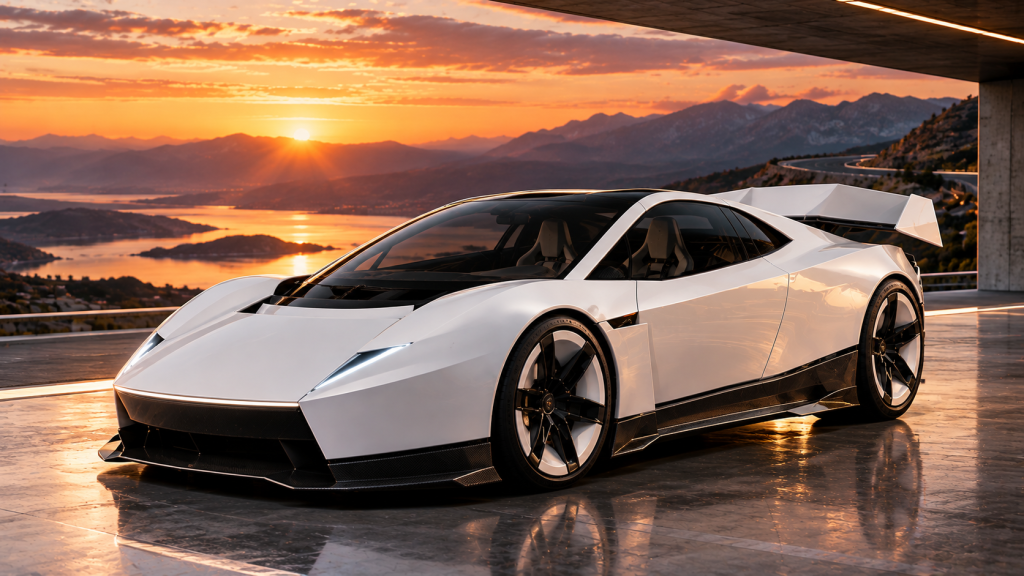
Why Has the Tesla Roadster Been Delayed for So Long?
The Roadster holds a special place in Tesla’s history.
The original model, launched in 2008, was the company’s first production vehicle and helped demonstrate that electric cars could deliver genuine sports-car performance.
Although its production volume was relatively limited, it played an important role in changing public perceptions of electric mobility.
Tesla unveiled the second-generation Roadster prototype in 2017, initially targeting production in 2020.
That deadline was missed, followed by several additional delays.
During the intervening years, Tesla concentrated significant resources on other vehicles, autonomous driving systems, artificial intelligence, and robotics.
The latest Roadster presentation suggests that development remains active, but it does not eliminate the uncertainty surrounding production readiness.
When Will the New Tesla Roadster Be Released?
Tesla is targeting 2028 for the beginning of Roadster production.
However, this remains a company target rather than a guaranteed commercial launch date.
Before production can begin, the vehicle must complete its development program, validate its technical specifications, and satisfy the relevant safety and regulatory requirements.
The Rocket version faces additional challenges because its unconventional propulsion capabilities extend beyond the usual expectations for road vehicles.
There is also no confirmed delivery schedule for the Greek or wider European markets.
Why the Roadster Matters for Tesla’s Future
The Roadster is unlikely to become a high-volume product.
Its importance lies primarily in its technological ambitions and its role as a showcase for Tesla’s engineering capabilities.
By combining electric propulsion, active aerodynamics, and SpaceX-inspired systems, Tesla is exploring technologies that go far beyond the conventional electric supercar formula.
The project also illustrates the difference between an impressive prototype demonstration and a commercially viable production vehicle.
Delivering extraordinary performance in controlled conditions is one challenge. Producing a reliable, safe, certifiable vehicle that customers can actually purchase is another.
A Bold Vision With a Difficult Road Ahead
The next-generation Tesla Roadster is among the most ambitious electric performance vehicles ever proposed.
Its combination of extreme acceleration, advanced aerodynamics, lightweight construction, and unconventional propulsion systems could introduce new possibilities for high-performance electric vehicles.
Yet significant questions remain about its final specifications, regulatory approval, production timeline, and commercial availability.
If Tesla successfully translates its technological ambitions into a reliable production vehicle, the Roadster could become an important milestone in electric supercar development.
Until then, it remains a remarkable engineering project whose ultimate impact will depend on what Tesla can deliver beyond the prototype stage.