
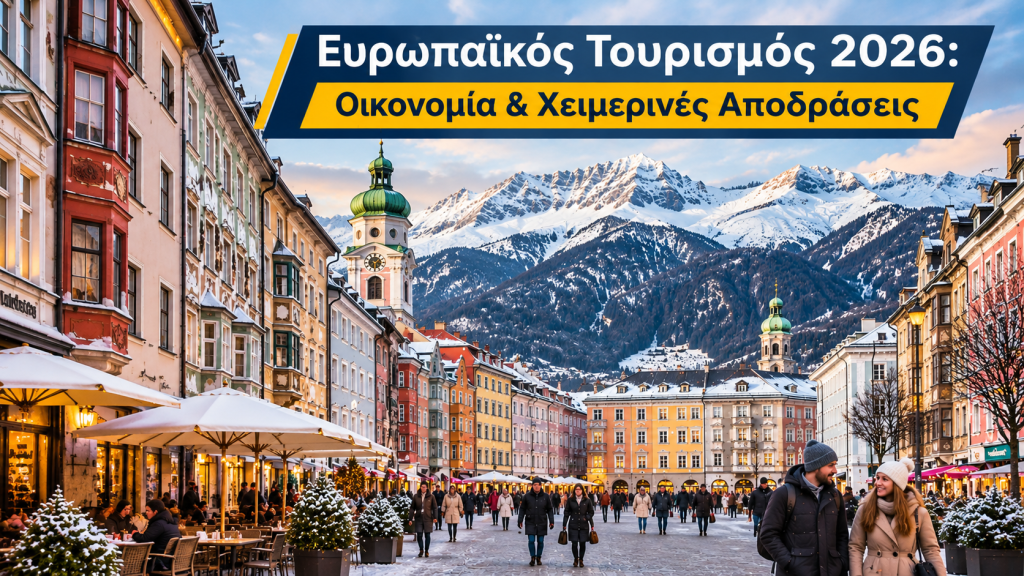
The European Commission’s latest tourism data reveals the sector’s wider economic contribution and introduces a new indicator to measure winter tourism across European regions.
Tourism is far more than hotels, restaurants, and holiday bookings. It is a powerful economic engine supporting businesses, employment, local communities, and regional development across Europe.
On November 18, 2026, the European Commission announced the latest update to the EU Tourism Dashboard, introducing an improved methodology for measuring tourism’s economic impact and a new indicator dedicated to winter tourism.
The findings reveal that tourism accounts for an estimated 10.1% of the European Union’s gross value added (GVA) when its direct, indirect, and induced economic effects are considered.
This is significantly higher than the sector’s direct contribution of 4.1%, demonstrating how tourism-related spending extends throughout the wider economy.
The updated Dashboard also provides new opportunities to understand winter travel patterns, regional tourism performance, and the importance of developing destinations beyond the traditional summer season.
Tourism Contributes 10.1% to the EU Economy
One of the most significant developments in the 2026 EU Tourism Dashboard is the introduction of a more comprehensive method for calculating tourism’s economic contribution.
Developed by the European Commission’s Joint Research Centre (JRC), the methodology measures three interconnected economic effects.
Direct effects include economic activity generated by businesses serving visitors, such as accommodation providers, restaurants, and transport services.
Indirect effects arise when tourism businesses purchase goods and services from suppliers. Hotels, for example, require food, equipment, electricity, maintenance, and other services.
Induced effects occur when employees and other people receiving income generated through tourism spend their earnings throughout the wider economy.
By combining these effects, the JRC estimates that tourism generates 10.1% of the EU’s gross value added.
Its direct contribution alone is estimated at 4.1%.
This means the sector’s total economic impact is approximately two and a half times its direct contribution.
Importantly, gross value added is an economic measure related to production and should not be confused with tourism revenue or visitor expenditure.
Why Tourism’s Economic Impact Is Greater Than Previously Captured
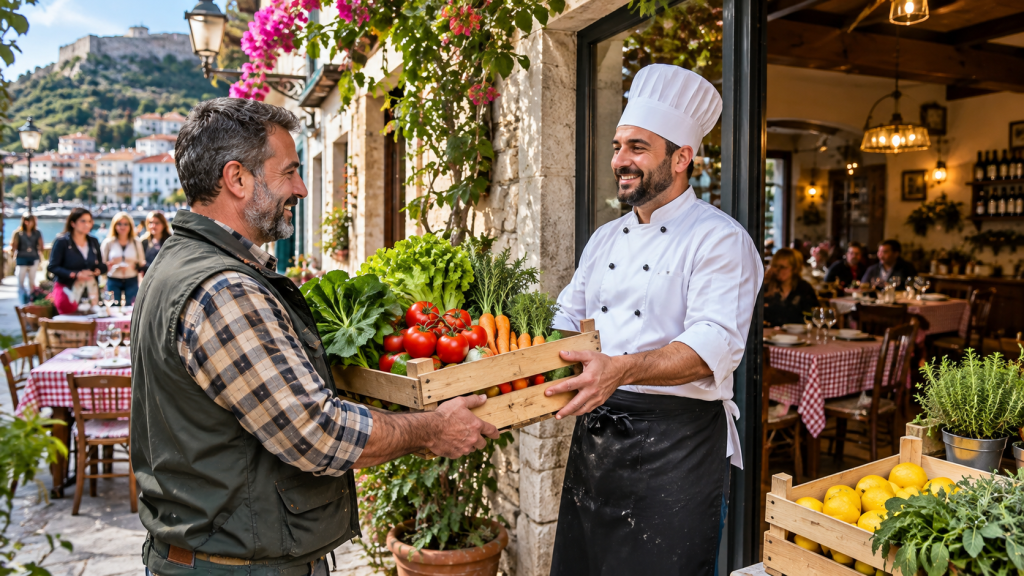
Tourism connects numerous industries that are not always classified as part of the tourism sector.
Consider a traveler spending several nights in a European mountain destination.
The visitor pays for accommodation, eats at local restaurants, purchases regional products, and uses transportation services.
The accommodation provider then purchases supplies, hires maintenance companies, and pays employees.
Restaurants buy ingredients from producers and distributors, while workers spend their income in nearby communities.
These interconnected transactions illustrate why tourism’s economic influence extends beyond businesses directly serving visitors.
The new JRC methodology uses official statistical sources, including Tourism Satellite Accounts and Eurostat input-output tables, to estimate these wider effects.
Applying a consistent approach across countries also improves the ability to compare tourism’s economic importance throughout Europe.
Which European Countries Depend Most on Tourism?
Tourism’s contribution varies considerably between EU member states.
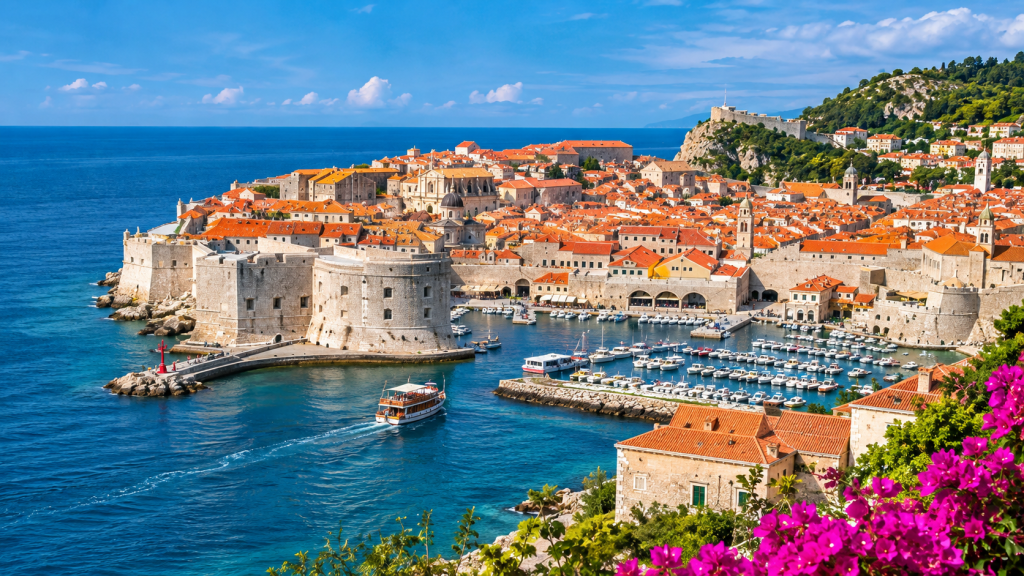
According to the Joint Research Centre’s findings, tourism’s total economic impact exceeds 20% of gross value added in Portugal and Croatia.
In Italy and Spain, the estimated contribution is approximately 14%.
By comparison, the total contribution is slightly below 5% in Belgium and Denmark.
These differences demonstrate how tourism plays a particularly significant role in some national economies.
They also highlight the importance of developing policies that reflect each destination’s characteristics rather than applying identical solutions across Europe.
For tourism-dependent regions, sustainable growth, infrastructure, workforce availability, and seasonal demand can have substantial economic implications.
A New Indicator Brings Winter Tourism Into Focus
The second major development in the EU Tourism Dashboard 2026 is the introduction of a regional indicator measuring winter tourism.
Using monthly Eurostat accommodation data, the indicator calculates the proportion of annual tourist accommodation nights that occur during the winter season.
This allows tourism authorities, researchers, and destination managers to examine how strongly tourism activity is concentrated in winter across different European regions.
Austria and Finland are among the countries identified by the European Commission as having strong winter seasonality.
The new indicator does not, by itself, establish that winter tourism is increasing across Europe.
Instead, it provides a more detailed way to measure winter’s relative importance within each destination’s annual tourism activity.
That distinction is important when interpreting the data and assessing future opportunities.
Why Winter Tourism Matters for European Destinations
Many European destinations experience significant differences in visitor demand throughout the year.
Coastal regions may attract most visitors during summer, while mountain destinations can depend heavily on winter activities.
Other areas have opportunities to attract travelers during multiple seasons through cultural tourism, gastronomy, nature experiences, and short breaks.
Understanding seasonal patterns can help destinations make better decisions about infrastructure, services, and tourism development.
For example, regional authorities may use accommodation data to assess when tourism demand is concentrated and whether efforts to diversify seasonal activity are producing results.
Businesses can also benefit from a clearer understanding of local tourism patterns when planning staffing, operations, and investment.
However, winter tourism development must consider environmental conditions, accessibility, local infrastructure, and the needs of residents.
Increasing visitor numbers should not be the only measure of success.

What the New Data Means for Greece
Greece is internationally recognized for its islands, beaches, and Mediterranean summer holidays.
However, the country also offers substantial opportunities for tourism throughout the year.
Mountainous regions, traditional villages, historical sites, and regional gastronomy create possibilities for attracting visitors outside the peak summer season.
Destinations such as Mountainous Arcadia, Pelion, Epirus, and the mountain regions of Northern Greece offer experiences that differ considerably from conventional seaside holidays.
The new EU winter tourism indicator could help researchers and destination managers examine seasonal accommodation patterns across Greek regions.
Such information may support better-informed decisions about destination promotion, infrastructure, and year-round tourism development.
Nevertheless, the European Commission’s November 18 announcement does not provide a specific new winter tourism growth rate for Greece.
Any assessment of individual Greek regions requires examination of the relevant regional data rather than assumptions based on the overall EU figures.
Tourism, Local Businesses, and Regional Development
The broader economic contribution of tourism is particularly relevant for smaller communities.
Tourism demand can support accommodation providers, restaurants, local producers, cultural attractions, and transport-related businesses.
When visitors explore destinations beyond major tourism centers, their spending may reach businesses that depend on regional and seasonal demand.
This creates opportunities for communities seeking to diversify their economic activity.
However, the benefits depend on how tourism is managed and how much visitor spending remains within local economies.
Strong local supply chains, responsible destination management, and investment in infrastructure can help communities benefit more effectively.
The new economic impact methodology provides policymakers with a stronger statistical foundation for examining these relationships.

The Role of Transportation and Car Rental in Regional Tourism
Transportation is an important part of the visitor experience, particularly in destinations where attractions are spread across several towns or rural areas.
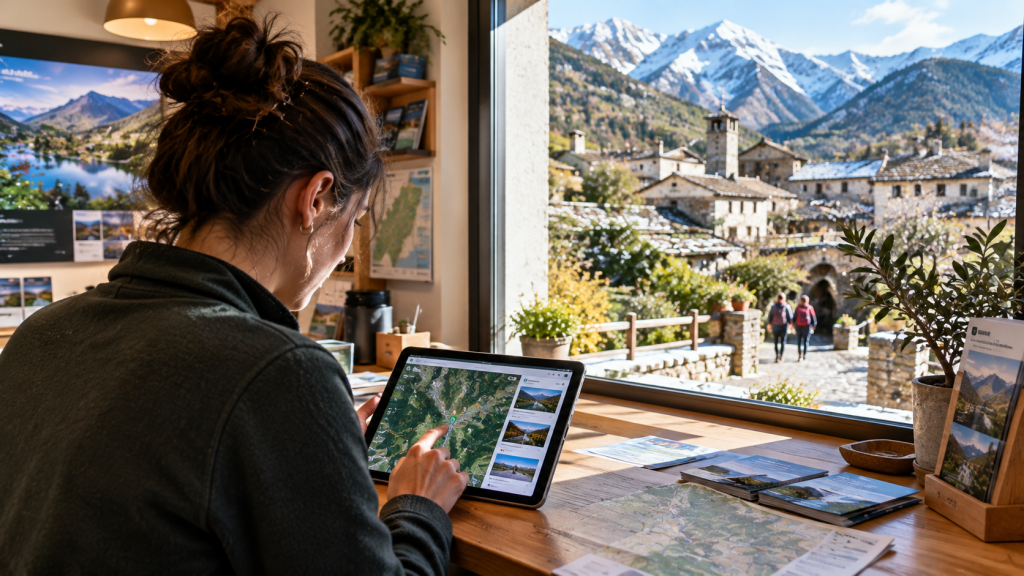
For travelers exploring mountain villages, coastal routes, or less-connected regions, access to suitable transportation can influence itinerary choices.
Car rental may provide flexibility for visitors who arrive by air or rail and want to explore surrounding destinations independently.
It can also help travelers reach smaller communities and attractions outside major transport corridors.
For car rental businesses, seasonal tourism patterns may be useful when planning fleet availability, staffing, and operational capacity.
These are potential practical applications of regional tourism data, rather than conclusions directly established by the new EU Tourism Dashboard.
Successful regional tourism development requires coordinated planning that considers public transport, road infrastructure, environmental impacts, and accessibility.
The EU Tourism Dashboard: 36 Indicators for Better Decisions
The EU Tourism Dashboard is an interactive platform developed and maintained by the European Commission.
Its 2026 update includes 36 indicators and descriptors covering tourism destinations across Europe.
These are organized around three main policy dimensions:
- Green transition and environmental sustainability.
- Digital transition and technological development.
- Socio-economic resilience and tourism performance.
The platform also provides information on characteristics such as tourism intensity, tourism density, bathing water quality, and internet connectivity.
Data is available at national or regional level, depending on the indicator.
Since 2025, selected indicators have also been available at local level, offering a more detailed perspective on tourism activity.
The available time series begin in 2019 and, for most indicators, currently extend to 2025.
This makes the Dashboard a resource for examining historical developments and comparing destinations, rather than a source of finalized tourism results for the full year 2026.

A New European Strategy for Sustainable Tourism
The updated Dashboard also connects with the European Commission’s broader tourism policy.
On November 4, 2026, the Commission presented its EU Sustainable Tourism Strategy, aimed at strengthening competitiveness, sustainability, and resilience.
The strategy recognizes tourism’s economic importance while addressing challenges including climate change, workforce shortages, geopolitical uncertainty, and changing traveler expectations.
It also emphasizes supporting smaller businesses, improving digital capabilities, managing visitor flows, and encouraging tourism throughout the year.
According to the Commission, the European tourism ecosystem supports more than 20 million jobs and includes approximately five million businesses, 99% of which are small and medium-sized enterprises.
Better data is therefore essential for decisions that affect businesses, destinations, employees, and local communities.
The Future of European Tourism: Better Data, Stronger Destinations
The EU Tourism Dashboard 2026 delivers two important developments.
First, it provides a more comprehensive picture of tourism’s economic contribution, estimating its total impact at 10.1% of EU gross value added.
Second, it introduces a regional winter tourism indicator that can help destinations understand seasonal patterns more accurately.
Together, these improvements demonstrate the growing importance of reliable information in tourism planning.
For European destinations, the challenge is not simply attracting more visitors.
It is creating sustainable economic value, supporting local businesses, improving the visitor experience, and developing tourism opportunities throughout the year.
The future of European tourism will depend not only on how many people travel, but also on how effectively destinations turn tourism activity into lasting benefits for their communities.