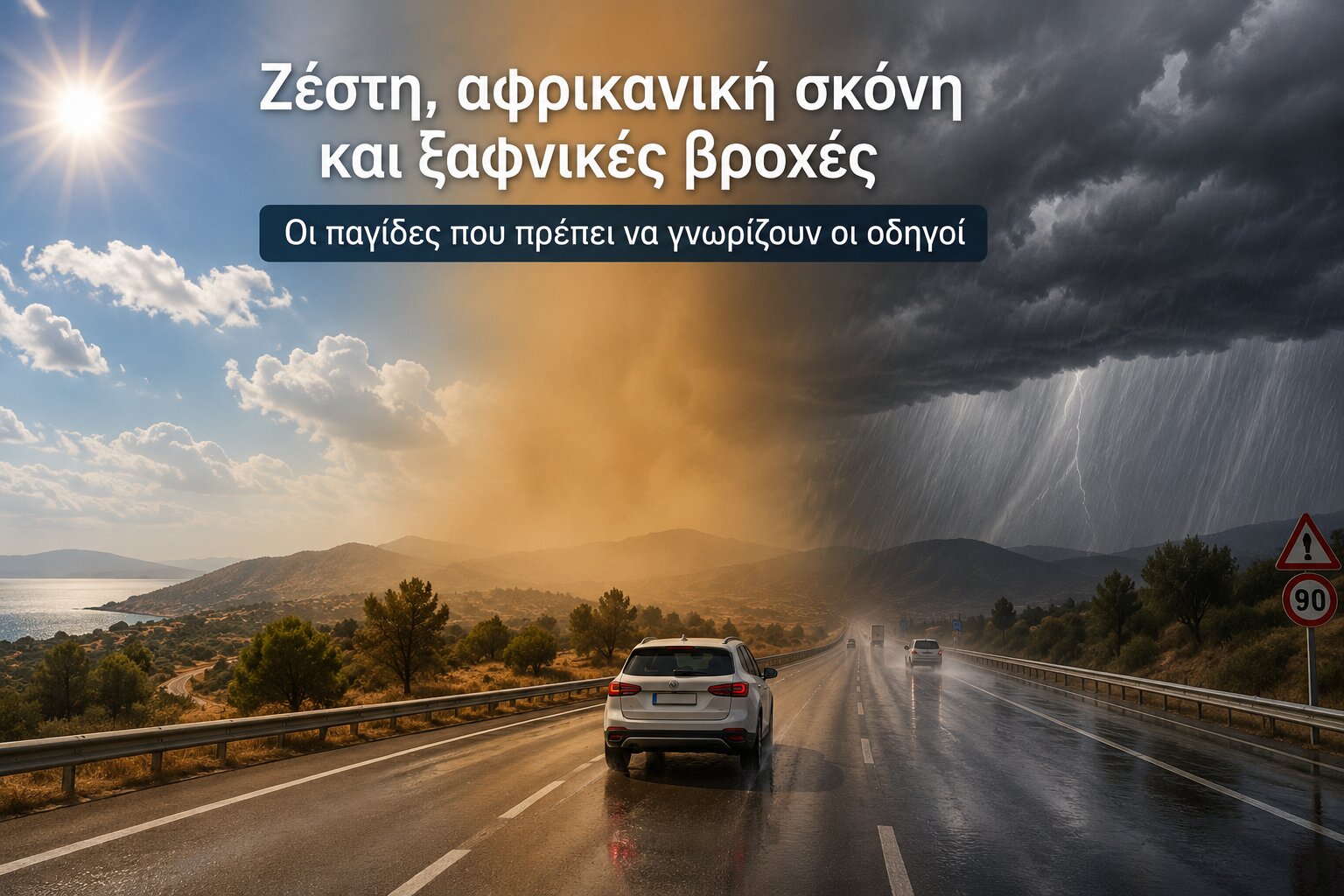
Summer driving in Greece is not just about high temperatures. Within a single day, drivers may experience intense heat, Saharan dust and sudden local showers or thunderstorms. This combination can quickly change road conditions and requires extra caution, especially for those travelling long distances or exploring the country during their holidays.
According to the Hellenic National Meteorological Service, high temperatures are expected across most parts of Greece, while local showers and isolated thunderstorms may develop over northern and mountainous regions. At the same time, Saharan dust is affecting air quality in several areas of the country, reducing visibility and creating additional challenges for motorists.
The real danger is not each weather event on its own, but how quickly conditions can change during the same journey.
Extreme Heat Affects Both Drivers and Vehicles
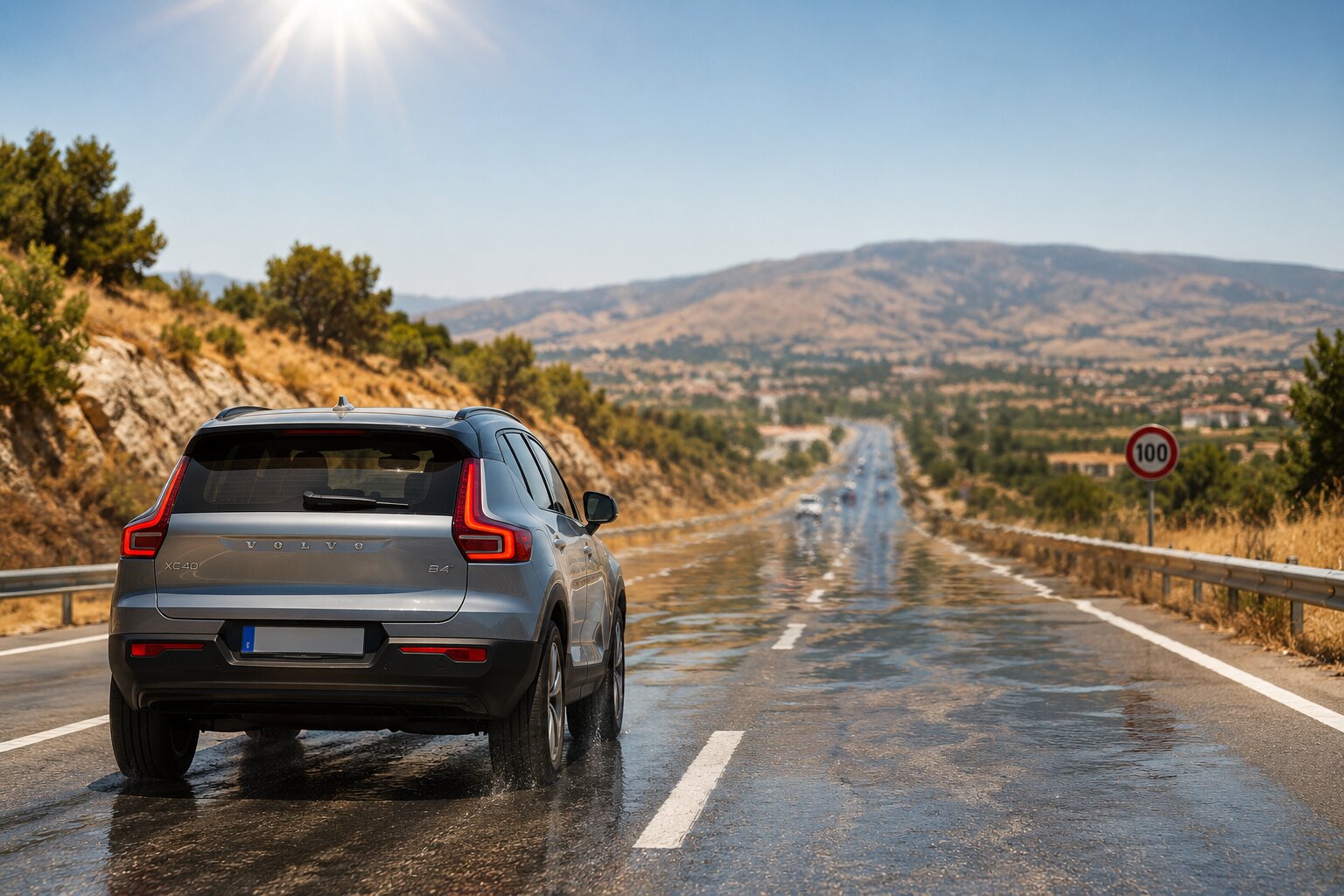
High temperatures place extra stress on both drivers and their vehicles. Fatigue, dehydration and reduced concentration can develop much faster during long journeys under the summer sun.
Cars are also more vulnerable in extreme heat. Before setting off, it is worth checking tyre pressure, coolant levels and the overall condition of the cooling system. A vehicle that performs normally during cooler months may struggle when temperatures climb above 35°C.
If possible, start your journey early in the morning or later in the afternoon, avoid the hottest hours of the day and take regular breaks to stay hydrated.
Saharan Dust Can Reduce Visibility
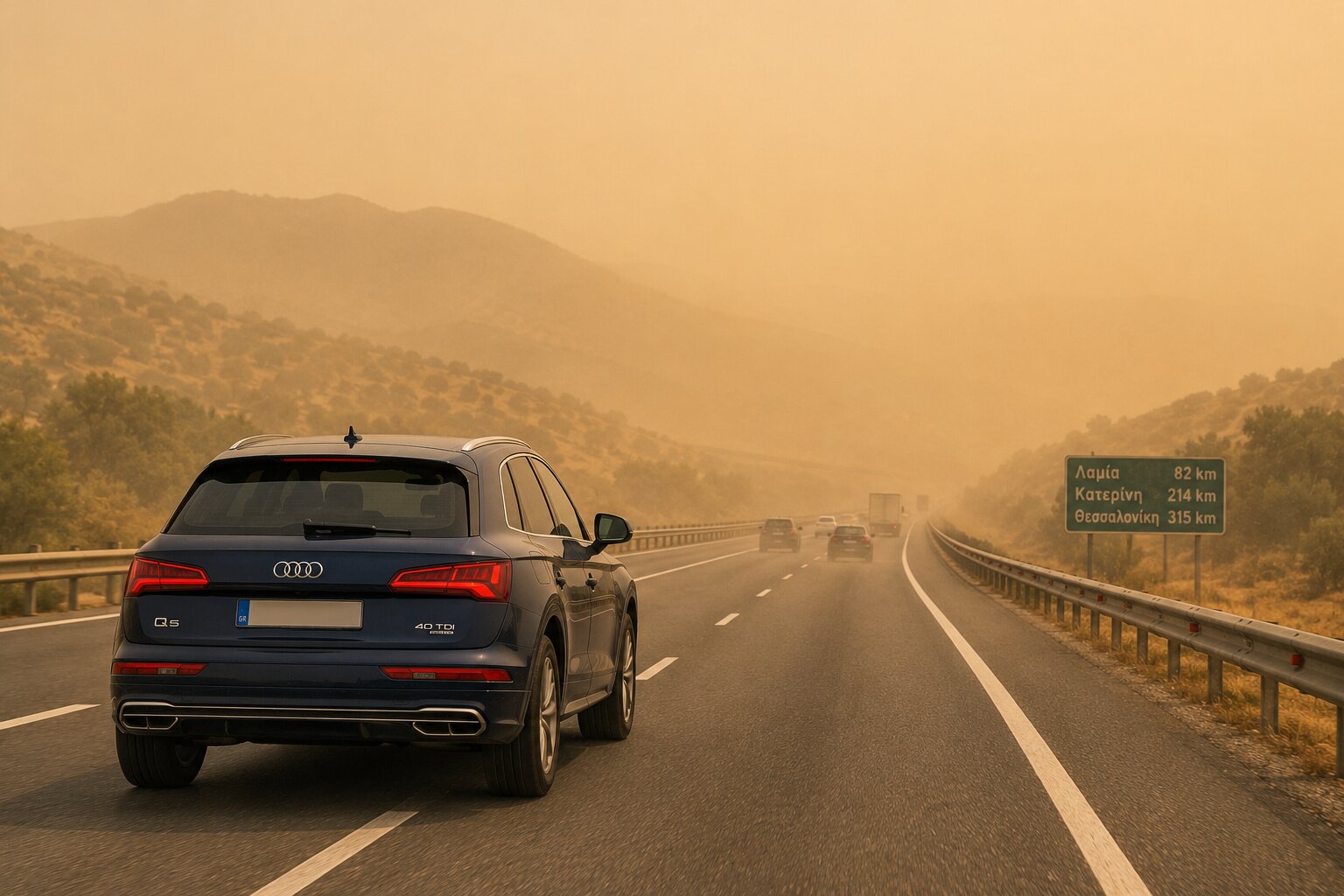
Saharan dust is more than just an air quality issue. It can significantly reduce visibility, particularly on open roads and motorways, while leaving a thin layer of dust on the windscreen and mirrors.
If rain follows, the dust mixes with water to create muddy residue on the glass, making it much harder to see clearly.
For this reason, drivers should ensure that windscreen washer fluid is full and that the wiper blades are in good condition. Worn wipers may struggle to clear the muddy film when visibility is already limited.
The First Minutes of Rain Are Often the Most Dangerous
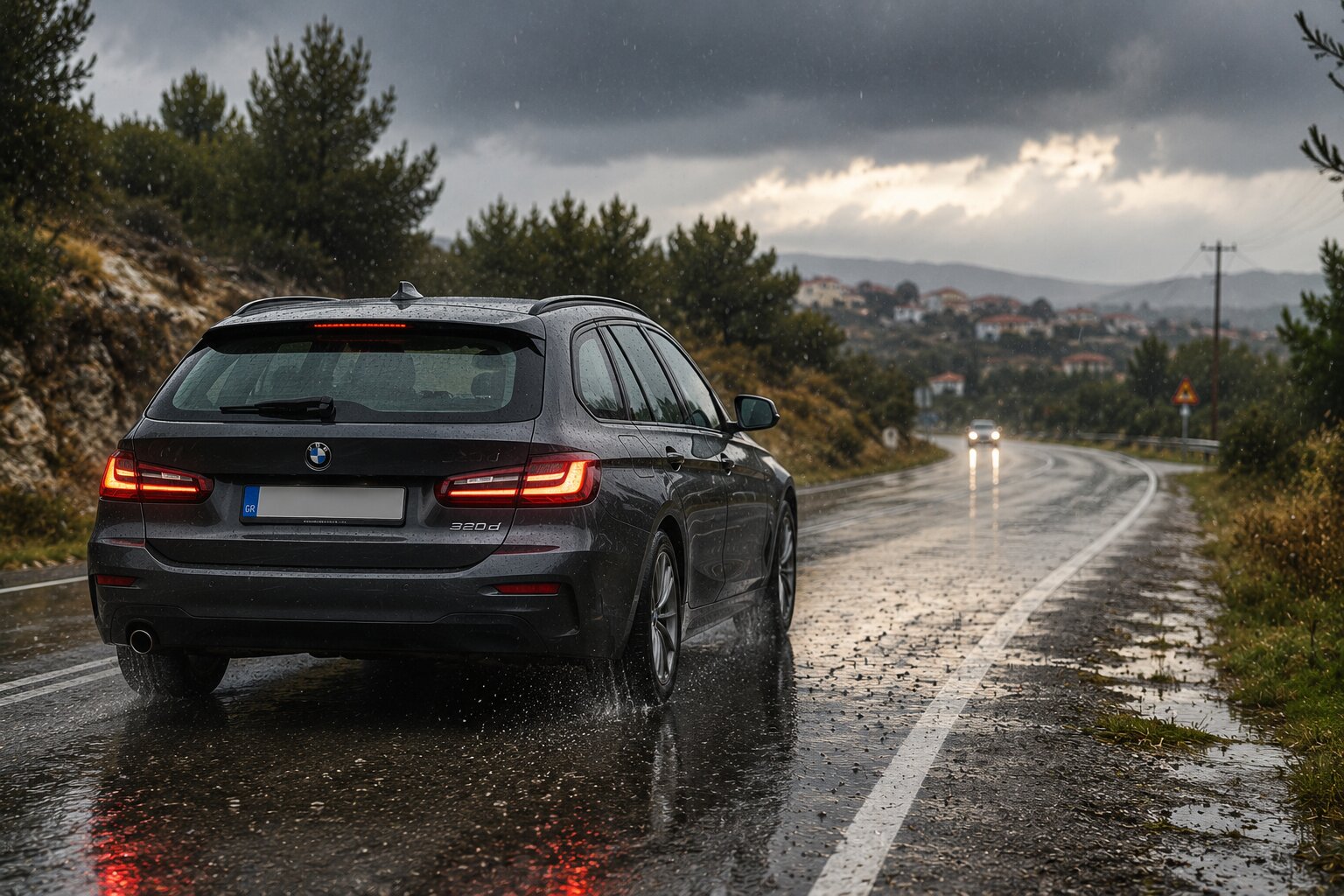
Many people believe that heavy rain creates the greatest risk. In reality, the first few minutes after rainfall begins can be even more hazardous.
Dust, oil and other residues that have accumulated on the road surface mix with water, creating a slippery layer that reduces tyre grip. Braking distances increase and the risk of skidding becomes much higher, particularly when cornering or braking suddenly.
The safest approach is to reduce speed gradually, increase the distance from the vehicle ahead and avoid abrupt steering or braking.
A Few Simple Checks Before You Leave
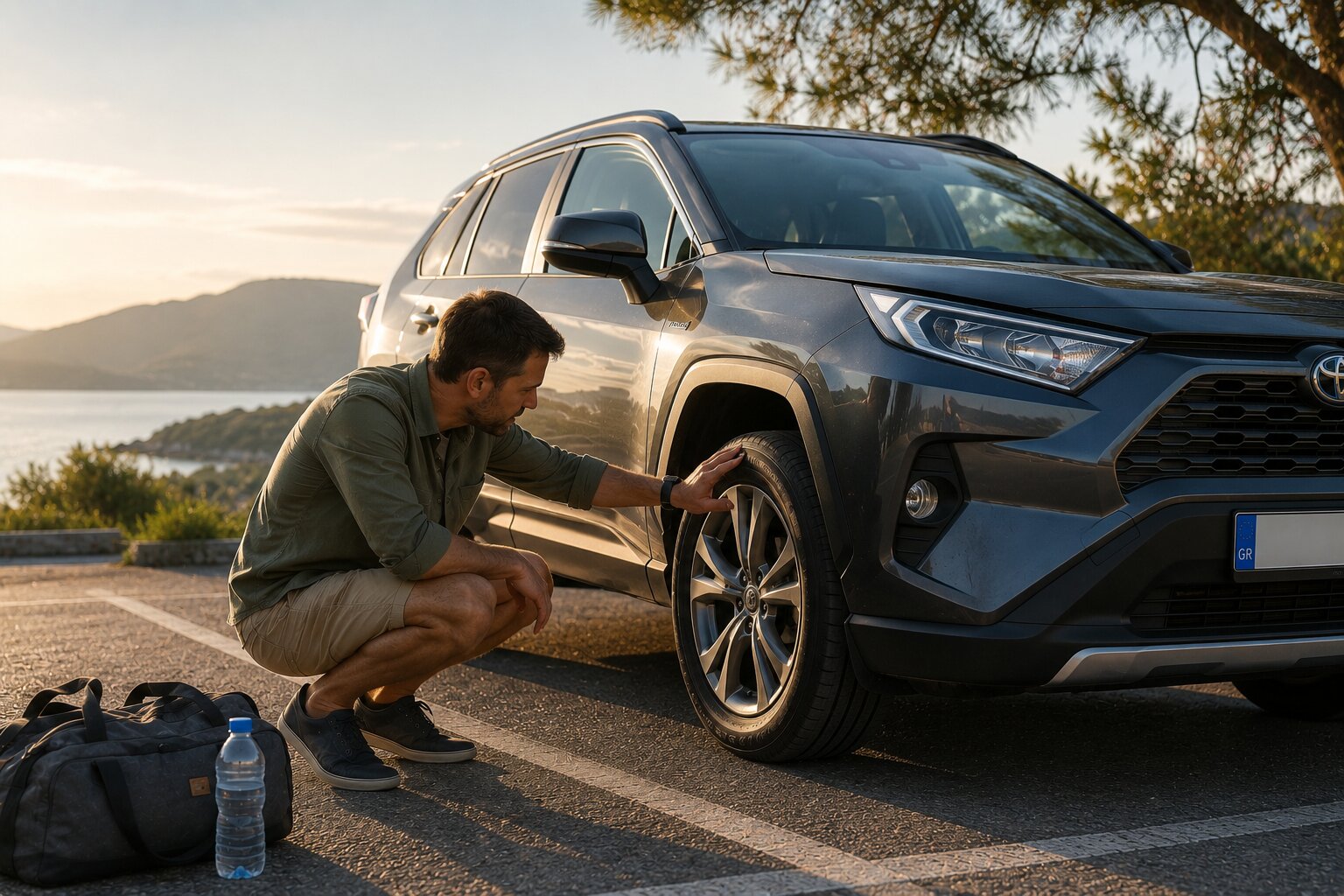
Before starting a summer road trip, take a few minutes to inspect your vehicle.
Check tyre pressure, coolant and other essential fluids, make sure the air conditioning and windscreen wipers are working properly, and carry enough drinking water for everyone travelling in the vehicle, including children and pets.
It is equally important to review the latest weather forecast for your planned route. Local thunderstorms can affect one area while conditions remain completely different just a few kilometres away.
Preparation Makes the Difference
Heat, Saharan dust and sudden summer showers are all common features of the Greek summer. They do not mean you should cancel your trip, but they are a reminder that driving conditions can change rapidly.
Drivers who adjust their speed, leave greater safety distances and prepare both themselves and their vehicles before travelling are far better equipped to deal with changing weather conditions.
Sometimes, the safest journey begins long before you turn the key.