
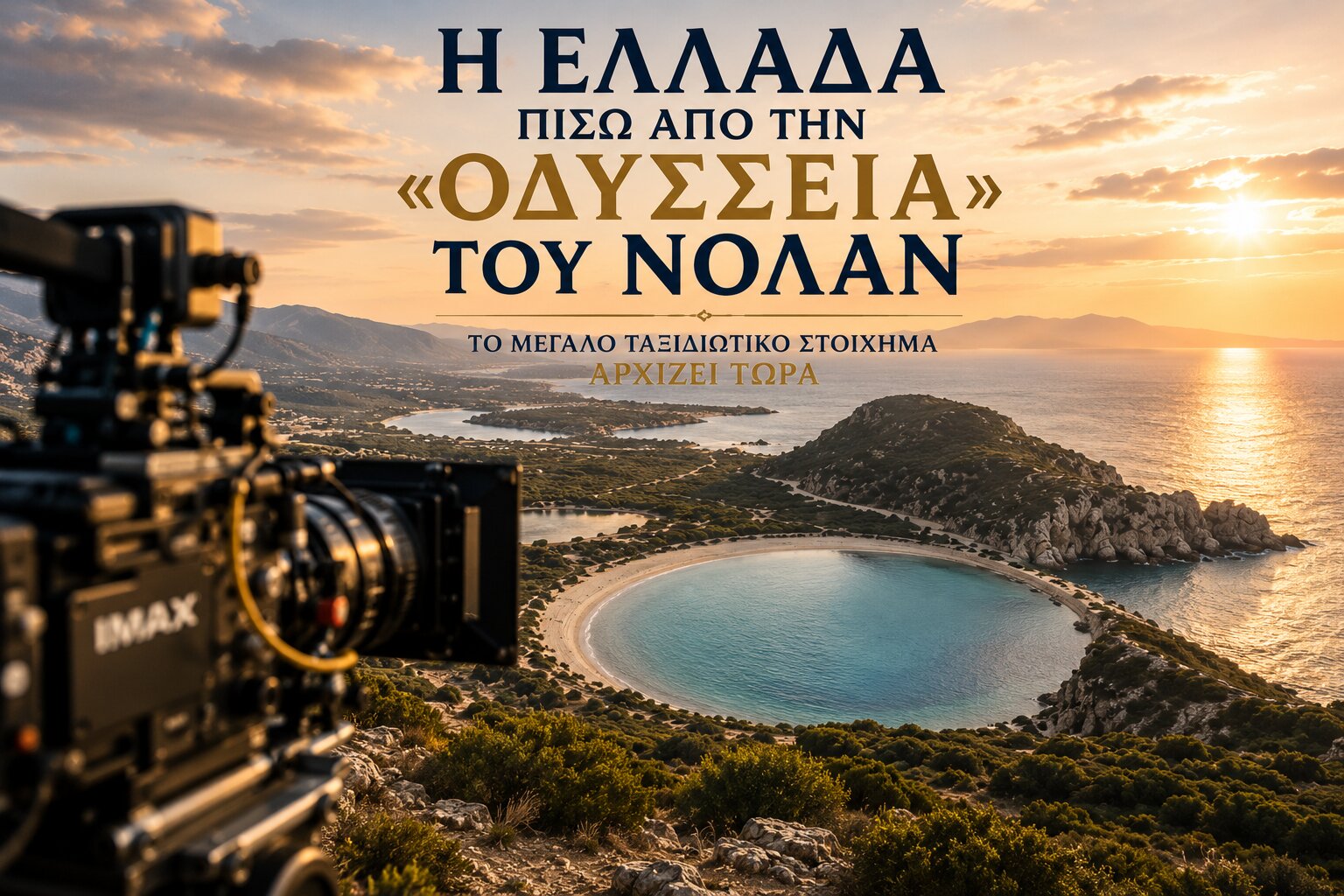
Greece has appeared in many major international productions over the past decade. Yet few projects begin with a story so deeply rooted in the country’s own cultural heritage.
Christopher Nolan’s The Odyssey is more than another blockbuster filmed against spectacular Greek landscapes. It marks the return of one of the world’s greatest stories to the land where it was born.
Part of the production was filmed in the Peloponnese, including Nestor’s Cave, Voidokilia Beach, Almyrolaka Beach, Methoni Castle and Acrocorinth.
The real question, however, is not simply whether millions of moviegoers will see Greece on the big screen.
The real challenge is whether those images will inspire people to experience the country for themselves—and whether that journey will leave them wanting to return.
When a Film Becomes a Journey
Film tourism often begins with a single scene.
A viewer watches a breathtaking coastline, an ancient fortress or a dramatic landscape and begins to imagine standing there one day. Curiosity turns into research, and research can eventually become a travel booking.
According to UN Tourism, film and television productions can significantly influence how international audiences perceive destinations, strengthening emotional connections with a country’s landscapes, culture and identity.
The Odyssey has an additional advantage.
It doesn’t simply showcase beautiful Greek scenery. It places those landscapes inside one of humanity’s most influential stories.
With Nolan’s adaptation, a new global audience returns to Homer—and, in many ways, rediscovers Greece.
The Return of a Timeless Story

Released on 17 July 2026, The Odyssey was filmed entirely using IMAX film cameras, according to Universal Pictures.
Homer’s epic has shaped Western ideas of adventure, perseverance, loss and homecoming for nearly three thousand years.
Odysseus is not travelling to discover new destinations. He is trying to return home after years of hardship.
His journey should not be confused with modern tourism.
Yet the idea of nostos—the longing to return—offers a powerful metaphor for contemporary travel.
The most successful destinations are not necessarily those that attract the highest number of visitors.
They are the places people genuinely want to visit again.
Why Greece Matters to Christopher Nolan’s Vision
Christopher Nolan is known for favouring real locations, practical filmmaking and large-scale cinematic landscapes over heavily digital environments.
That makes Greece more than a symbolic choice.
The country’s natural scenery becomes part of the film’s visual identity.
The stone walls of Methoni Castle, the unique geometry of Voidokilia Beach, the commanding position of Acrocorinth and the rugged coastline of Messenia provide an authenticity that physical locations naturally offer.
For audiences, these are not anonymous movie sets.
They are real places that can actually be visited.
This also introduces international audiences to a side of Greece that extends far beyond the familiar image of islands and summer beaches.
Where Was The Odyssey Filmed in Greece?
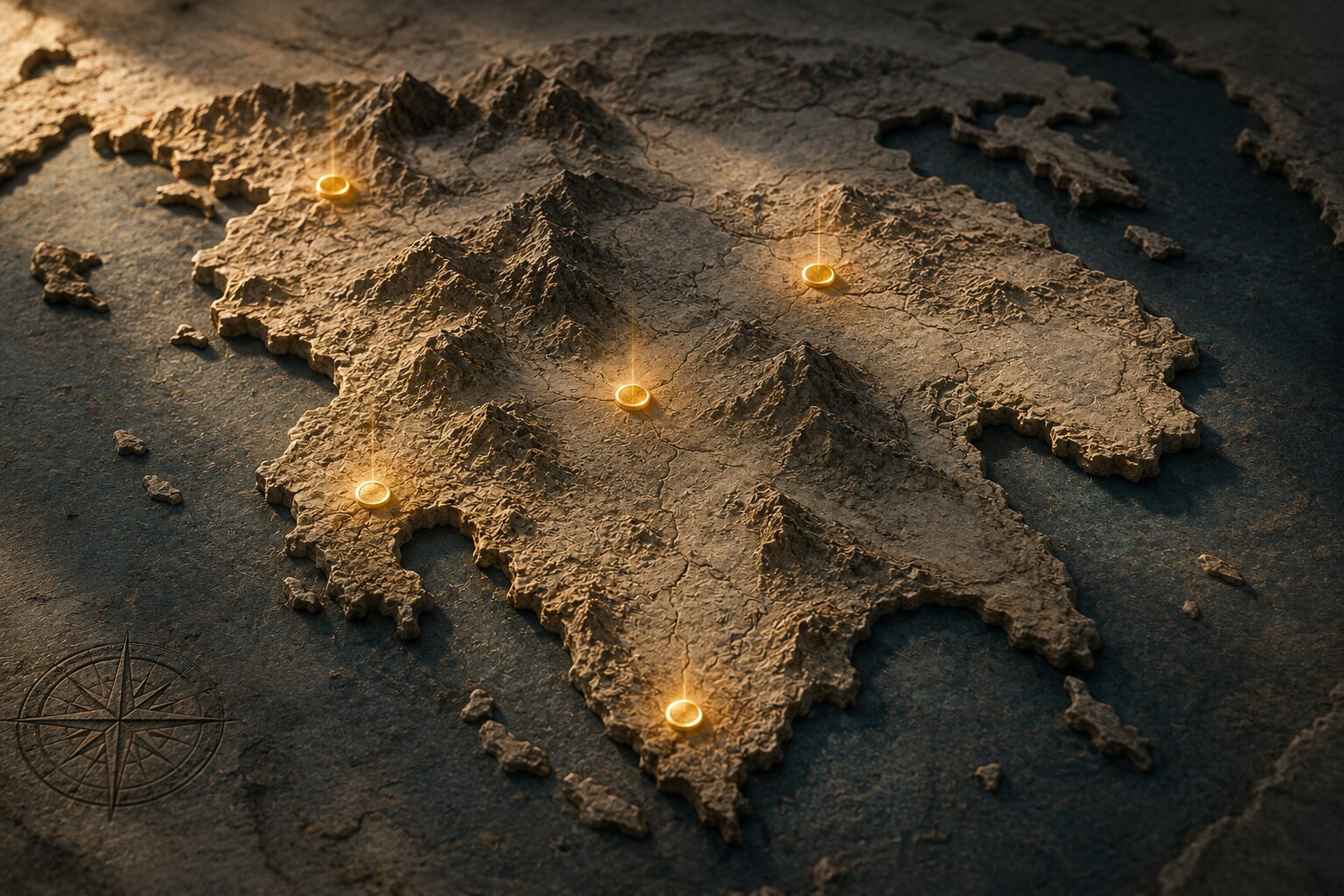
According to the Hellenic Film Commission, filming took place at:
- Nestor’s Cave
- Voidokilia Beach
- Almyrolaka Beach
- Methoni Castle
- Acrocorinth
While the production has not officially identified which scenes correspond to each location, the sites themselves have already become points of interest for travellers.
Nestor’s Cave and the Coast of Messenia
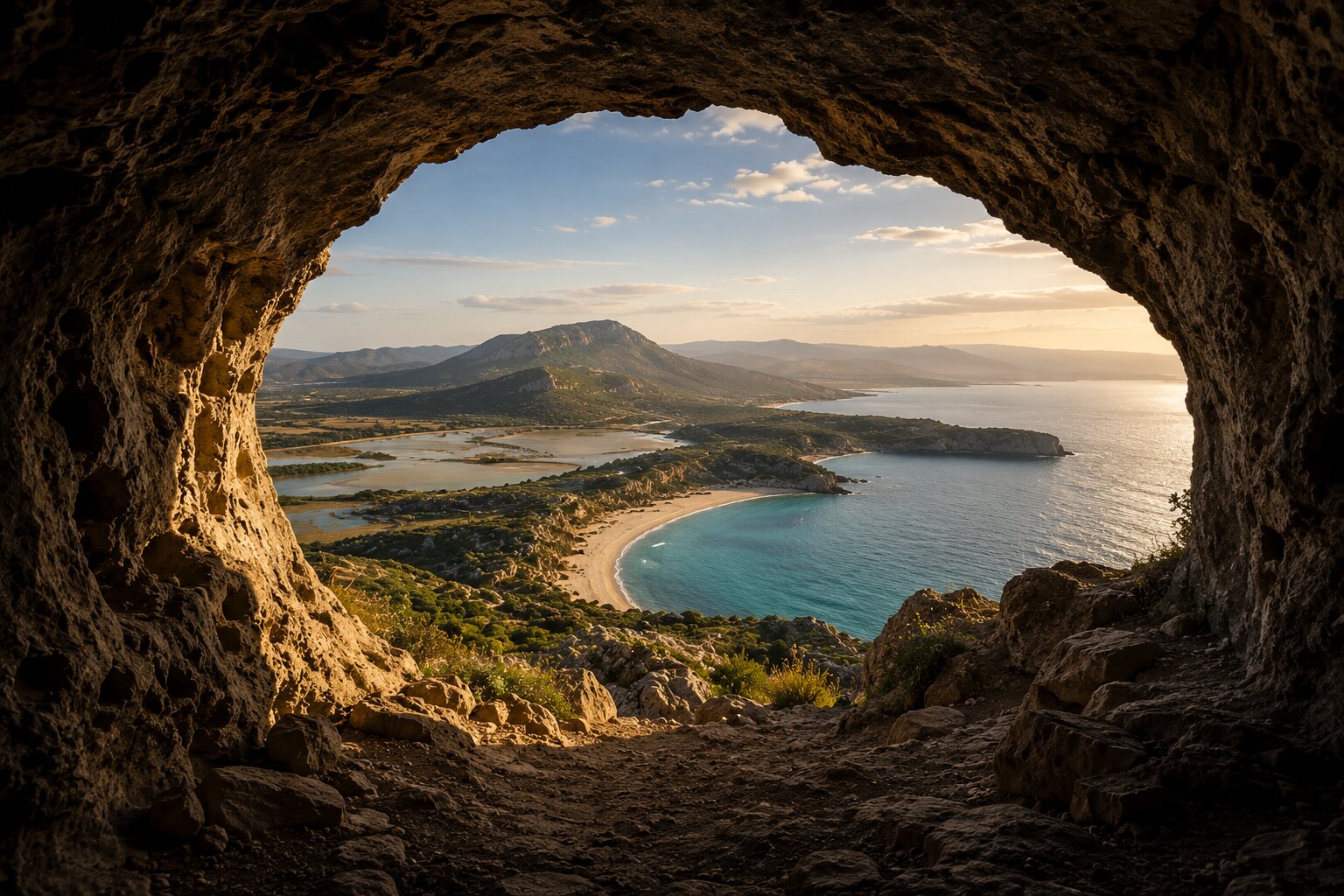
Located above Voidokilia Beach near Pylos, Nestor’s Cave carries strong symbolic links to Homer’s world through its association with the mythical King Nestor.
Nearby, Voidokilia is already considered one of Greece’s most distinctive natural beaches. Its almost perfect circular shape, surrounding dunes and neighbouring Gialova Lagoon create one of the country’s most recognisable landscapes.
Almyrolaka, by contrast, remains largely unknown to international visitors.
Its appearance in the production could encourage travellers to explore quieter parts of the Messenian coastline rather than concentrating exclusively on Greece’s best-known destinations.
Methoni Castle
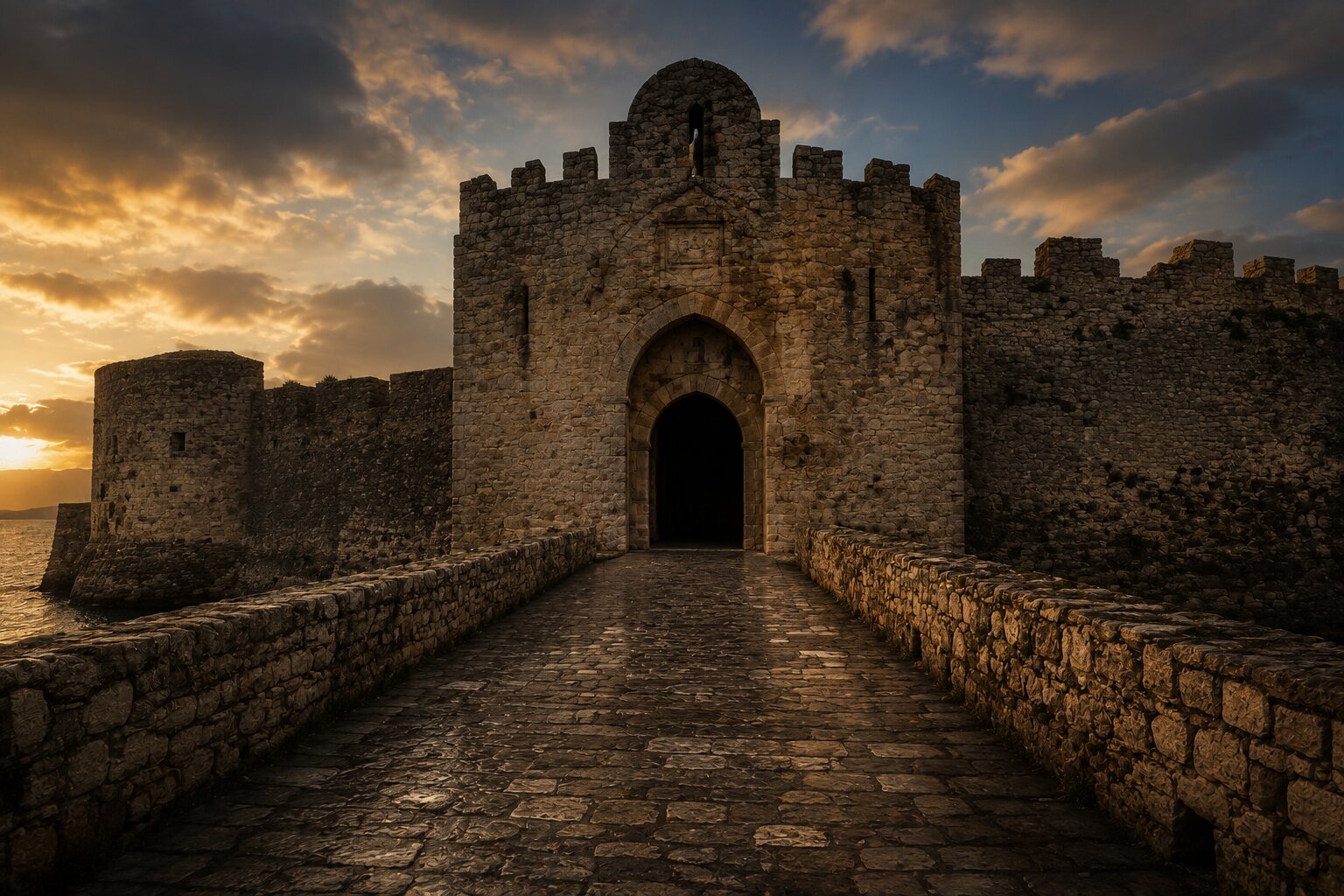
Methoni Castle presents a completely different image of Greece.
Rather than whitewashed villages or crowded beaches, visitors encounter a vast medieval fortress surrounded by the sea and centuries of history.
Someone may arrive because they recognised the castle from Nolan’s film.
They often stay longer because they discover the region itself.
That is where film tourism creates real value: when a few cinematic moments become several days of travel.
Acrocorinth
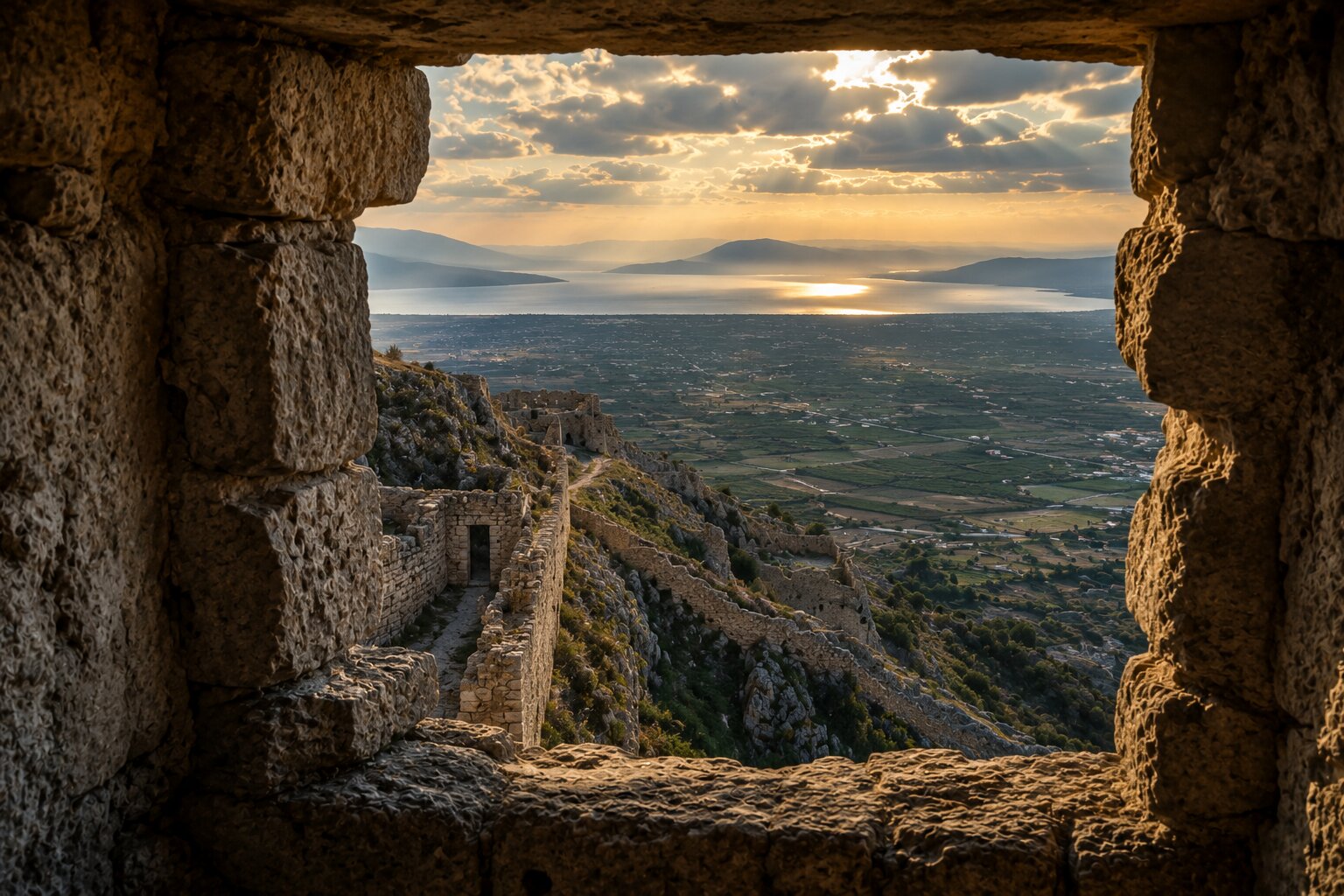
Overlooking Ancient Corinth, Acrocorinth serves as a natural gateway into the Peloponnese.
Its strategic location makes it an ideal first stop for visitors travelling south from Athens before continuing towards Messenia.
The fortress also reminds travellers that Greece offers much more than coastal holidays.
Its landscapes include mountains, vineyards, castles, archaeological sites and historic routes connecting thousands of years of civilisation.
A Road Trip Through Nolan’s Greece
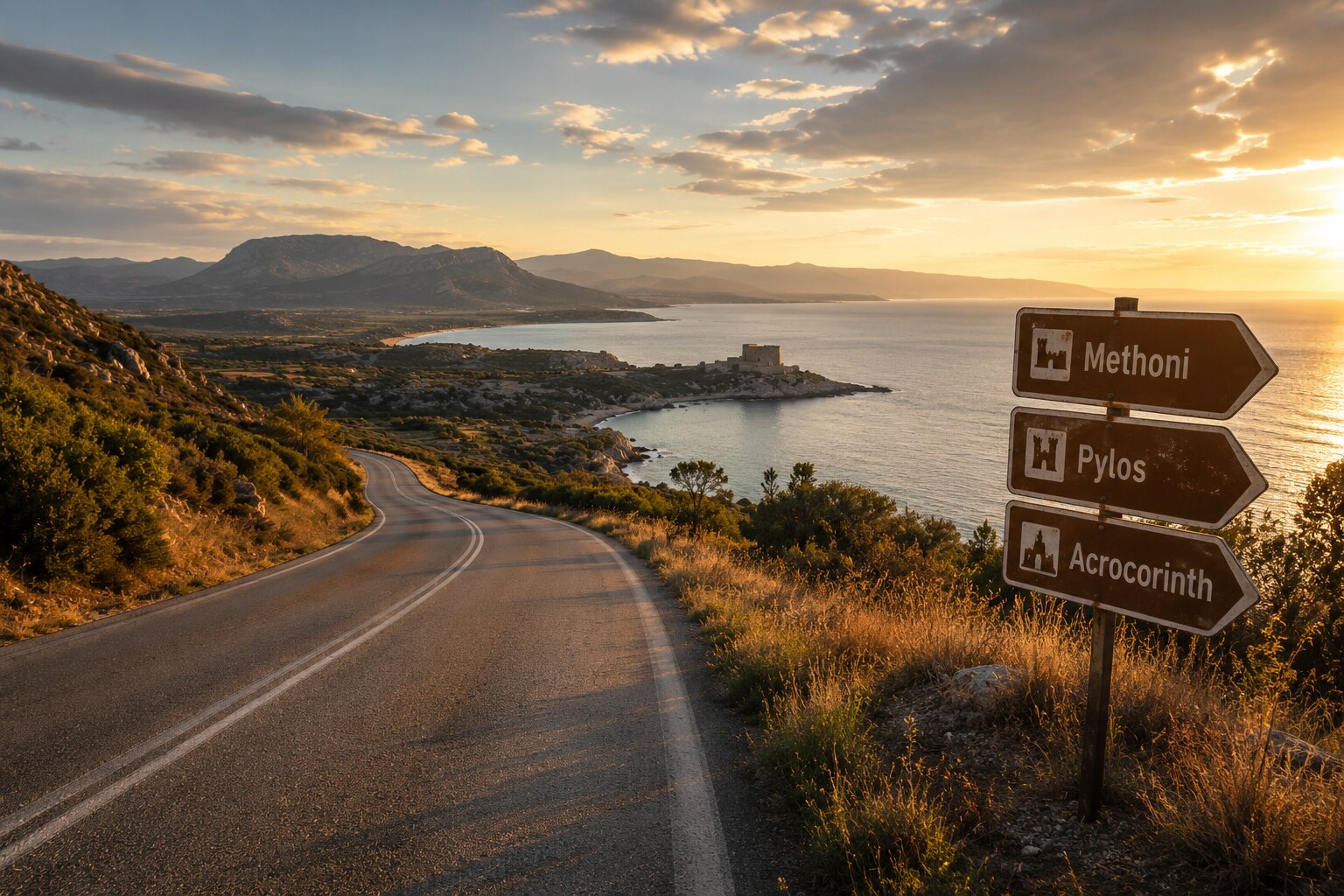
The filming locations naturally lend themselves to a road trip across the Peloponnese.
Starting in Athens, travellers can visit Acrocorinth before continuing towards Pylos, Gialova, Voidokilia, Nestor’s Cave, Almyrolaka and Methoni.
Allowing at least two or three days transforms the experience from simply collecting photographs into discovering the region itself.
The freedom to stop in small villages, explore local wineries, enjoy regional cuisine or take unexpected detours is what turns transportation into travel.
The route should not be presented as a literal recreation of Odysseus’ mythical voyage.
Instead, it offers a modern journey through the authentic Greek landscapes chosen by Nolan’s production.
A Major Opportunity for the Peloponnese
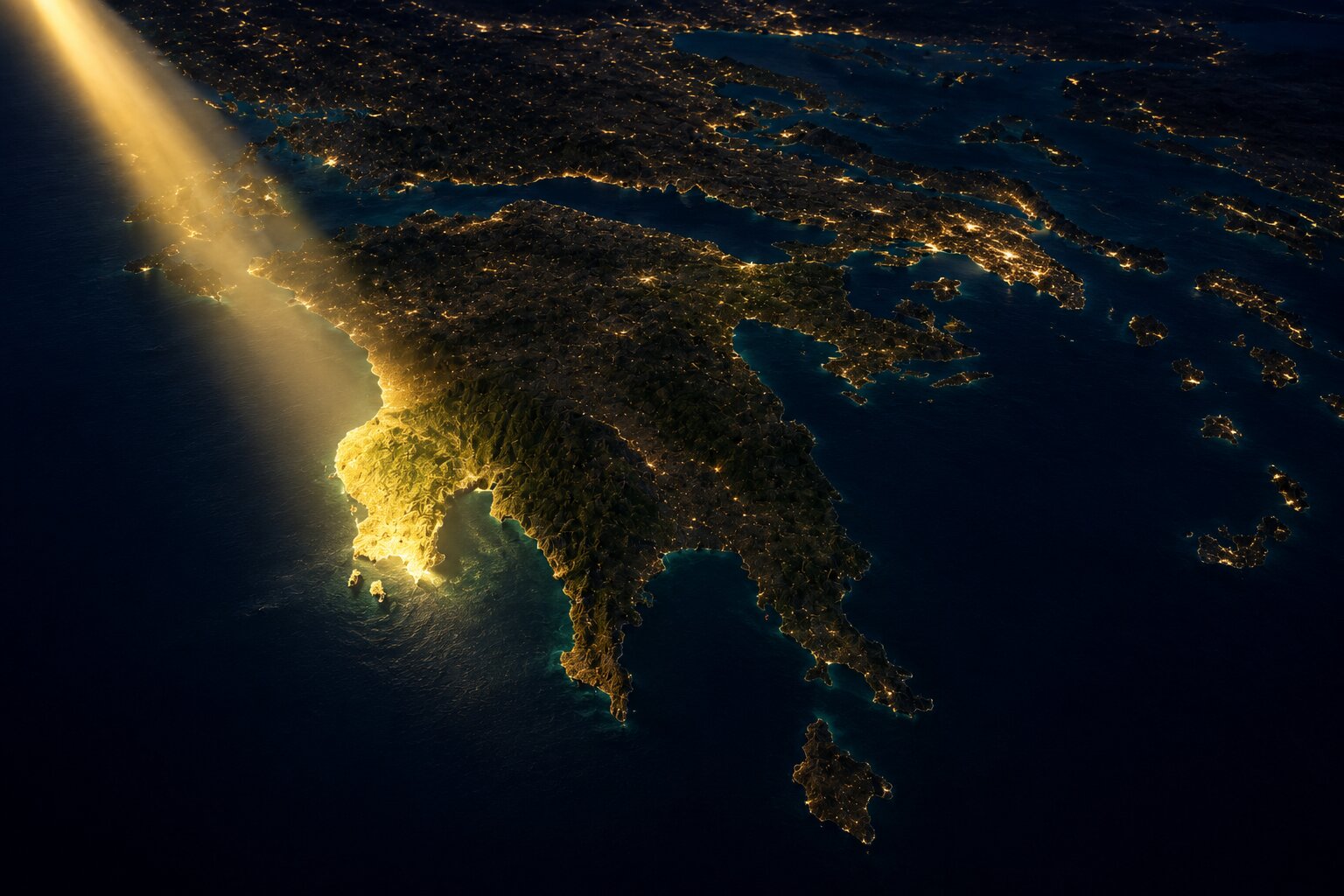
The Peloponnese offers far more than a handful of famous filming locations.
Visitors can combine archaeological sites, castles, beaches, mountain villages, vineyards and local gastronomy within a single journey.
This encourages longer stays while spreading tourism benefits across local communities instead of concentrating them in a few iconic attractions.
Film tourism works best when it invites visitors to discover an entire region rather than simply taking a photograph at a single location.
Protecting What Makes These Places Special
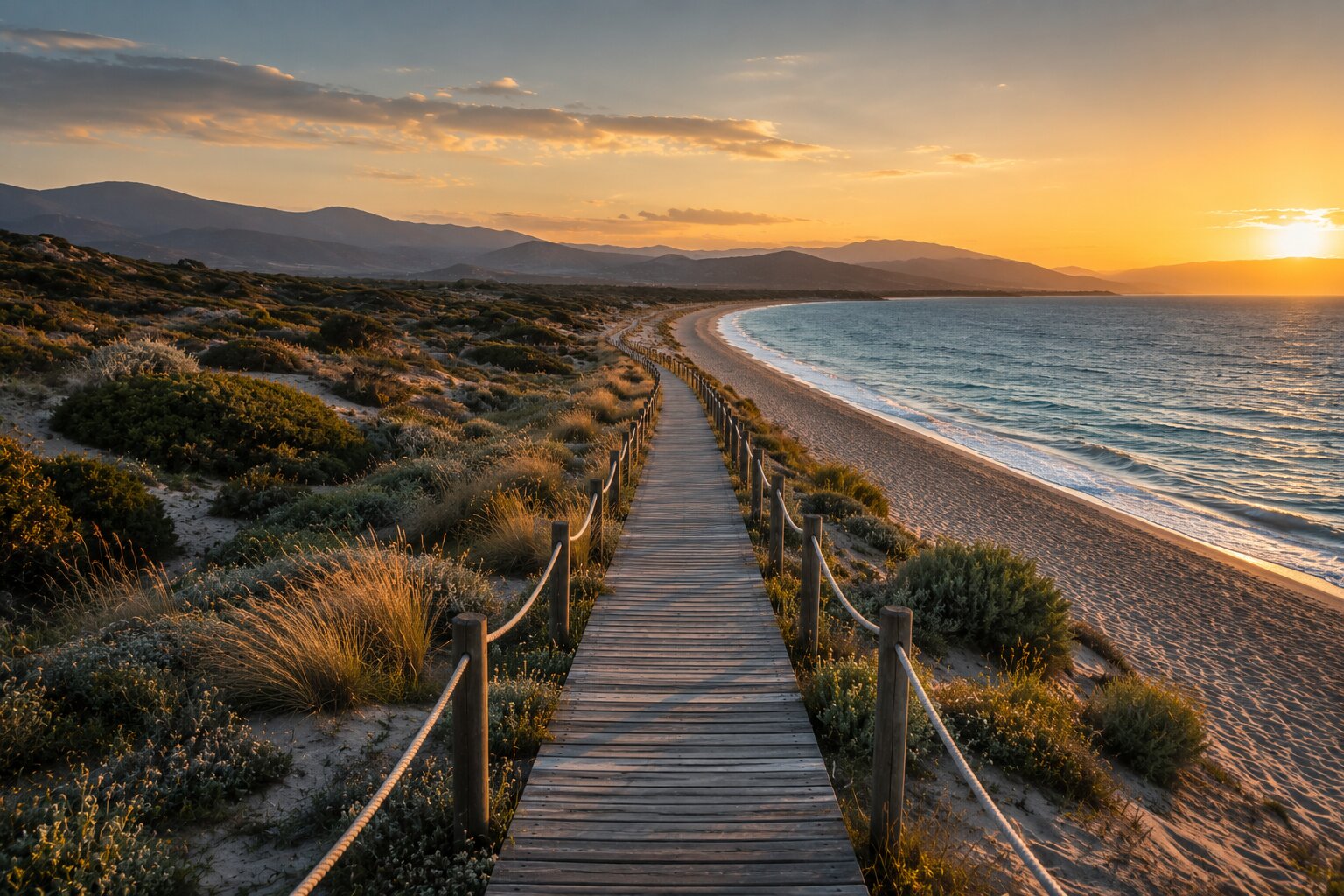
Growing popularity also creates challenges.
Increased visitor numbers can lead to traffic congestion, uncontrolled parking, litter and pressure on sensitive natural and archaeological sites.
The same care taken to protect these locations during filming should guide their future tourism management.
The goal is not to transform Greece’s landscapes into movie theme parks.
The goal is to allow visitors to experience authentic places while preserving exactly what made them remarkable in the first place.
The Journey That Matters Most
Christopher Nolan’s The Odyssey offers Greece an extraordinary opportunity.
Its long-term value will not be measured simply by how many people search for Voidokilia or Methoni after watching the film.
It will be measured by the experiences those visitors have once they arrive.
A traveller may come because of a movie.
They return because of the destination itself.
That is perhaps the greatest lesson hidden inside Homer’s timeless story.
The true success of a journey is not reaching a place once.
It is leaving with a reason to come back.