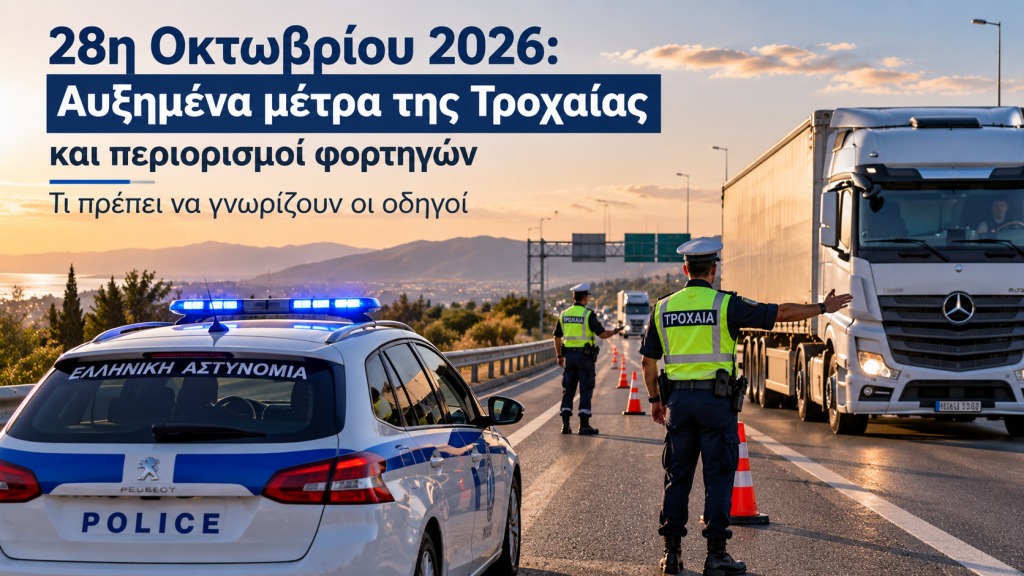
Greek authorities have announced enhanced road safety measures for the October 28 national holiday, including additional police checks and temporary restrictions on heavy goods vehicles. Here is what drivers and transport operators should know before travelling.
Greece is preparing for increased road traffic ahead of October 28, 2026, the national holiday commonly known as Ohi Day. With many residents planning trips, family visits and short breaks, the Hellenic Police have announced a special traffic management and road safety plan.
According to the official announcement issued on October 24, enhanced traffic police measures will be implemented from Tuesday, October 27, through Wednesday, October 28, 2026.
The measures are designed to reduce road accidents, improve traffic flow and support safer journeys across the country’s motorway and regional road networks.
Temporary restrictions will also apply to certain heavy goods vehicles during peak travel periods.
Where Will Traffic Police Checks Be Increased?
The Hellenic Police will strengthen their presence throughout Greece, particularly in locations where traffic volumes are expected to increase.
Special attention will be given to major motorway routes, entrances and exits of large cities, regional roads with higher accident risks, and areas frequently used by holiday travellers.
Additional police monitoring is also expected near ports, airports, transport terminals and busy urban centres.
Traffic police units will use patrol cars, motorcycles and unmarked vehicles to monitor driving behaviour and respond to incidents.
The objective is not simply to issue penalties but to prevent dangerous driving and minimise the risk of accidents during the holiday period.
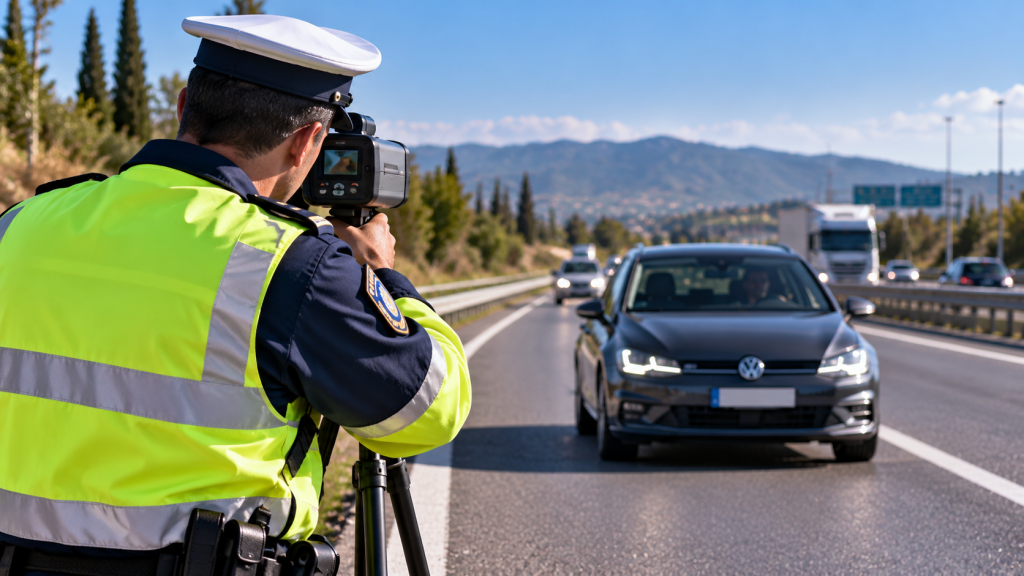
Which Traffic Violations Will Be Targeted?
Police checks will focus on driving behaviours associated with serious road accidents.
Priority violations include:
-
Speeding and dangerous overtaking.
-
Driving under the influence of alcohol.
-
Using a mobile phone while driving.
-
Failure to wear seat belts or motorcycle helmets.
-
Incorrect use of child restraint systems.
-
Crossing solid road markings.
-
Driving without a valid licence.
-
Operating vehicles with unsafe tyres or without the required technical inspection.
Drivers should expect increased enforcement, particularly along major travel routes.
Regardless of the number of police checkpoints, maintaining safe distances, observing speed limits and avoiding distractions remain essential for road safety.
Truck Restrictions: Dates and Times
One of the most important measures concerns temporary restrictions on heavy goods vehicles with a maximum authorised weight exceeding 3.5 tonnes.
The restrictions are intended to improve traffic conditions during periods of increased passenger vehicle movement.
| Date | Restriction hours | Main traffic direction |
|---|---|---|
| Tuesday, October 27 | 16:00–22:00 | Holiday departures |
| Wednesday, October 28 | 16:00–23:00 | Return journeys |
All times are local Greek time. Restrictions apply to designated roads and directions, not to every road nationwide.
Transport operators should check the exact sections covered by the official restrictions before scheduling deliveries or long-distance journeys.
Which Greek Motorways Will Be Affected?
On Tuesday, October 27, restrictions will mainly apply to outbound traffic from major urban areas.
The affected routes include designated sections of:
-
The Athens–Patras motorway towards Patras.
-
The Athens–Thessaloniki motorway towards Thessaloniki.
-
The Ionian Motorway towards Ioannina.
-
Roads serving Kalamata, Sparta, Chalkida and Kalambaka.
-
Selected routes towards Chalkidiki, Kavala, Polygyros and Aktio.
On Wednesday, October 28, restrictions will primarily apply in the opposite directions, reflecting the expected return of holiday travellers.
Designated sections of the A1, A8 and A7 motorways, the Ionian Motorway, the E65 and other connecting routes may be affected.
These are general route descriptions rather than a complete list of restricted motorway sections. Professional drivers should consult the official traffic decisions for precise locations and directions.
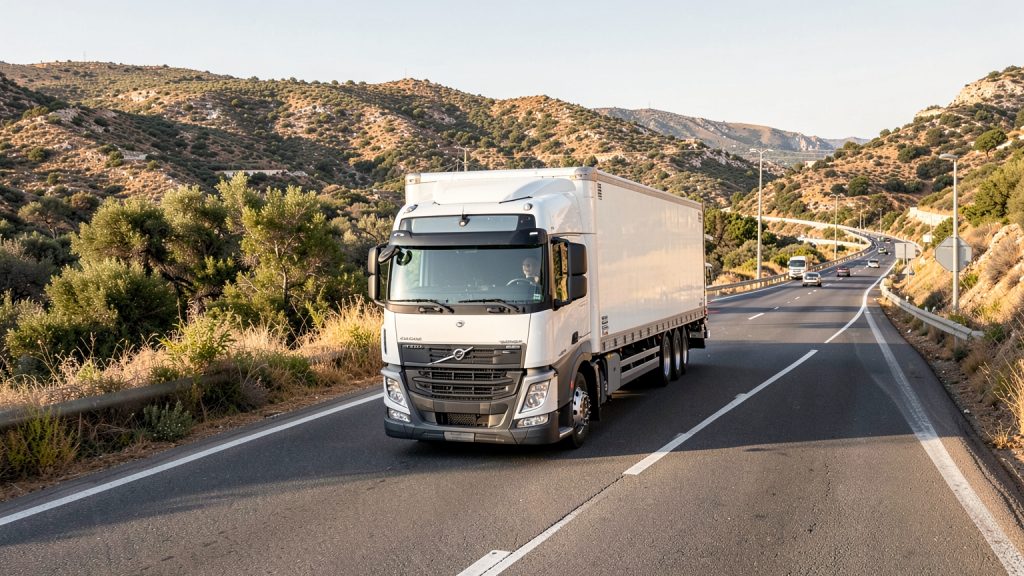
Which Trucks Are Exempt?
Certain transport operations may be exempt from the restrictions, subject to the conditions established by the relevant authorities.
Exemptions can include vehicles used for emergency response, roadside assistance, firefighting, civil protection and essential public utility repairs.
Some specialised transport operations may also qualify, including vehicles carrying live animals, perishable food, fresh produce or medical oxygen.
However, exemptions should not be assumed to apply automatically to every commercial vehicle.
Transport companies should verify whether their specific vehicle, cargo and journey meet the applicable requirements and whether supporting documentation is necessary.
What Should Drivers Check Before Travelling?
Preparing a vehicle before a holiday journey can significantly reduce the likelihood of unexpected problems.
Drivers should check tyre condition and pressure, lighting, windscreen wipers and essential vehicle fluids.
It is also advisable to check weather forecasts, road conditions and any temporary traffic announcements before departure.
During the journey, drivers should maintain safe following distances, respect speed limits and avoid unnecessary overtaking.
Seat belts must be worn by all occupants, while children must travel using appropriate restraint systems.
Drivers should also avoid using mobile phones and never combine alcohol consumption with driving.
Where possible, planning departure times outside the busiest travel periods may help reduce delays.
What About Parades and Local Traffic Restrictions?
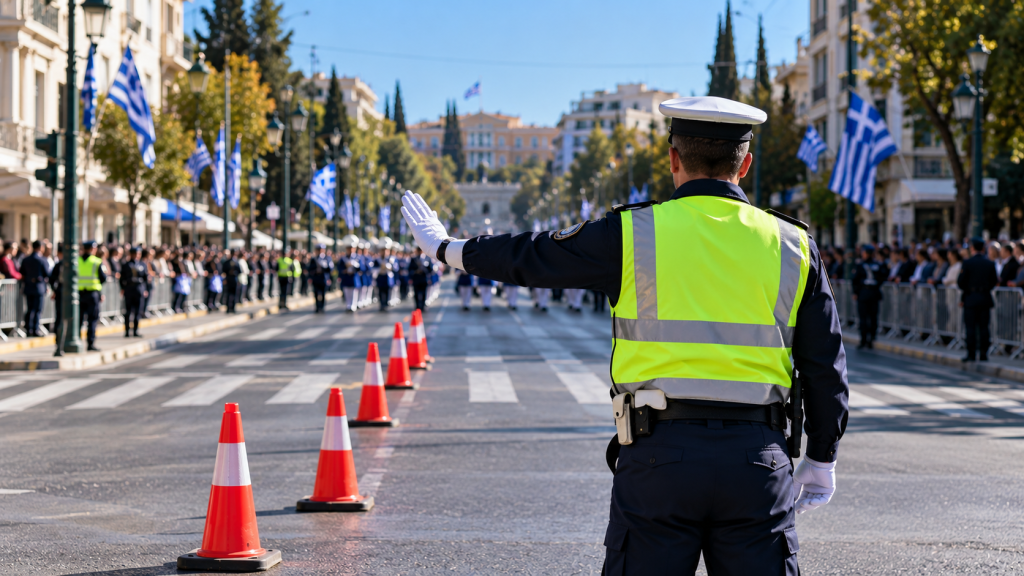
October 28 is marked by military and student parades, commemorative events and ceremonies throughout Greece.
These activities can lead to temporary road closures, parking restrictions and diversions in city centres.
Such arrangements are determined locally and are separate from the nationwide heavy goods vehicle restrictions.
Drivers visiting Athens, Thessaloniki or other cities should check announcements from local authorities before travelling into areas where parades or official ceremonies are scheduled.
Allowing additional travel time and using alternative routes where necessary can help avoid unnecessary disruption.
What Does This Mean for Tourists and Rental Car Drivers?
Visitors travelling around Greece during the national holiday should also be aware of the increased police presence and possible traffic disruption.
Although the truck restrictions do not generally apply to ordinary passenger cars, increased traffic and local road closures may affect journey times.
Drivers using rental vehicles should ensure they understand the vehicle’s controls, check its condition before departure and carry the necessary driving documents.
Visitors unfamiliar with Greek roads should pay particular attention to speed limits, road signs and regional driving conditions.
Those planning to visit popular destinations or attend parades should allow extra time for parking and local traffic arrangements.
Road Safety Remains the Priority
The enhanced traffic measures for October 28, 2026, are intended to protect motorists, passengers and other road users during a period of increased travel.
For passenger car drivers, careful planning, responsible driving and compliance with police instructions are the most important considerations.
For professional transport operators, checking the applicable truck restrictions and adjusting schedules accordingly will be essential.
Whether travelling for a short holiday, visiting family or simply driving through a busy city, a safe and well-planned journey should always come first.