

Hotel rates are rising while occupancy continues to strengthen. The phenomenon is not explained by inflation alone, but by a deeper shift in the model of Greek tourism.
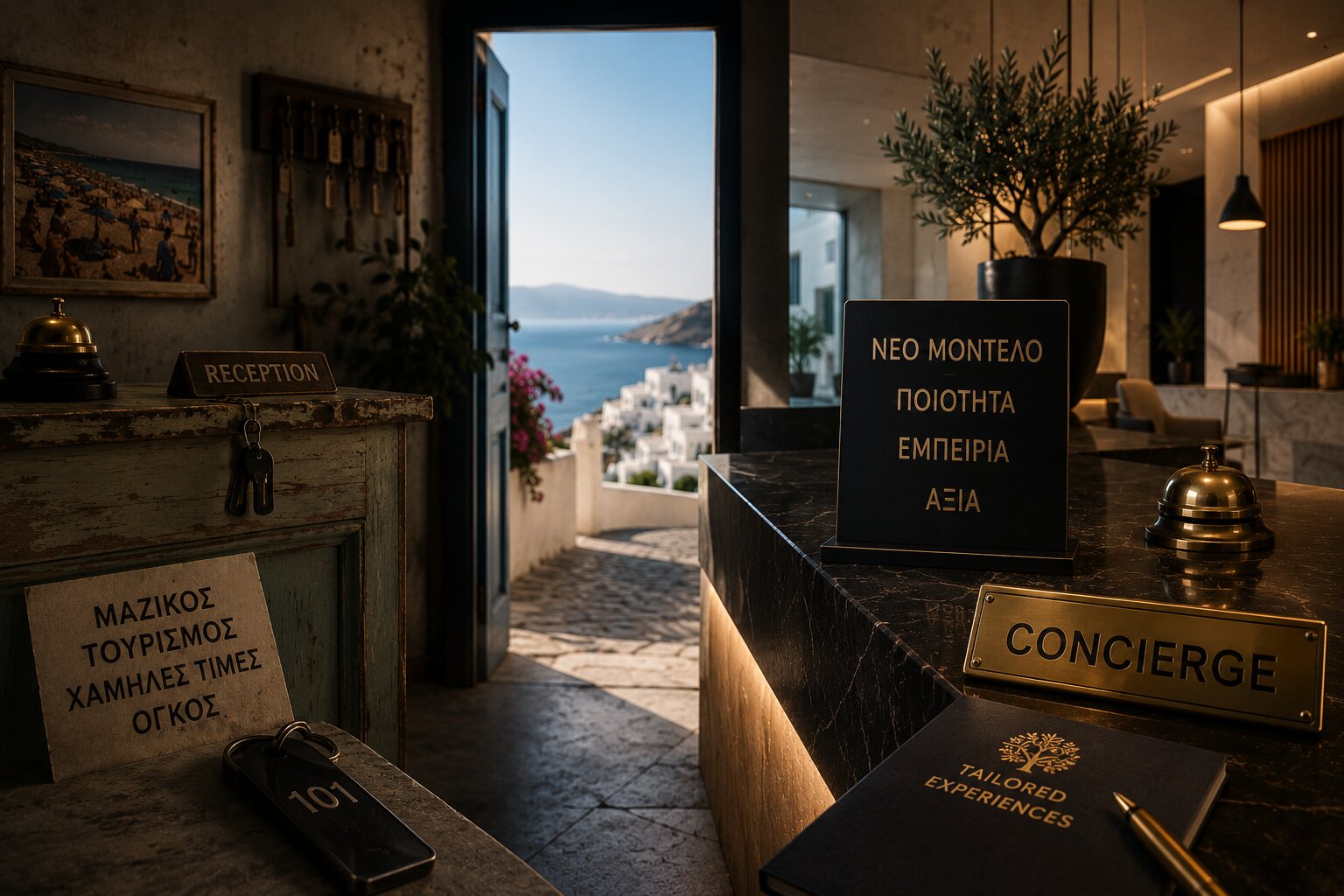
For travelers, the picture is simple: they search for a hotel they visited two or three years ago and discover that the same stay now costs considerably more. In popular destinations, higher prices are not accompanied by empty rooms. In many cases, the opposite happens: as the travel date approaches, availability shrinks and the price rises even further.
The question is therefore obvious: how can Greek hotels become more expensive and still continue to fill up?
The easy answer is that Greece enjoys strong demand. The more meaningful answer, however, is that the country is gradually moving from the model of a relatively inexpensive mass-market destination to a more expensive, more heavily invested, and more complex tourism product.
The increase in hotel prices is not simply a result of inflation. It is where international demand, higher operating costs, investment, technology, constrained supply in popular areas, and the effort of businesses to extract greater value from every available room all meet.
The Numbers Show That Demand Is Not Weakening
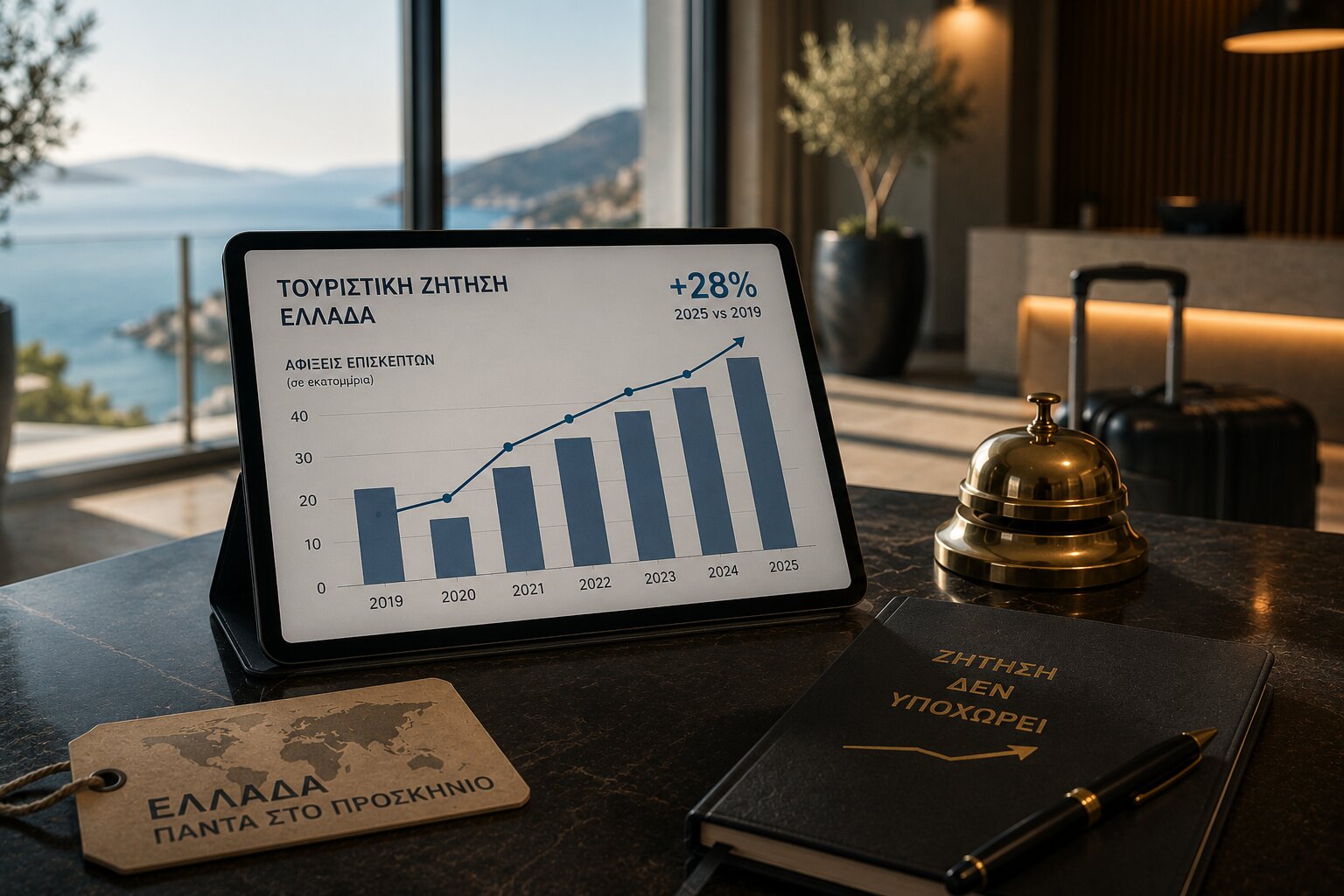
The latest survey by the Institute for Tourism Research and Forecasts records average occupancy of 63.2% in May 2026, compared with 61.9% in May 2025. During the same period, the average selling price of a double room, calculated at room level, rose to €117 from €112 a year earlier.
An important clarification is needed here. ITEP presents different measures depending on whether the analysis is performed at hotel-unit level or across the total number of available rooms. At hotel level, the corresponding average price for May 2026 was €94, up from €91 in 2025. The difference is not a contradiction; it arises because larger properties and the total number of rooms are weighted differently in the two calculations.
The most important finding is not merely that the average increased. Price and occupancy rose at the same time. This means the market is not attempting to compensate for weak demand through discounts. Instead, it is selling more rooms at higher prices.
The broader picture supports the same conclusion. In 2025, Greece’s travel receipts increased by 9.4%, while inbound travel traffic rose by 6.4%, according to final data from the Bank of Greece. Revenue therefore grew faster than visitor numbers.
The trend was even stronger at the beginning of 2026. During the first four months of the year, non-resident arrivals increased by 27.1%, while travel receipts rose by 36.9%, reaching €2.79 billion. This suggests that not only the volume of travel is increasing, but also the total amount generated by Greek tourism.
These figures do not prove that every visitor spends more in every destination or in every hotel category. They do show, however, that the overall market has so far been strong enough to absorb higher prices.
Greece Is No Longer the ‘Cheap Paradise’ of the Previous Era
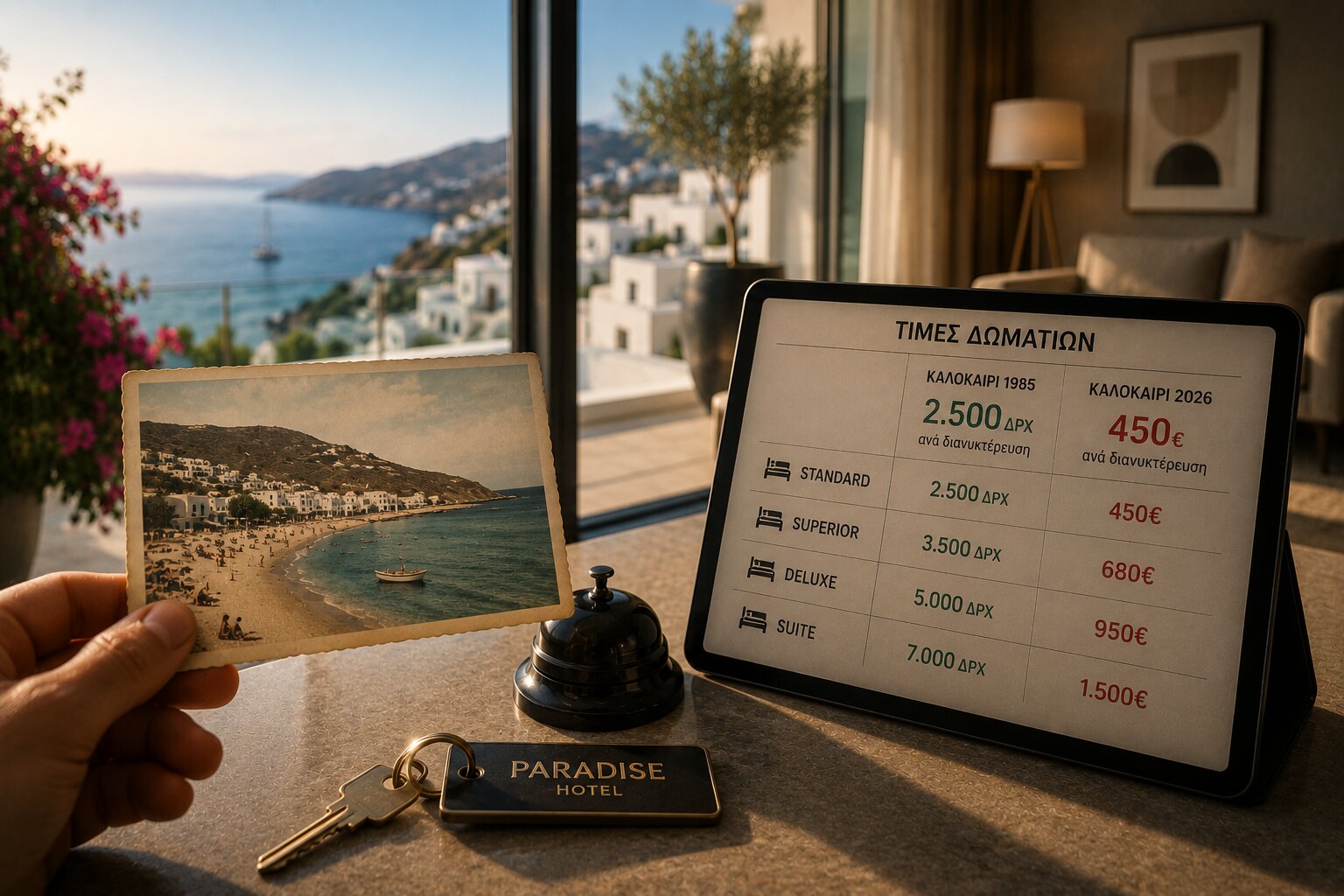
For decades, much of Greece’s tourism success was based on a powerful but relatively simple combination: good weather, sea, natural beauty, and lower prices than other mature European destinations.
That model attracted millions of travelers, but it also created a specific dependency: the more beds were filled, the better the year was considered. Success was measured primarily in arrivals and overnight stays.
Today, the market is attempting to move from volume toward value. This does not mean that Greece has stopped seeking more visitors. It means that hotels, investors, and destinations are pursuing higher revenue per room, per overnight stay, and per traveler.
In 2024, the total turnover of Greek hotels reached approximately €11.49 billion, an increase of 8.8% compared with 2023.
That growth did not come only from opening more rooms. It was linked to higher prices, stronger demand, and the gradual upgrading of the hotel product.
This is the core change: Greece is no longer trying to win only the traveler searching for the lowest possible price. It is also trying to attract the traveler willing to pay more for design, privacy, gastronomy, views, wellness, personalized service, or a more complete overall experience.
Hotels Have Invested in Order to Sell at Higher Prices

The rise in prices cannot be examined separately from the investments made across the sector.
According to ITEP’s annual survey, hotel investment in repairs, renovations, and maintenance exceeded €1 billion in 2024.
This amount does not concern luxury resorts alone. It includes room refurbishments, equipment replacement, energy-efficiency interventions, digital systems, upgrades to shared spaces, and improvements in services.
A renovated property, however, does not return to the market at its old price. Businesses that invest significant capital aim to raise their category, image, guest ratings, and ultimately their average room rate.
This creates a self-reinforcing cycle. Strong demand enables investment. Investment upgrades the product. The upgraded product supports higher prices. Higher prices, in turn, attract even more capital into the sector.
The result is that, in several destinations, the share of simple low-cost accommodation is gradually declining while the share of more premium options is increasing.
This does not mean that every higher price is genuinely matched by higher quality. It does mean, however, that a large part of the market has strategically repositioned itself in a more expensive segment.
Prices Are No Longer Set Once for the Entire Summer
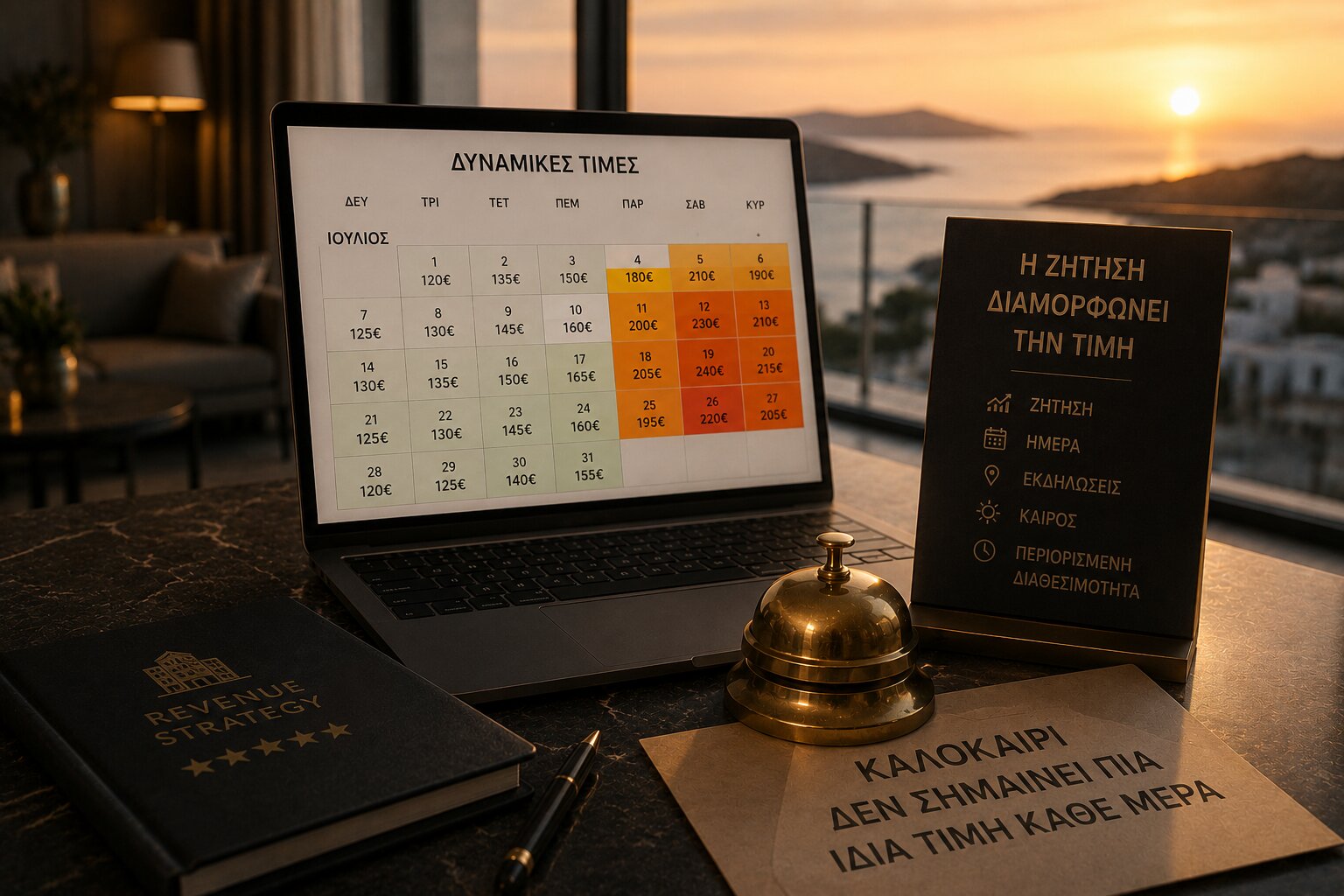
One of the less visible reasons behind the rise is the spread of revenue management and dynamic pricing.
In the past, many smaller properties created a basic price list for low, shoulder, and high season. Today, a price can change daily or even several times within the same day.
Pricing systems take into account current availability, the pace of new bookings, the number of days remaining before arrival, cancellations, competitors’ rates, airline seat capacity, events, and historical booking data.
When a hotel sees that its rooms are selling faster than expected, it does not wait until it is full before increasing the price. It raises the rate earlier so that the last available rooms are sold at a premium.
This has two consequences. First, strong occupancy directly pushes up the average room rate. Second, travelers who delay booking are exposed to much larger increases than in the past.
That is why the same room may cost €120 in February, €160 in April, and €220 a few weeks before arrival, even though nothing has changed in its facilities.
The price does not express only the cost of the room. It also expresses its scarcity at a particular moment.
In Some Destinations, Supply Cannot Keep Up With Demand
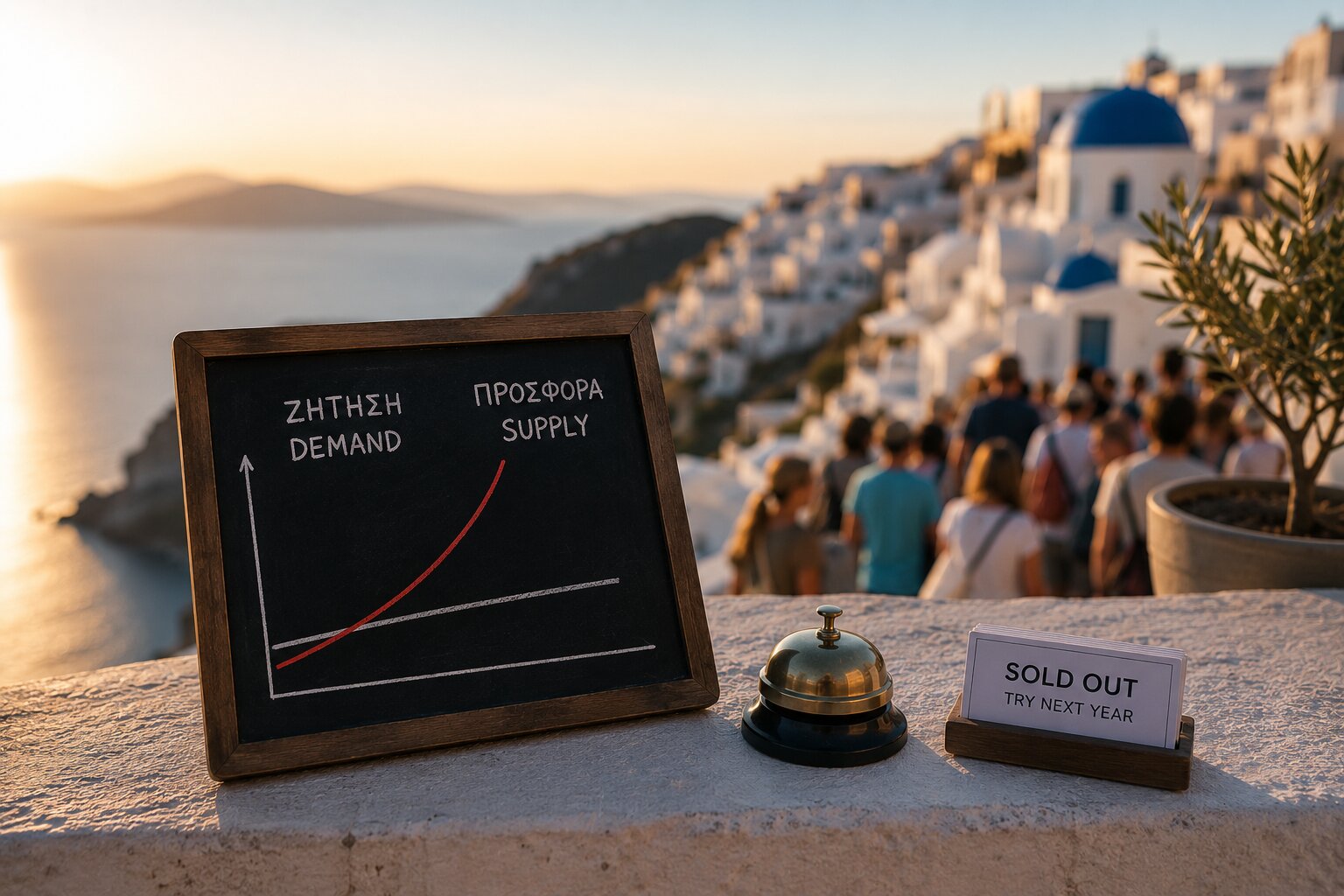
The Greek hotel market does not operate as a single uniform system. The national average occupancy rate conceals enormous differences between regions, seasons, and categories.
In a mature island destination, it is not easy to create unlimited new capacity. There are constraints related to land, infrastructure, water supply, planning, and environmental resilience. Even when new properties are developed, the process requires years and substantial capital.
Therefore, when international demand for a specific destination grows faster than the number of quality rooms available, prices rise.
The increase may be even sharper for rooms with particular characteristics: sea views, a private pool, beach access, family capacity, or close proximity to popular attractions.
The traveler is not simply competing for ‘a room in Greece’. They are competing with thousands of others for a limited number of properties offering exactly the experience they want.
Higher Costs Are Real, but They Do Not Explain Everything

Hotel businesses face higher costs than they did before the pandemic. Payroll, food, cleaning, maintenance, insurance, technology, financing, and energy needs all affect daily operations.
An increase in room price therefore does not automatically translate into an equal increase in profit.
A hotel may collect more revenue while simultaneously paying more for staff, supplies, online platforms, repairs, and loans. International booking platforms also absorb part of the room price in the form of commissions.
Even so, it would be an oversimplification to attribute the entire increase to costs alone. Businesses do not price exclusively according to what it costs them to operate. They also price according to what the market is willing to pay.
When a room can be sold for €180 under strong demand, it will not remain at €130 simply because its operating cost did not rise by the same amount.
Cost creates pressure for prices to rise. Demand, however, creates the ability to implement that rise.
Foreign Visitors and Greek Travelers Do Not Perceive the Same Price in the Same Way
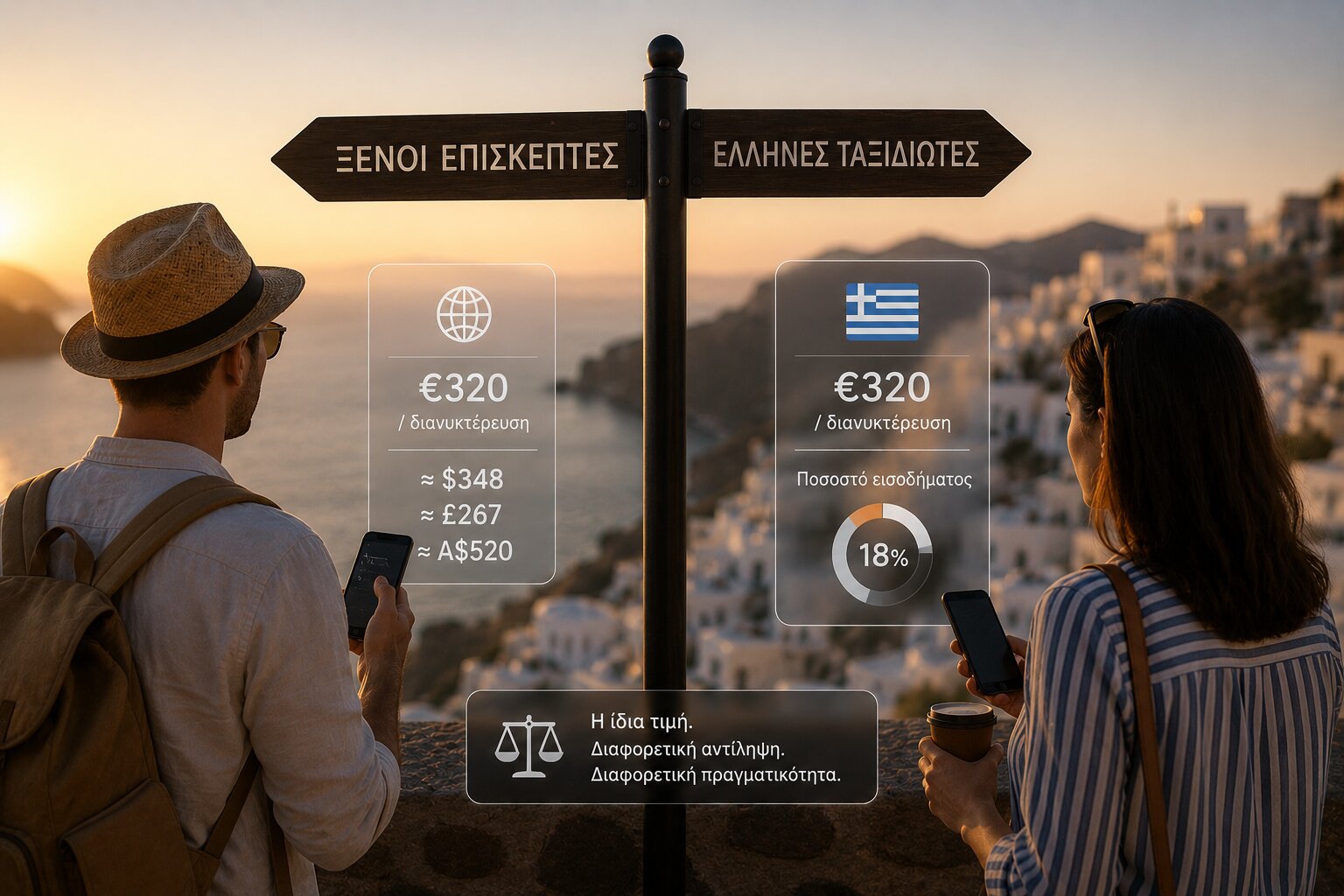
The same room may feel expensive to a Greek household and acceptable to a traveler from a country with higher wages.
This is crucial to understanding the market. Hotels in popular destinations do not price only according to the purchasing power of Greek consumers. They compete in an international market in which prices are compared with Spain, Italy, France, Croatia, and other premium destinations.
As long as international demand remains strong, rates can move away from what part of the domestic market considers affordable.
This creates one of the major paradoxes of contemporary Greek tourism: a destination can record high occupancy and exceptional revenue while simultaneously becoming less accessible to many residents of the same country.
Hotel success therefore does not automatically mean that holidays remain socially affordable.
A Longer Season Also Expands the Period of Higher Prices
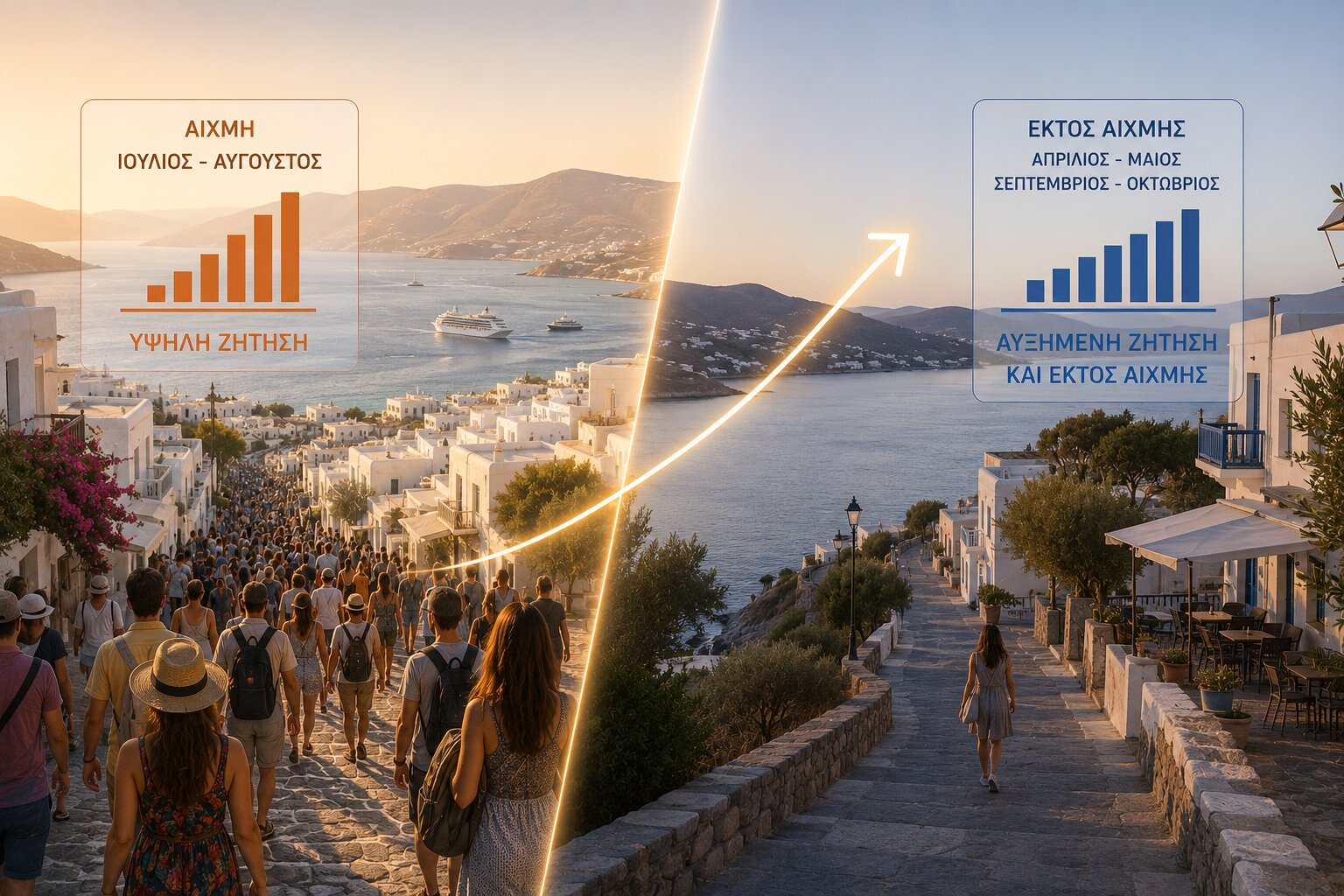
The increase in occupancy in May is particularly important because it shows that tourism activity is spreading across a larger part of the year.
Greece still depends heavily on summer. However, Athens, Thessaloniki, Crete, Rhodes, and other destinations are attracting more visitors in spring and autumn.
Bank of Greece data for the first four months of 2026, showing a large increase in arrivals and receipts before the peak summer period, reinforce the image of a season that starts earlier.
This development is positive for businesses because it increases operating days and reduces dependence on a small number of peak weeks. At the same time, however, it means that traditionally cheaper months are not always as inexpensive as they used to be.
As May and October gain stronger demand, their hotel prices gradually move closer to peak-season levels, especially in popular destinations.
Extending the season does not merely redistribute demand. It can also extend the period of higher prices.
Not All Hotels Are Becoming More Expensive in the Same Way
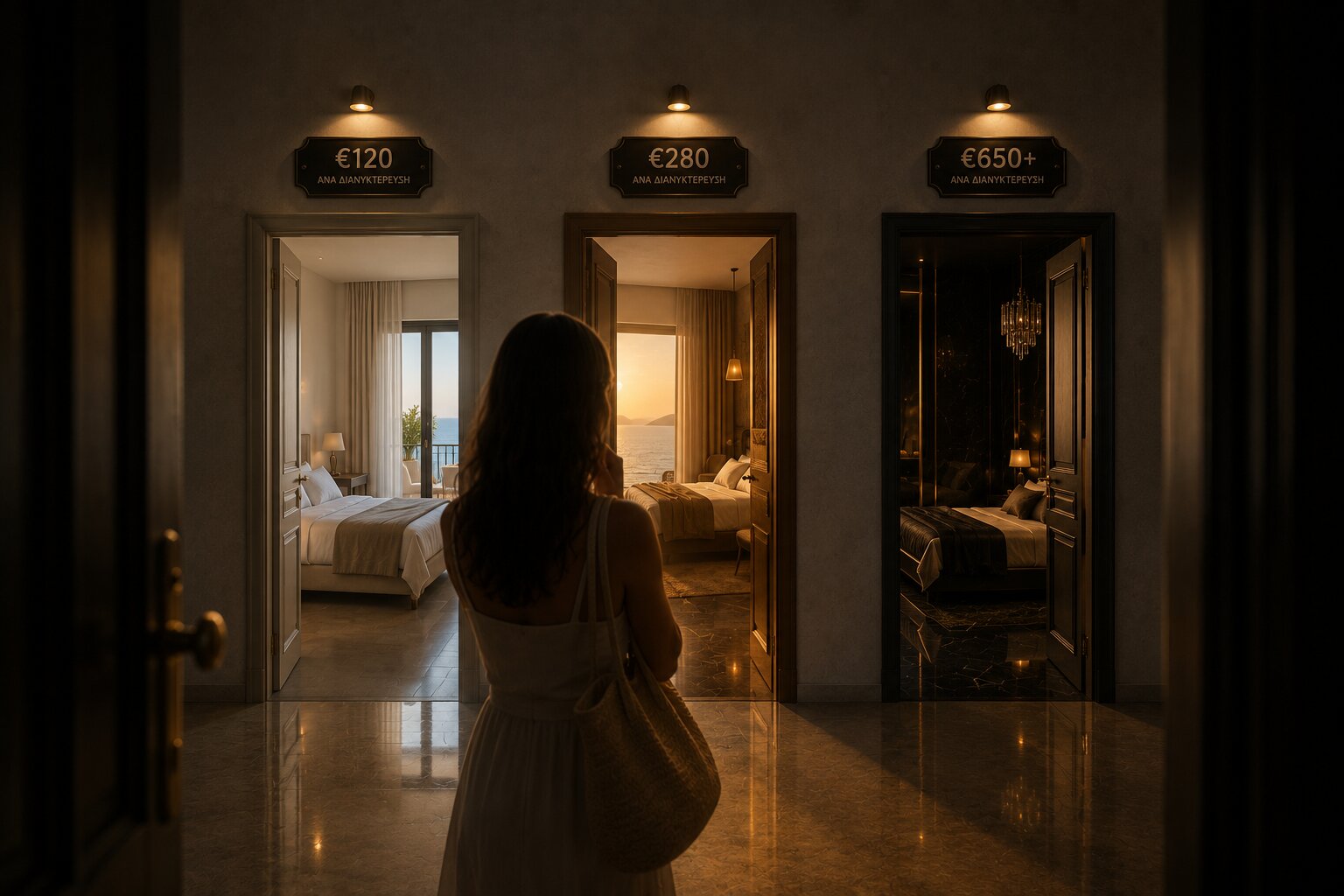
Averages are useful, but they can create misleading impressions.
An increase in the average price does not mean that every hotel raised its rates by the same percentage. Nor does it mean that every destination is moving upward in every month.
During 2025, for example, the Hellenic Statistical Authority recorded months in which hotel prices contributed downward to the relevant index, mainly because of seasonal comparisons and differences between periods.
This is a reminder that hotel prices are highly seasonal. They can rise sharply in one destination and fall in another, or increase year on year in May but decline in October.
The broader picture, however, remains clear: in popular properties and during periods of strong demand, the market has shifted toward higher price levels.
A More Expensive Greece Does Not Automatically Mean a Better Greece
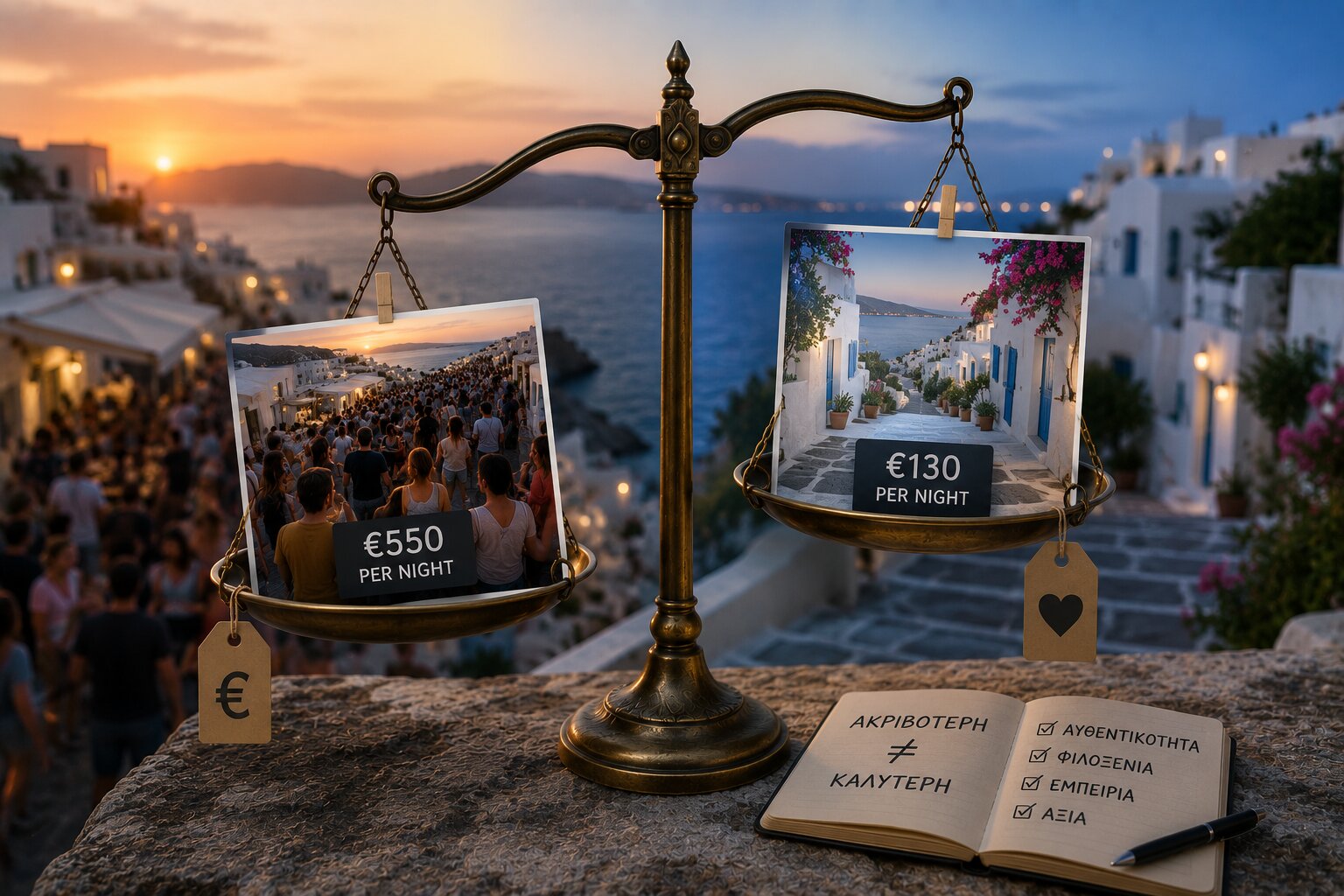
The shift toward higher value can be positive. More revenue can support better infrastructure, higher wages, renovations, and improved services.
There is, however, one essential condition: perceived quality must keep pace with the price.
A visitor may accept paying more for a fully renovated room, impeccable cleanliness, fast service, a quality breakfast, proper soundproofing, and professional staff.
They will find it much harder to accept a high price for outdated facilities, poor maintenance, limited infrastructure, or services that do not match the promise made at the time of booking.
This is where the greatest risk lies. Because demand is currently strong, some businesses can raise prices without making a corresponding improvement in the guest experience. That may work in the short term, but over time it damages reviews, the reputation of the destination, and the relationship between value and cost.
Greece is not competing only over who has the most beautiful beach. It is competing over whether the traveler feels the experience was worth what they paid.
What All This Means for the Traveler
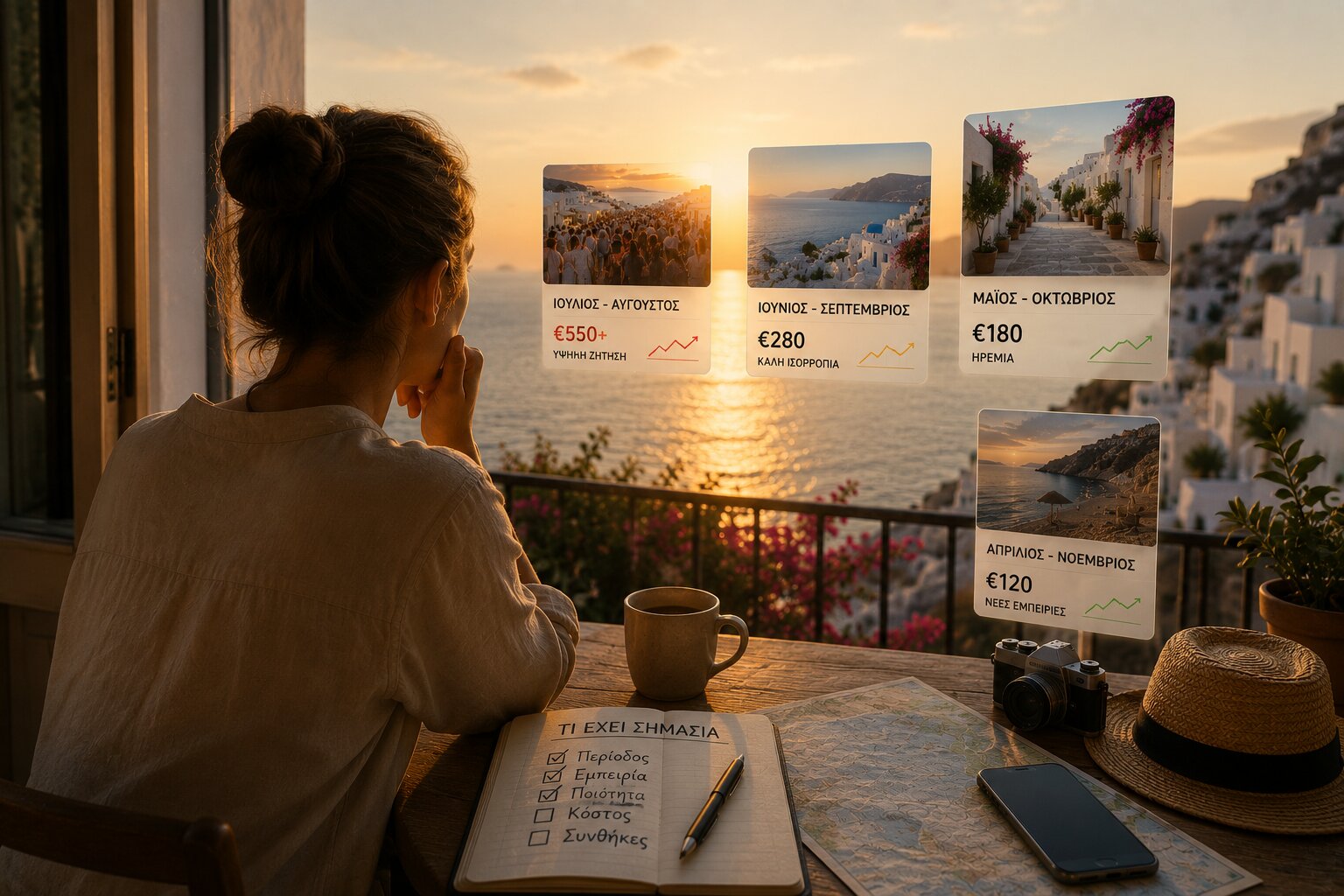
The new reality requires a different booking strategy.
Searching early has greater value, not because every booking made months in advance is necessarily cheaper, but because it offers more choice before availability becomes limited.
Flexibility in dates can also make a major difference. Moving a stay by only a few days can significantly change the cost when a weekend, public holiday, conference, or increase in airline arrivals intervenes.
At the same time, less-publicized destinations may offer a better balance between value and price without necessarily falling short in quality or experiences.
Most importantly, travelers should not evaluate only the headline price shown on the first screen. Breakfast, taxes, the climate-resilience fee, cancellation policy, parking, and additional charges can materially change the final amount.
In today’s market, the truly affordable room is not always the one displaying the lowest initial price. It is the one offering the best overall value.
The Real Challenge for Greek Tourism

Higher prices and stronger occupancy are powerful signs of economic success. They are not, however, a guarantee of sustainable development on their own.
Greece needs to answer three critical questions.
Can it increase revenue without placing excessive pressure on destinations and their infrastructure?
Can it offer more expensive accommodation without completely excluding the average traveler, particularly the domestic market?
And, most importantly, can it ensure that rising prices are accompanied by a genuine rise in quality?
If the answer is yes, the transition from low-cost mass tourism toward a higher-value model can strengthen the economy, employment, and the resilience of the sector.
If, on the other hand, price becomes detached from experience, today’s strong demand may conceal a future loss of competitiveness.
Conclusion
Hotels in Greece are not becoming more expensive for a single reason. Prices are rising because more travelers are competing for a limited number of quality rooms, because businesses have invested significant capital, because operating costs remain high, and because technology now allows properties to adjust prices to demand almost instantly.
Above all, however, prices are rising because Greek tourism is changing its position in the market.
Greece no longer wants simply to sell more summer to more people. It wants to sell more expensive, higher-quality, and more complete experiences across a longer part of the year.
The data show that, for the time being, the market accepts this transition: prices are rising, occupancy is strengthening, and travel receipts are increasing faster than arrivals.
The real test, however, begins now. Travelers may forgive a high price when they feel they received something exceptional. They will not forever forgive a high price that merely offers the same room at a higher cost.