
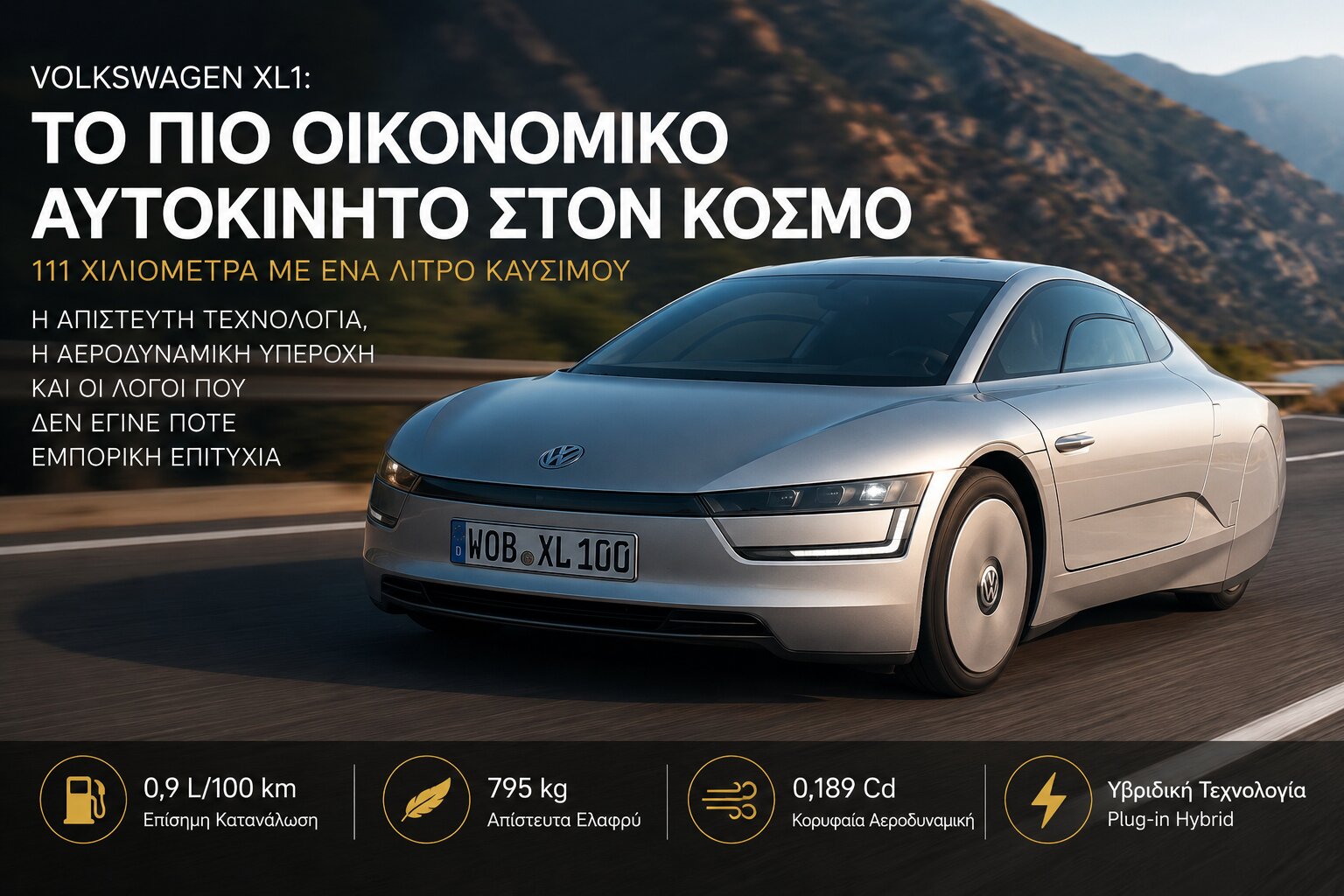
In a world where fuel prices remain volatile, environmental regulations grow stricter every year, and electric vehicles dominate discussions about the future of mobility, few people remember that Volkswagen introduced a vehicle more than a decade ago that seemed decades ahead of its time.
Its name was the Volkswagen XL1.
A two-seat plug-in hybrid vehicle that achieved what many engineers once considered nearly impossible: an official fuel consumption rating of just 0.9 liters per 100 kilometers (261 mpg UK / 313 mpg US equivalent under the NEDC cycle).
Even today, the XL1 remains one of the most extreme examples of automotive efficiency ever produced. Yet despite its groundbreaking technology, it never became a commercial success and failed to reshape the automotive market as many expected.
Why did this happen? And what lessons can the world’s most fuel-efficient production car still teach us today?
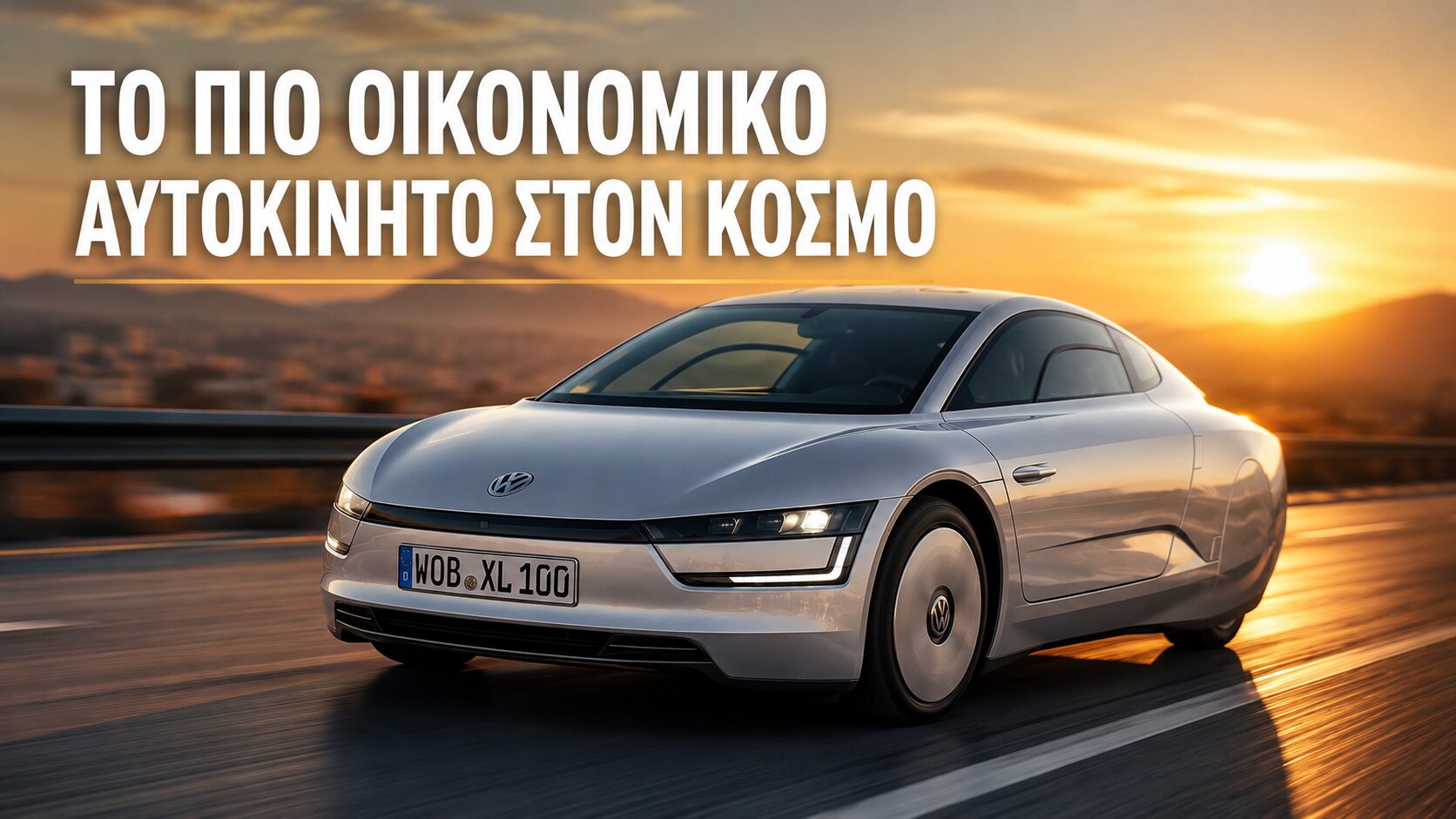
The Dream of the “One-Liter Car”
The story begins in the late 1990s when Ferdinand Piëch, then Chairman of Volkswagen Group, set an ambitious challenge:
Build a production vehicle capable of consuming just one liter of fuel per 100 kilometers.
At the time, even the most efficient diesel cars struggled to achieve fuel consumption figures below 4 liters per 100 kilometers.
Many industry experts considered the goal unrealistic. Nevertheless, Volkswagen launched a long-term engineering program that led first to the experimental Volkswagen 1-Liter Car in 2002 and ultimately to the production-ready XL1 in 2013.
The XL1 was never intended to be an ordinary vehicle. It was designed as a technological statement—a demonstration of what could be achieved when efficiency becomes the primary engineering objective.
The Engineering Philosophy Behind the XL1
Most automakers focus on improving fuel economy through engine development.
Volkswagen took a radically different approach.
Engineers identified four key factors that determine vehicle efficiency:
- Weight
- Aerodynamics
- Materials
- Powertrain efficiency
Instead of optimizing one area, Volkswagen optimized all four simultaneously.
The result was unlike anything else on the road.
1. Extreme Weight Reduction
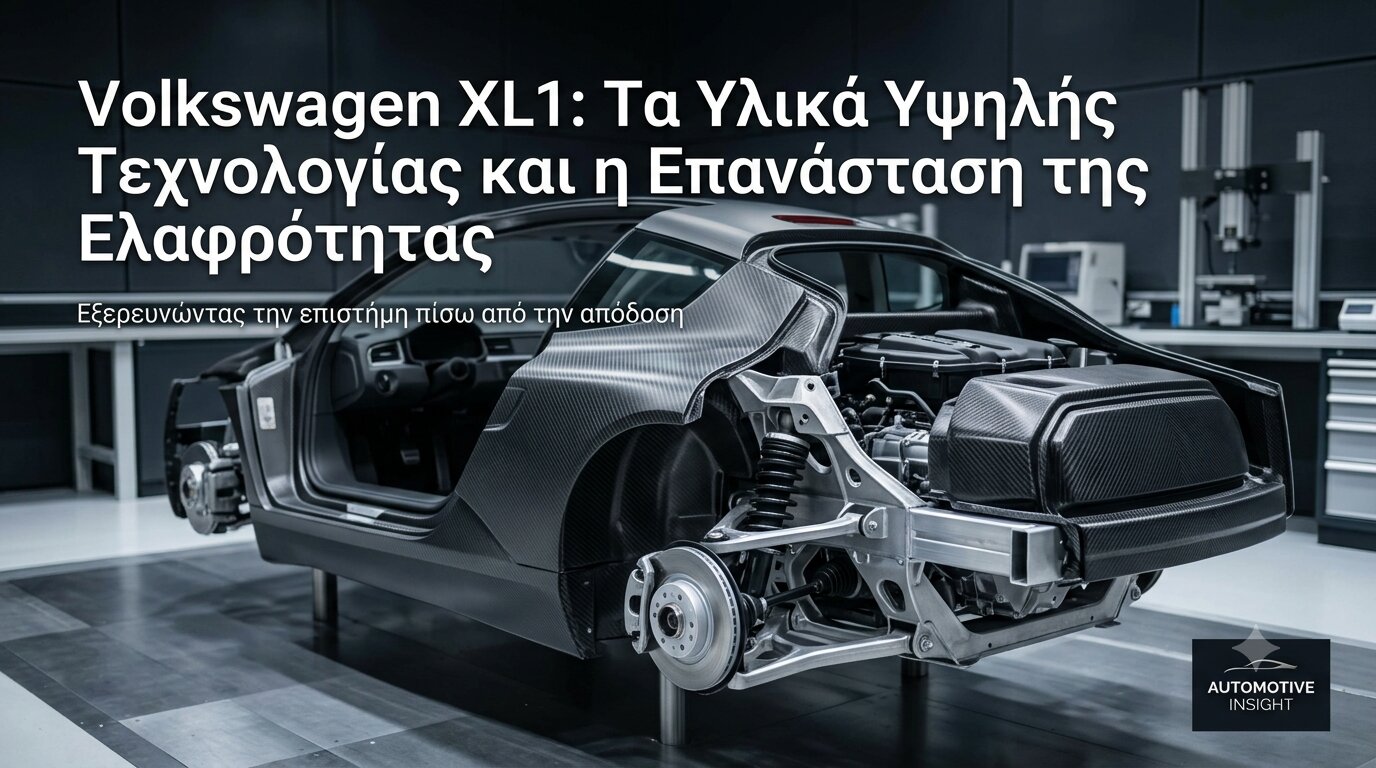
Every kilogram a vehicle carries requires energy to move.
For that reason, the XL1 weighed just:
795 kilograms (1,753 pounds)
To put that into perspective:
| Vehicle | Weight |
|---|---|
| Volkswagen XL1 | 795 kg |
| Toyota Yaris Hybrid | ~1,150 kg |
| Volkswagen Golf | ~1,350 kg |
| Tesla Model 3 | ~1,760 kg |
| Tesla Model Y | ~1,980 kg |
The XL1 weighed less than many modern city cars despite featuring a hybrid powertrain and advanced safety systems.
This low weight was one of the most important reasons behind its exceptional efficiency.
2. Aerodynamics Without Compromise
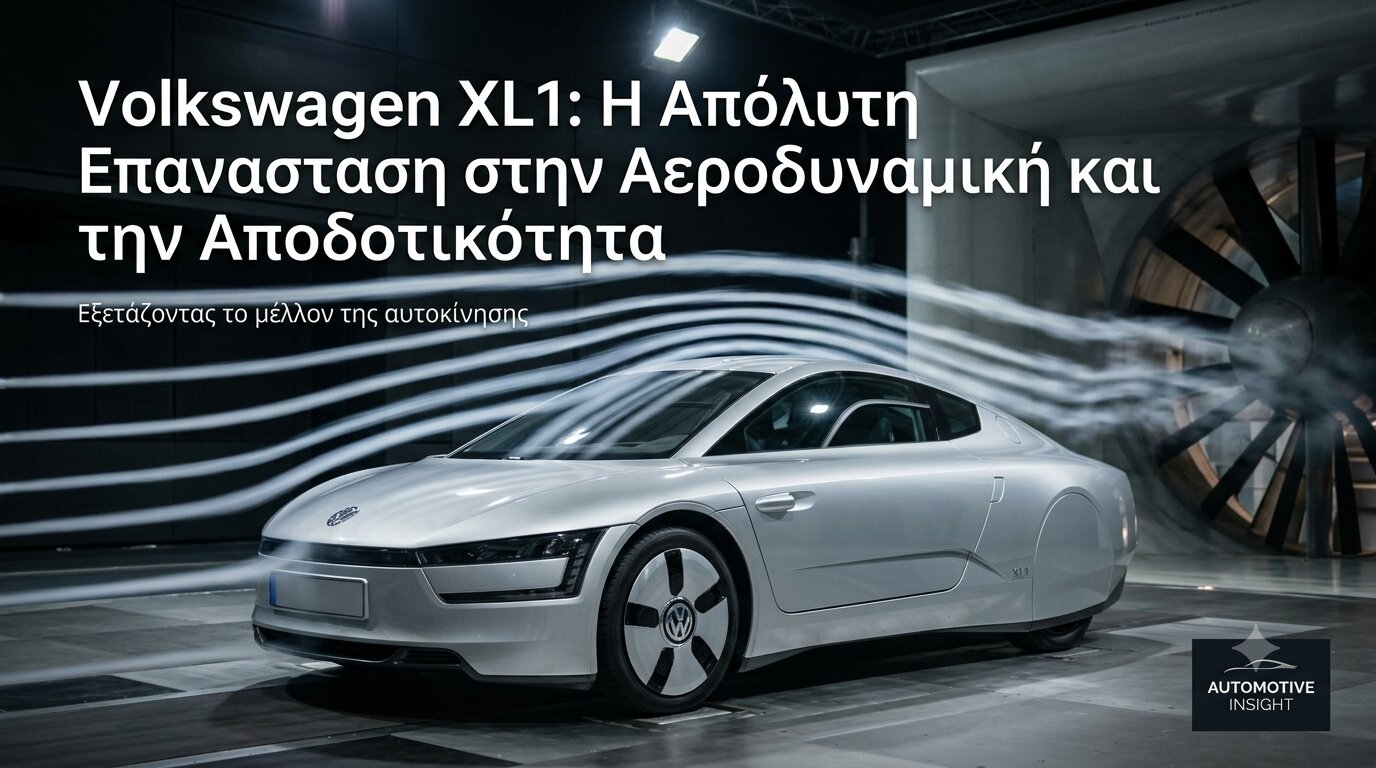
At highway speeds, aerodynamic drag becomes the largest energy consumer in any vehicle.
Volkswagen invested heavily in wind tunnel development to create one of the most aerodynamic production cars ever built.
The result:
Drag Coefficient (Cd): 0.189
Even by 2026 standards, this remains an extraordinary figure.
| Vehicle | Drag Coefficient |
|---|---|
| Volkswagen XL1 | 0.189 |
| Lucid Air | 0.197 |
| Mercedes EQS | 0.20 |
| Tesla Model 3 | 0.22 |
| Toyota Prius | 0.24 |
| Average SUV | 0.35–0.40 |
To achieve this, Volkswagen implemented several innovative solutions:
- Covered rear wheels
- Camera-based side mirrors
- Teardrop-shaped body design
- Ultra-low ride height
- Narrow rear track
The XL1 looked more like an aircraft fuselage than a traditional automobile.
3. Carbon Fiber Construction
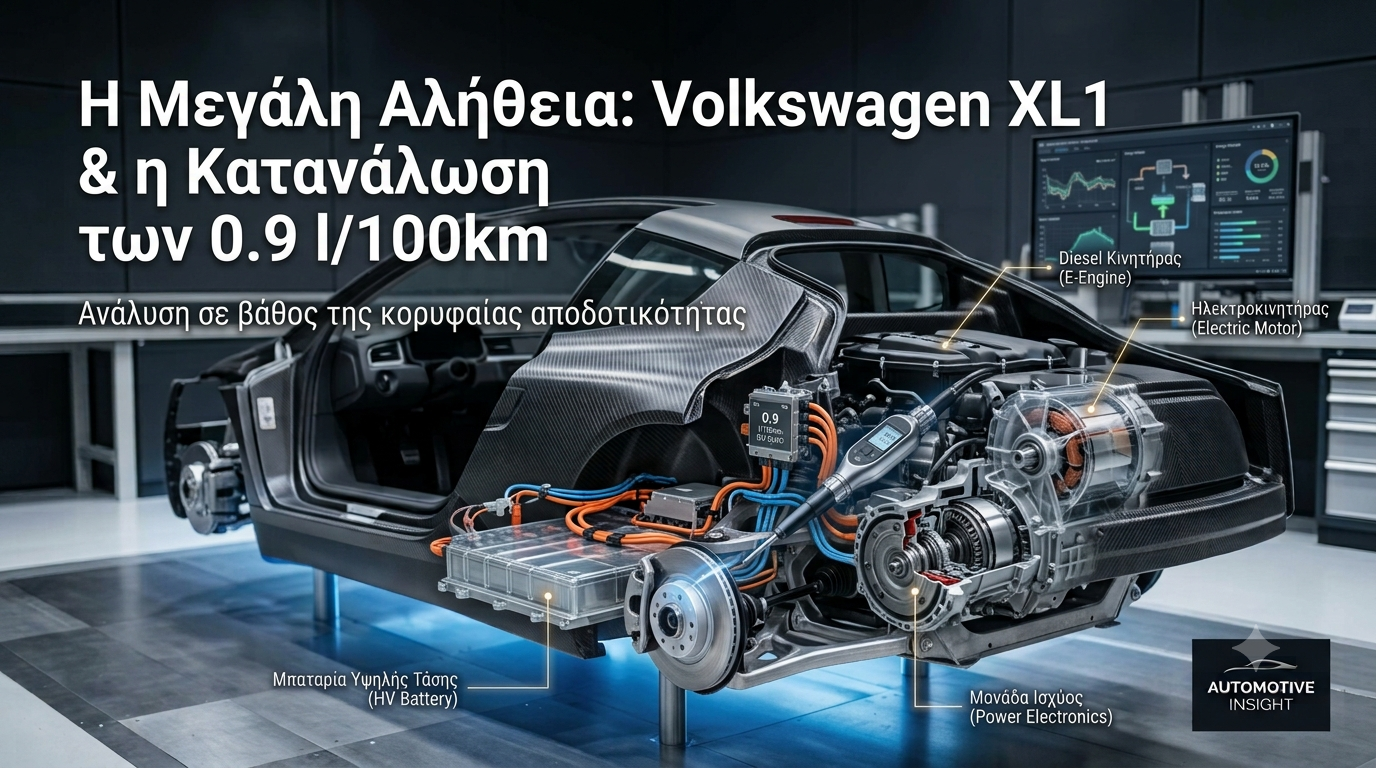
Reducing weight required materials rarely seen outside the supercar segment.
The XL1 featured a Carbon Fiber Reinforced Polymer (CFRP) monocoque chassis, dramatically reducing mass while maintaining structural rigidity and safety.
Benefits included:
- Significant weight savings
- Exceptional chassis stiffness
- Improved crash protection
- Increased efficiency
However, these advantages came at a cost.
Carbon fiber manufacturing remains expensive even today, making large-scale production difficult and costly.
4. An Advanced Plug-In Hybrid Powertrain
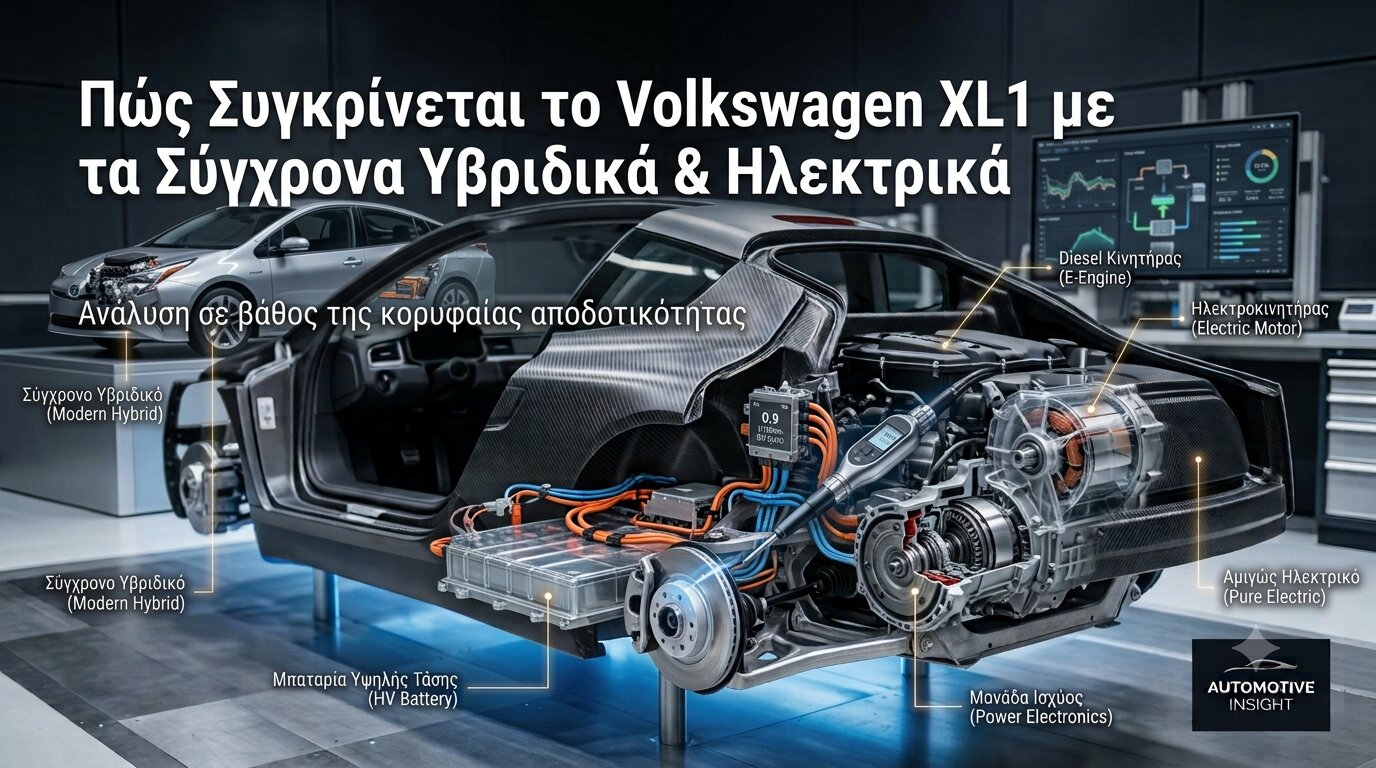
The XL1 combined:
- An 800cc two-cylinder turbo-diesel engine
- An electric motor
- A lithium-ion battery pack
- A 7-speed DSG transmission
The vehicle could travel approximately 50 kilometers (31 miles) in electric-only mode under ideal conditions.
By combining electric driving with an ultra-efficient diesel engine, Volkswagen created a vehicle capable of achieving unprecedented fuel economy figures.
The Truth Behind the 0.9 L/100 km Fuel Consumption Figure
This is where many articles and social media posts become misleading.
The famous 0.9 L/100 km figure was measured under the European NEDC testing cycle.
That means:
- The battery started fully charged.
- Testing occurred under laboratory conditions.
- Part of the journey was completed using stored electrical energy.
In real-world driving, fuel consumption depended heavily on:
- Driving style
- Battery charge level
- Temperature
- Road conditions
- Vehicle load
Nevertheless, independent road tests consistently confirmed that the XL1 remained one of the most efficient production vehicles ever built.
The official figure should therefore be viewed as a certified benchmark rather than a guaranteed real-world result.
Why Didn’t the XL1 Become a Commercial Success?
This is perhaps the most fascinating aspect of the XL1 story.
If it was so efficient, why didn’t the market embrace it?
The answer lies in consumer priorities.
Buyers Want More Than Fuel Economy
Most car buyers prioritize:
- Comfort
- Passenger space
- Cargo capacity
- Safety
- Convenience
- Styling
The XL1 offered:
- Only two seats
- Limited practicality
- Minimal storage space
- Difficult entry and exit due to its low profile
It was an engineering masterpiece but not an ideal family vehicle.
The Rise of SUVs
The XL1 arrived at a time when SUV sales were exploding globally.
Consumers increasingly preferred:
- Larger vehicles
- Higher seating positions
- Greater versatility
The XL1 represented the exact opposite philosophy.
While engineers pursued maximum efficiency, buyers pursued maximum practicality.
A Price Tag Above €100,000
Perhaps the biggest obstacle was cost.
Despite its tiny size, the XL1 cost more than €100,000.
For the same amount of money, buyers could purchase:
- A luxury sedan
- A premium SUV
- A high-performance sports car
The fuel savings simply could not justify the purchase price.
How Does the XL1 Compare With Modern Hybrids?
Today’s benchmark for fuel-efficient daily transportation remains the Toyota Prius.
| Vehicle | Average Fuel Consumption |
|---|---|
| Volkswagen XL1 | 0.9 L/100 km (NEDC) |
| Toyota Prius | ~4.1 L/100 km |
| Toyota Yaris Hybrid | ~3.8–4.2 L/100 km |
| Honda Civic e:HEV | ~4.2–4.8 L/100 km |
| Renault Clio E-Tech | ~4.2–4.5 L/100 km |
The difference is that modern hybrids offer:
- Five seats
- Large cargo areas
- Better practicality
- Significantly lower purchase prices
This demonstrates how efficiency alone is not enough to guarantee market success.
Electric Vehicles Changed the Rules
When the XL1 launched in 2013, electric vehicles were still a niche market.
Today, EVs have fundamentally changed the efficiency conversation.
Vehicles such as:
- Tesla Model 3
- Hyundai Ioniq 6
- Lucid Air
achieve energy efficiency levels that can outperform the XL1 in terms of operating costs.
With home charging, some EV owners spend less than the equivalent of €3–4 per 100 kilometers.
As battery technology improves, efficiency gains increasingly come from software, aerodynamics, and lightweight engineering—the very principles that made the XL1 revolutionary.
What the Automotive Industry Learned From the XL1
The Volkswagen XL1 proved a critical lesson that remains relevant today:
Efficiency is not determined solely by the powertrain.
True efficiency comes from the combination of:
- Lightweight construction
- Aerodynamic optimization
- Energy management
- Intelligent engineering
These same principles now define the world’s most advanced electric vehicles.
In many ways, the XL1 predicted the future.
The Legacy of the Volkswagen XL1
Only around 250 units were produced, making the XL1 one of the rarest production vehicles of the modern era.
Yet its impact extends far beyond those few cars.
The project demonstrated that extraordinary efficiency is achievable when engineers are willing to challenge conventional automotive design.
Many technologies and engineering philosophies explored in the XL1 continue to influence modern hybrid and electric vehicles today.
Conclusion
The Volkswagen XL1 was far more than an experimental hybrid.
It was a bold engineering statement that pushed automotive efficiency to unprecedented levels.
With an official fuel consumption rating of just 0.9 liters per 100 kilometers, a lightweight carbon-fiber structure, and record-breaking aerodynamics, it remains one of the most remarkable production cars ever built.
At the same time, the XL1 revealed an important truth about the automotive market: consumers do not buy fuel economy alone. They buy comfort, practicality, convenience, safety, and lifestyle.
That reality ultimately prevented the XL1 from becoming a mainstream success.
Nevertheless, its technological legacy lives on in every modern hybrid and electric vehicle designed around the principles of efficiency, aerodynamics, and intelligent engineering.
The Volkswagen XL1 may not have changed the world overnight, but it undeniably helped shape the future of automotive innovation.