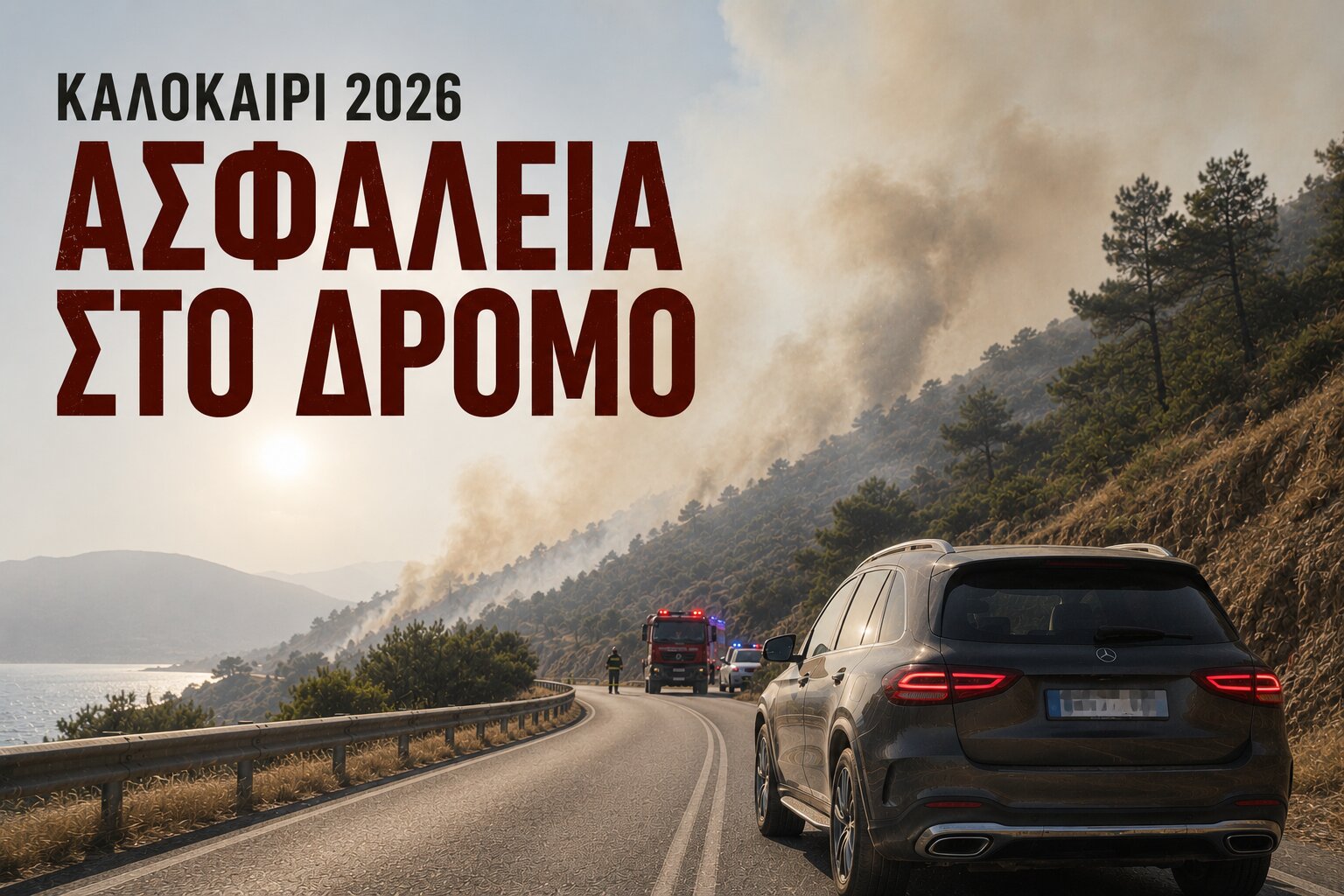
Summer in Greece is synonymous with holidays, road trips and unforgettable destinations. Every year, millions of residents and visitors travel across the country by car, heading to islands, coastal towns and mountain villages.
Behind this idyllic picture, however, lies another reality. Summer is also the period when Greece faces its greatest challenges from high temperatures and wildfires. Heatwaves, dry vegetation and changing weather conditions require every traveler to be better prepared than ever before.
Whether you are driving your own vehicle or a rental car, understanding the risks before you leave can make the difference between a safe journey and an unexpected emergency.
Why Summer Travel Requires More Preparation
High temperatures are nothing unusual for Greece. What has changed in recent years is the increasing frequency of prolonged hot periods, combined with dry conditions and stronger wildfire risk.
For travelers, this means that a journey can be affected not only by traffic but also by:
- temporary road closures,
- traffic diversions,
- long delays,
- restricted access to forests and protected areas,
- emergency alerts from the 112 public warning system.
Checking the weather forecast is no longer enough. Before every major trip, it is also worth reviewing the daily Wildfire Risk Forecast Map issued by the Greek Civil Protection authorities.
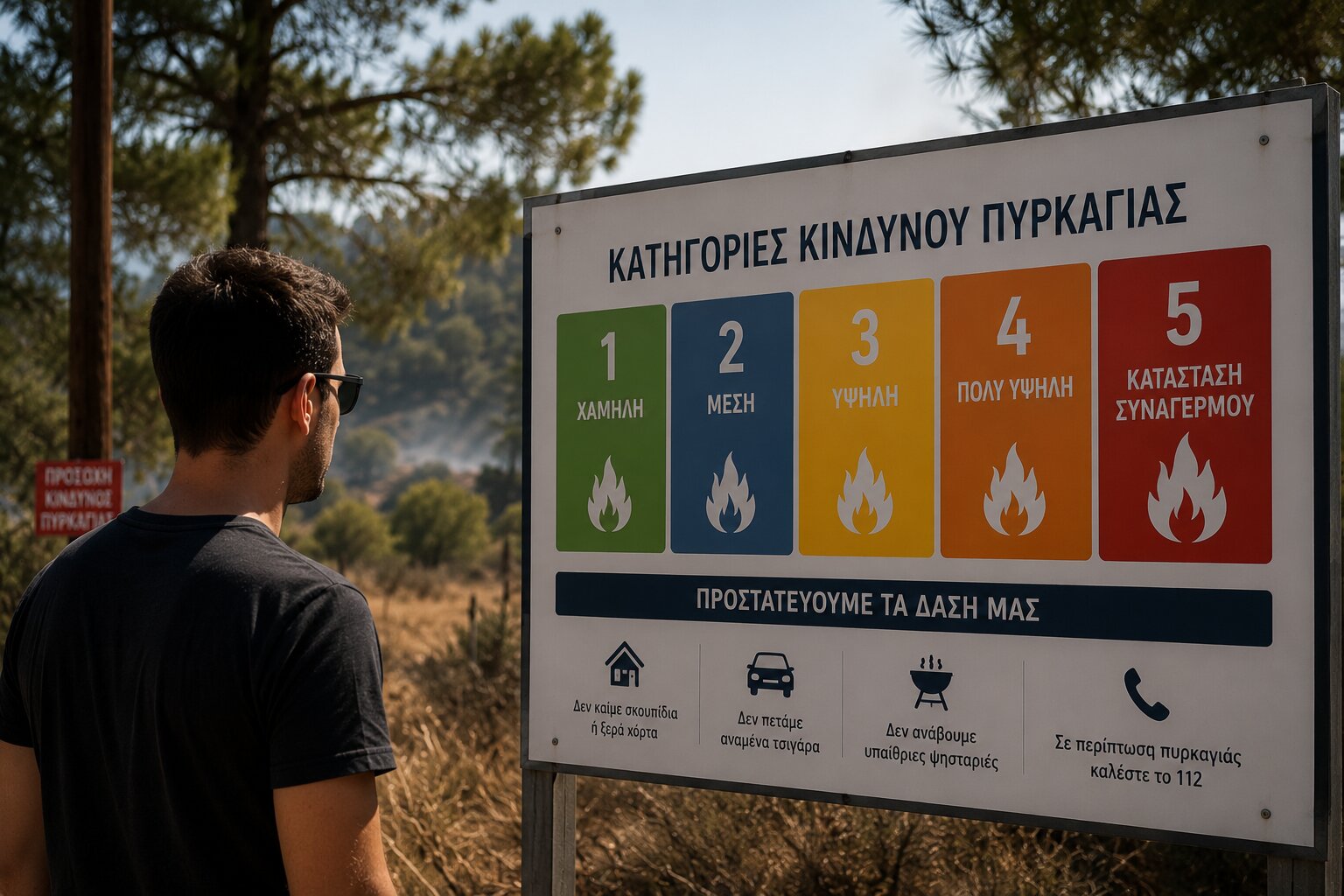
Understanding Greece’s Five Wildfire Risk Levels
Every summer, the General Secretariat for Civil Protection publishes a daily wildfire risk map. The colours on that map are not just statistics—they indicate how dangerous conditions may become during the following 24 hours.
Understanding these levels helps travelers make better decisions before they leave.
Level 1 – Low Risk
Weather conditions are relatively favourable and the likelihood of rapid wildfire spread is limited.
What this means for travelers:
Travel plans can normally continue as expected, while basic fire safety rules should always be respected.
Level 2 – Moderate Risk
Conditions become more favourable for wildfire ignition, particularly in areas with dry vegetation.
What this means for travelers:
If your route includes rural or forested areas, stay informed about local conditions and avoid any activity that could accidentally start a fire.
Level 3 – High Risk
Authorities are on increased alert because a wildfire could spread quickly if it starts.
What this means for travelers:
- Check the daily wildfire map before departure.
- Follow local traffic announcements.
- Consider alternative routes if travelling through forested regions.
Level 4 – Very High Risk
This level indicates particularly dangerous weather conditions that could allow a wildfire to develop rapidly.
What this means for travelers:
- Access to certain forests or national parks may be restricted.
- Preventive measures may already be in place.
- Monitoring official announcements throughout the day becomes essential.
Level 5 – State of Alert
This is the highest wildfire risk level.
Emergency services operate at maximum readiness, while additional protective measures may be introduced.
What this means for travelers:
- Avoid unnecessary travel towards high-risk areas.
- Follow all official instructions immediately.
- If you receive an emergency alert through the 112 system, follow it without delay.
The Most Vulnerable Part of Every Journey Is Not the Car
Most drivers worry about engine problems during hot weather.
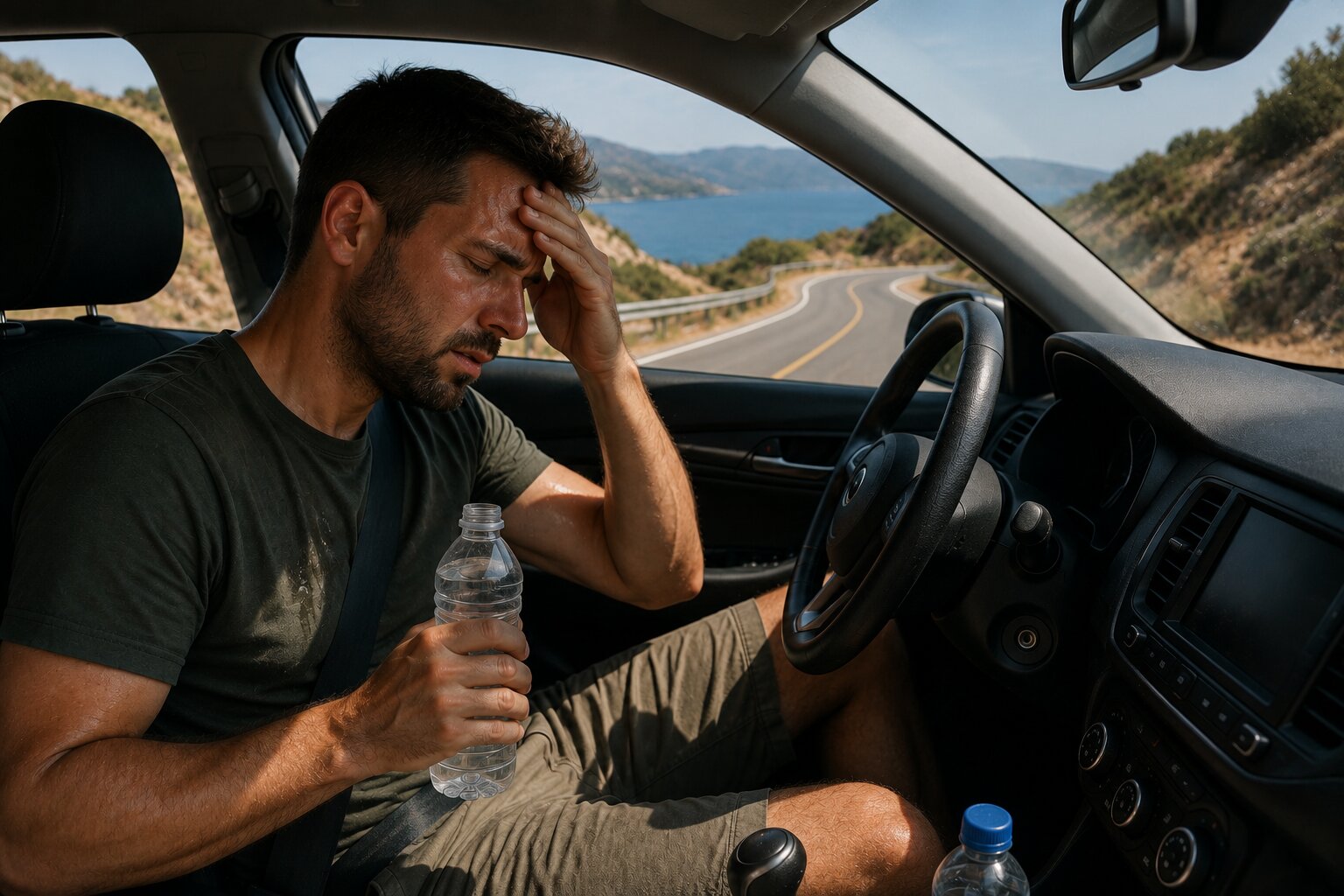
In reality, the first thing affected by extreme heat is the human body.
Long exposure to high temperatures can lead to:
- dehydration,
- heat exhaustion,
- headaches,
- dizziness,
- reduced concentration,
- slower reaction times.
For someone behind the wheel, even a slight reduction in alertness can significantly increase accident risk.
Who Is Most Vulnerable?
Heat does not affect everyone equally.
Extra care should be taken when travelling with:
- infants and young children,
- older adults,
- pregnant women,
- people with heart or respiratory conditions,
- individuals taking medication that may affect body temperature regulation.
For these groups, even a long traffic delay under intense sunlight can become physically demanding.
Planning your departure early in the morning or later in the evening, carrying sufficient drinking water and taking regular breaks can make the journey much safer and more comfortable.
A Common Mistake Many Drivers Make
Many people spend hours preparing their luggage before leaving for holiday.
Very few spend five minutes preparing themselves.
Travelling while tired, dehydrated or under intense heat places unnecessary stress on both the driver and every passenger inside the vehicle.
Simple habits—such as drinking water regularly, avoiding heavy meals before driving and taking short breaks every couple of hours—can dramatically improve both comfort and safety.
In Part 2, we will explain how to prepare your vehicle for summer travel, what to do if you encounter a wildfire on your route, how Greece’s 112 emergency alert system works, and the practical steps every family should take before setting off on a summer journey.
Preparing before you leave is only half the journey. The other half depends on how you react if conditions suddenly change.
During the Greek summer, a wildfire several kilometres away can quickly lead to road closures, traffic diversions or long delays. Staying calm, following official instructions and making informed decisions are often far more important than trying to reach your destination as quickly as possible.
Prepare Your Vehicle Before Every Trip
Just as you pack your luggage, your vehicle deserves a final check before a long journey.
Pay particular attention to the following:
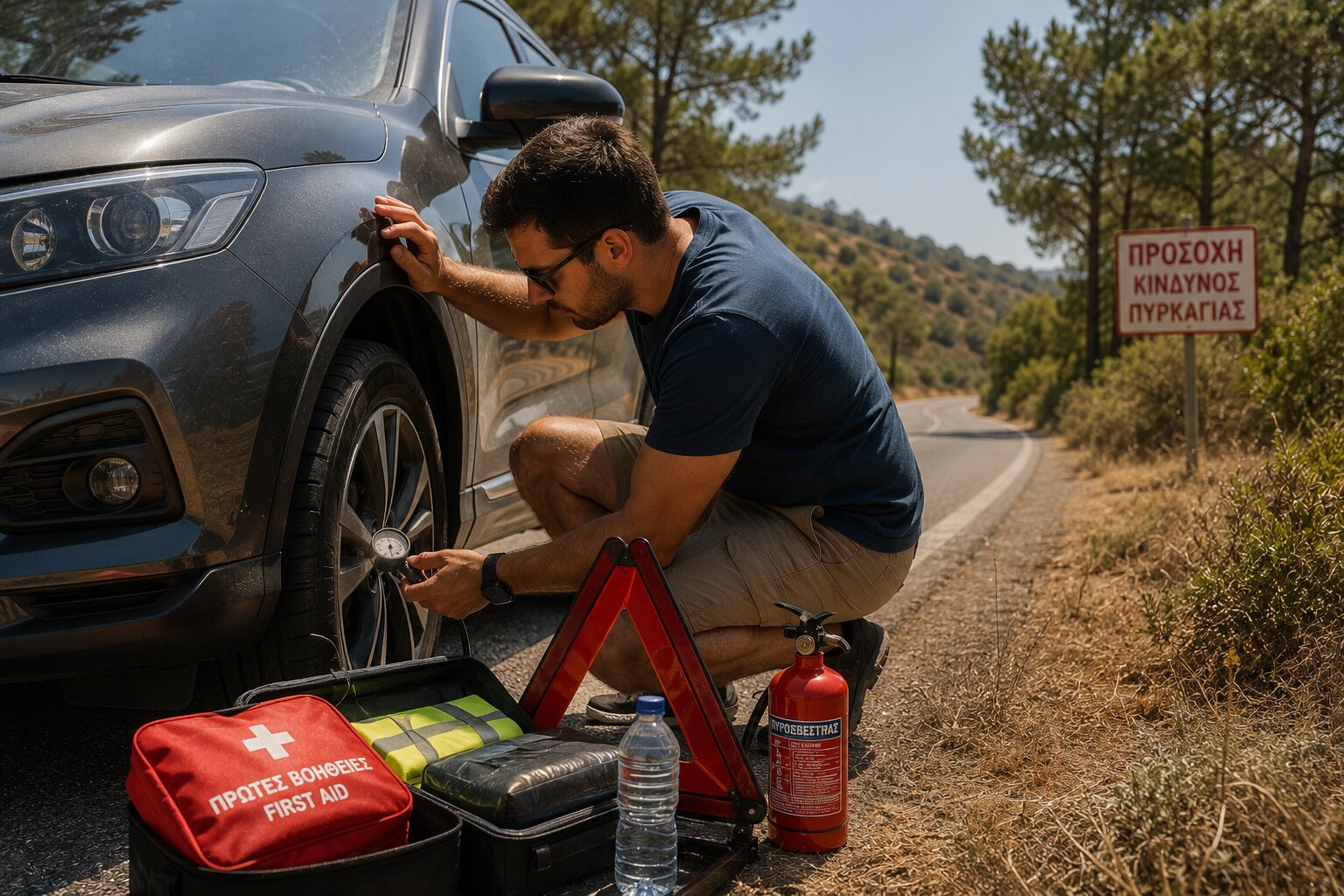
Tyres
Tyres are your vehicle’s only contact with the road.
Before travelling, check:
- tyre pressure,
- tread condition,
- manufacturing date,
- spare wheel or tyre repair kit.
High road temperatures place additional stress on tyres, especially if they are worn or underinflated.
Cooling System
Summer places extra demands on your engine’s cooling system.
Make sure to inspect:
- coolant level,
- possible leaks,
- radiator condition,
- cooling fan operation.
Preventive maintenance is always cheaper—and safer—than dealing with a breakdown during your holiday.
Air Conditioning
Air conditioning is much more than a comfort feature.
A properly functioning system helps reduce driver fatigue, improves concentration and keeps children, older passengers and pets safer during long journeys.
If cooling performance has noticeably decreased, have the system inspected before travelling.
Battery
Many people associate battery problems with winter.
However, extreme heat also accelerates battery wear.
If your battery already shows signs of weakness, replacing it before your trip may prevent unnecessary stress later.
Build a Simple Summer Emergency Kit
Besides the legally required safety equipment, every vehicle should ideally carry:
- drinking water,
- a fully charged power bank,
- charging cables,
- a flashlight,
- a basic first-aid kit,
- sunscreen,
- hats,
- wet wipes,
- light snacks,
- a towel or lightweight blanket.
Families travelling with children should also carry extra water and food in case unexpected delays occur.
What Should You Do If You Receive a 112 Emergency Alert?
Greece’s 112 Emergency Warning System plays an essential role during wildfires and other natural emergencies.
If you receive an alert:
- read the message carefully,
- do not ignore it,
- follow the instructions immediately,
- avoid relying solely on social media for information.
Official alerts are based on real-time operational data and are designed to protect public safety.
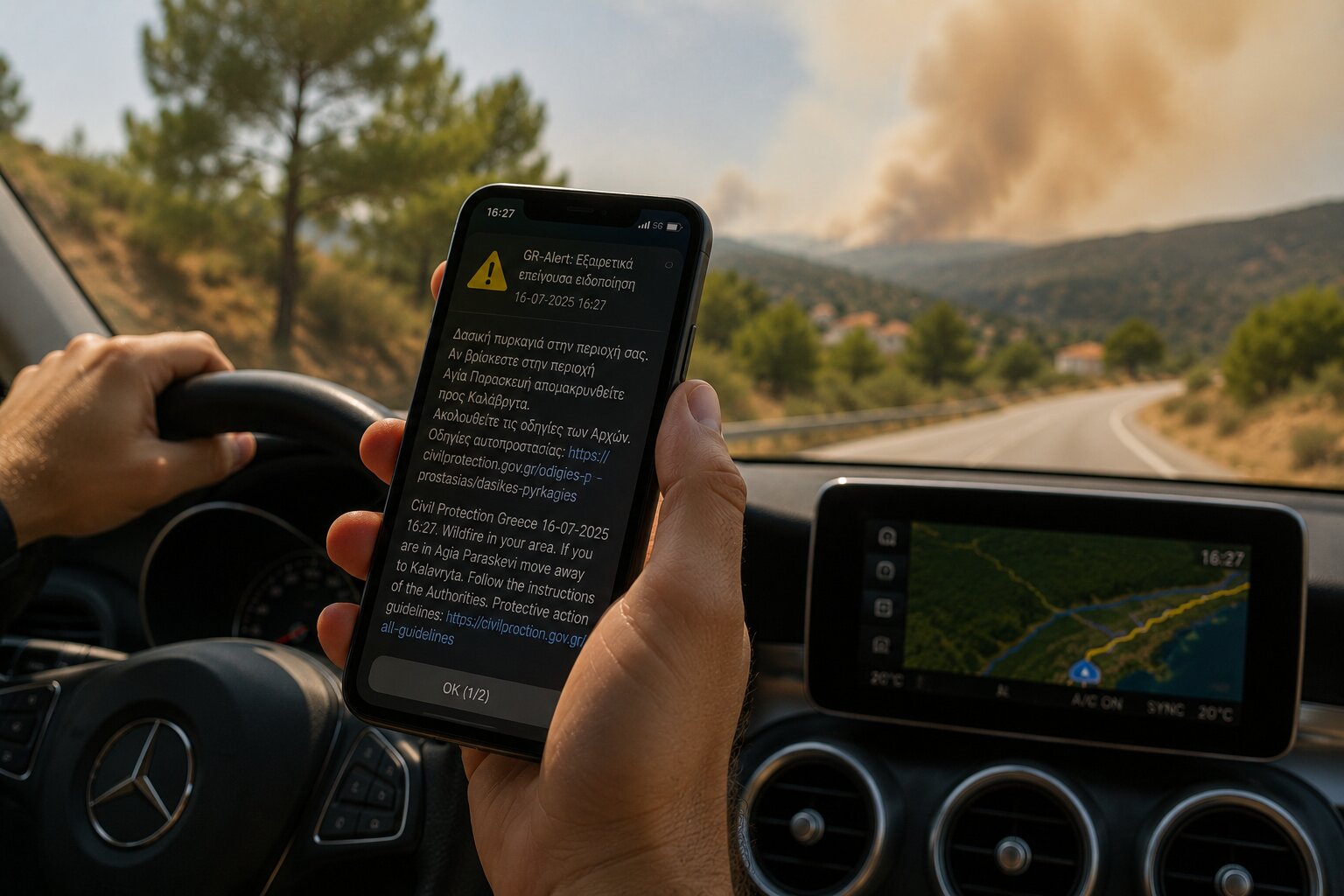
What If You Encounter a Wildfire While Driving?
Seeing smoke ahead does not always mean the fire is nearby.
Nevertheless, it should never be ignored.
If you approach an area affected by wildfire:
- remain calm,
- reduce your speed,
- follow Police and Fire Service instructions,
- never drive around roadblocks,
- avoid taking unofficial shortcuts through rural or forest roads.
Navigation apps can be useful, but they may not immediately reflect emergency road closures.
Always prioritise official instructions over GPS suggestions.
If visibility is reduced by heavy smoke:
- switch on your headlights,
- close the windows,
- activate air recirculation,
- maintain a safe distance from the vehicle ahead.
Common Summer Travel Mistakes
Every summer, many drivers make the same avoidable mistakes.
They:
- begin long journeys without drinking enough water,
- drive for hours without taking breaks,
- travel during the hottest hours of the day,
- ignore the daily wildfire risk forecast,
- postpone checking warning lights on the dashboard,
- continue driving despite signs of engine overheating.
Most of these situations can be avoided with a few minutes of preparation.
Travelling With Children and Older Family Members
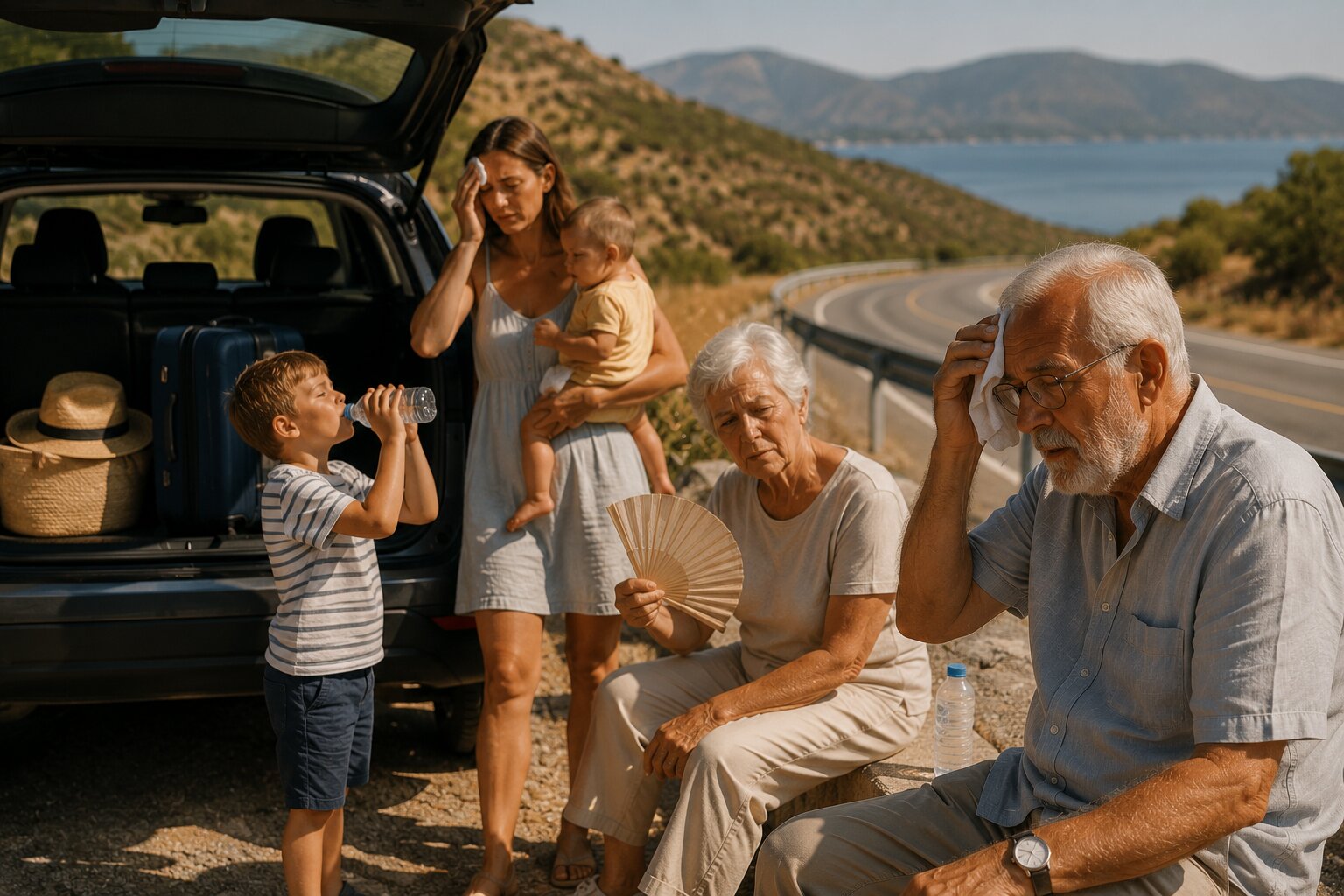
Children and older adults are far more sensitive to heat.
During long trips:
- offer water regularly,
- schedule more frequent breaks,
- keep the cabin comfortably cool,
- never leave anyone inside a parked vehicle,
- avoid unnecessary exposure during the hottest part of the day.
If travelling with pets, apply exactly the same principles. Heat can affect animals much faster than many people realise.
If You Are Driving a Rental Car
Millions of visitors explore Greece every year using rental vehicles.
Before leaving the rental office:
- familiarise yourself with the vehicle,
- save the roadside assistance number,
- understand the emergency procedure,
- confirm the fuel type—or charging procedure if the vehicle is electric.
Taking five extra minutes at pickup can save considerable time and stress later.
Safe Travel Starts Before the Engine Starts
One of the biggest misconceptions is that road safety begins once the vehicle starts moving.
In reality, it begins much earlier.
Checking the weather forecast, reviewing the daily wildfire risk map, preparing your vehicle and making sure every passenger is ready for the journey are all part of travelling safely.
Final Thoughts
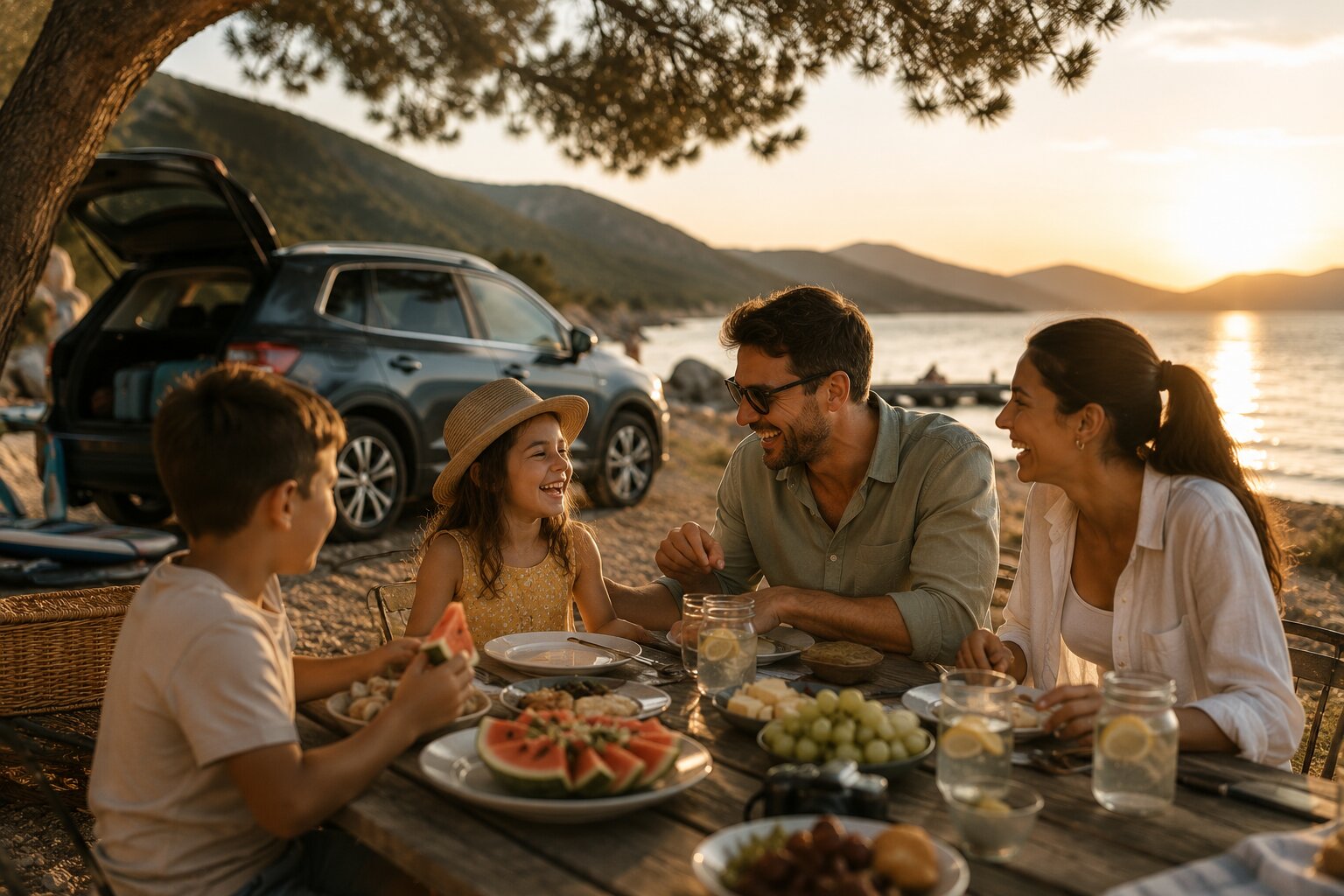
Summer should be remembered for holidays, beautiful destinations and time spent with family—not for preventable emergencies.
High temperatures and increased wildfire risk should not discourage anyone from travelling across Greece. Instead, they remind us that preparation, awareness and responsible decision-making are essential parts of every journey.
Whether you are travelling with your family, exploring Greece in a rental car or simply driving to your next destination, a few simple precautions can make a significant difference.
Because the true success of every journey is not arriving quickly.
It is arriving safely—together.