

Greece is entering one of the most significant infrastructure transformation periods of the last two decades. By mid-2027, three flagship projects worth several billion euros are expected to reshape the country’s transportation network, creating faster, safer and more efficient connections for millions of residents and visitors.
The E65 Central Motorway, the Northern Road Axis of Crete (BOAK) and the Thessaloniki Flyover are not simply construction projects. They are strategic investments that will redefine mobility, boost tourism, strengthen regional economies and significantly improve road safety throughout Greece.
As these projects reach completion, Greece is positioning itself among Europe’s modern transportation networks, creating a new era of connectivity for the coming decades.
E65: The Motorway Connecting Central and Northern Greece
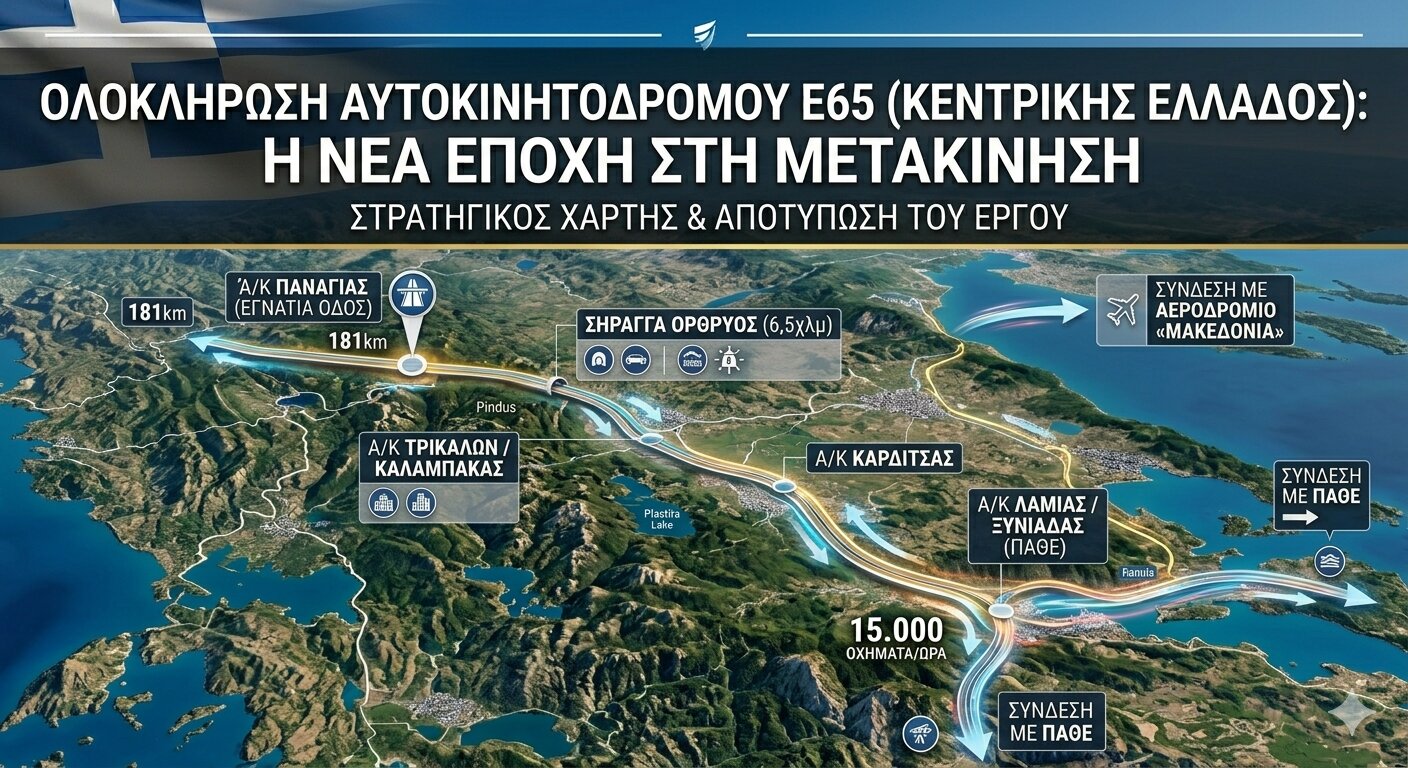
The E65 Central Motorway is one of the most important road infrastructure projects ever built in Greece.
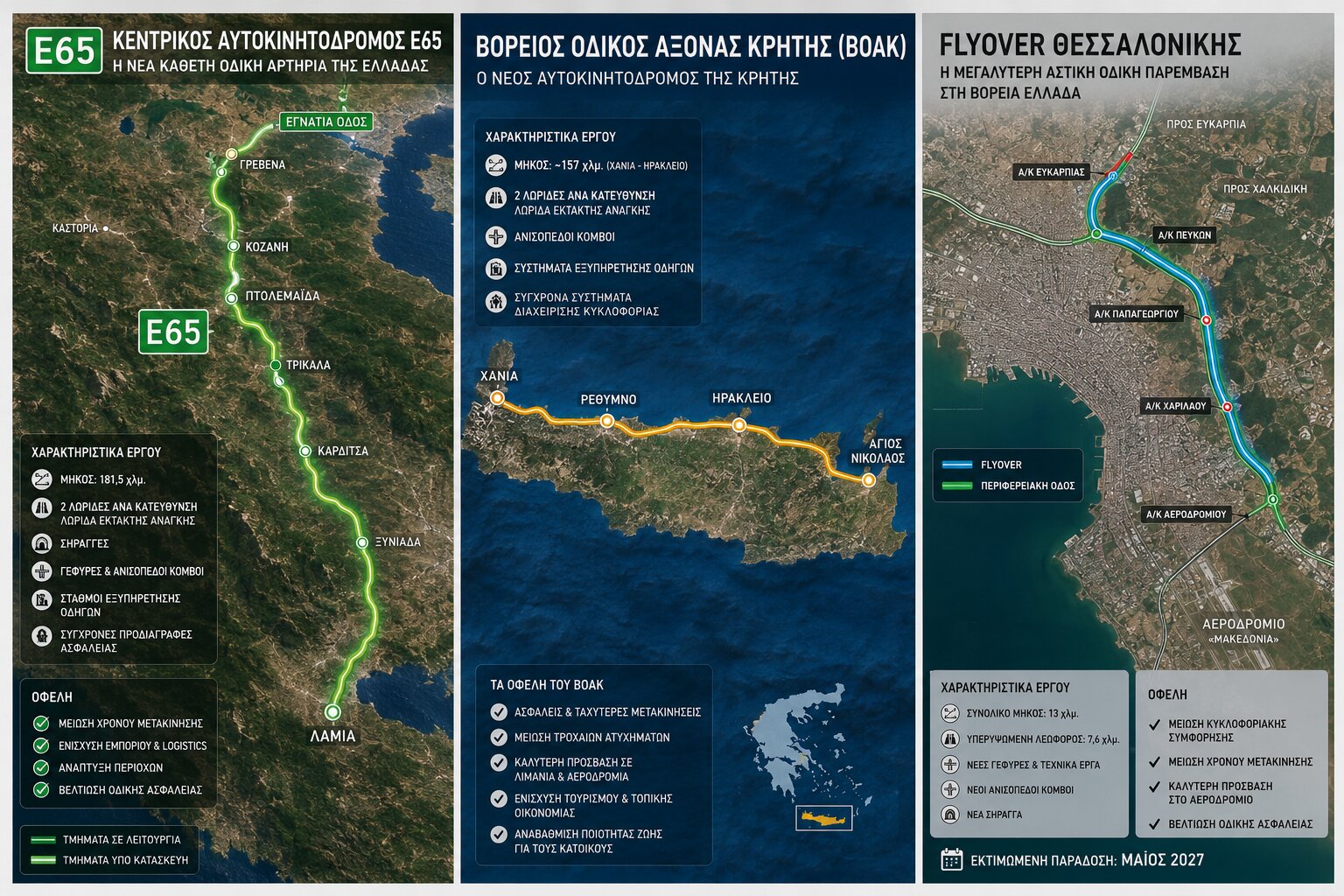
With a total length of approximately 181.5 kilometers, the motorway connects Lamia with the Egnatia Motorway, creating a new north-south transportation corridor that complements the country’s main PATHE motorway.
The E65 is divided into three major sections:
- Southern Section: Lamia – Xyniada (32.5 km)
- Central Section: Xyniada – Trikala (79 km)
- Northern Section: Trikala – Egnatia Motorway (70.5 km)
The completion of the northern section is the final step that transforms the E65 into a fully operational national transportation axis.
How will travel change?
The E65 will significantly reduce travel times across mainland Greece.
Estimated improvements include:
- Athens – Grevena: up to one hour faster.
- Athens – Kozani: approximately 3.5 hours.
- Athens – Kastoria: considerably shorter journeys.
- Thessaly – Epirus: substantially improved connectivity.
Technical specifications
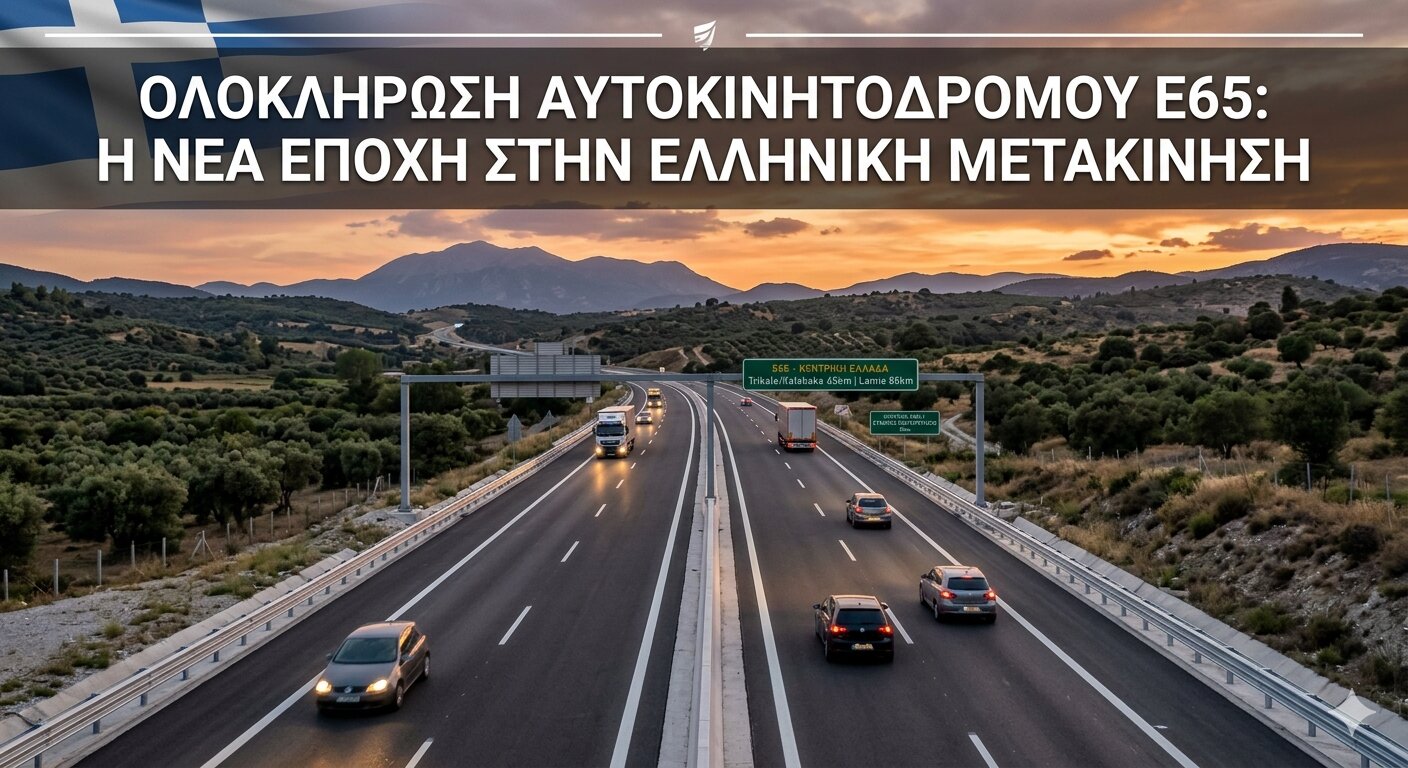
The motorway includes:
- Two traffic lanes in each direction.
- Emergency lanes.
- Modern tunnels.
- Dozens of bridges.
- Grade-separated interchanges.
- Service and rest areas.
- Advanced safety systems.
Economic impact
The E65 creates a new logistics corridor linking:
- Port of Piraeus
- Thessaly
- Western Macedonia
- Egnatia Motorway
- Balkan markets
For the first time, previously remote regions gain direct access to Greece’s largest economic centers.
BOAK: The Largest Infrastructure Project Ever Built in Crete
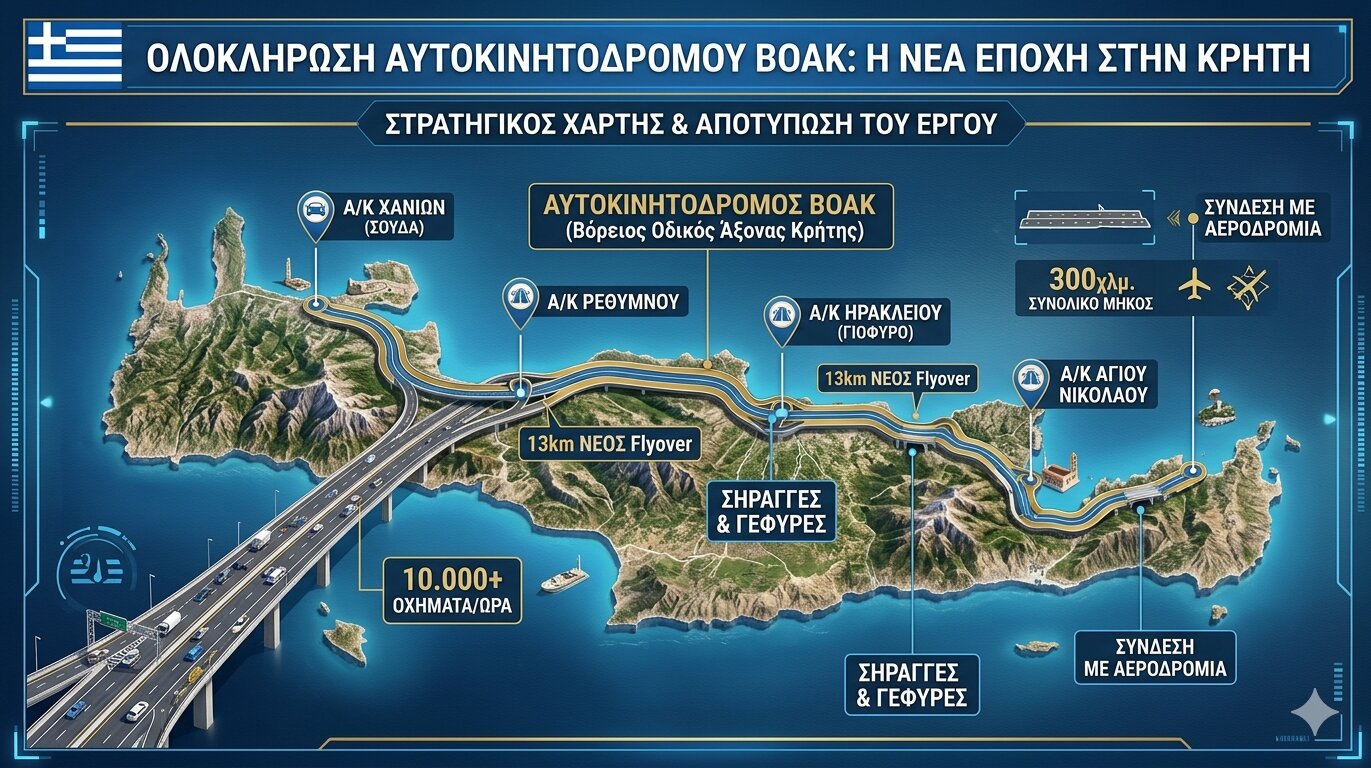
The Northern Road Axis of Crete (BOAK) is the largest development project ever undertaken on the island.
Despite being one of Greece’s strongest tourism destinations, Crete has long relied on an outdated and dangerous road network.
BOAK aims to completely transform transportation across the island.
Which cities will it connect?
The new motorway will serve:
- Chania
- Rethymno
- Heraklion
- Agios Nikolaos
The main concession section focuses on the Chania – Heraklion corridor, spanning approximately 157 kilometers, while additional upgrades will gradually extend toward eastern Crete.
Why is this project so important?
Crete has historically recorded high numbers of severe traffic accidents.
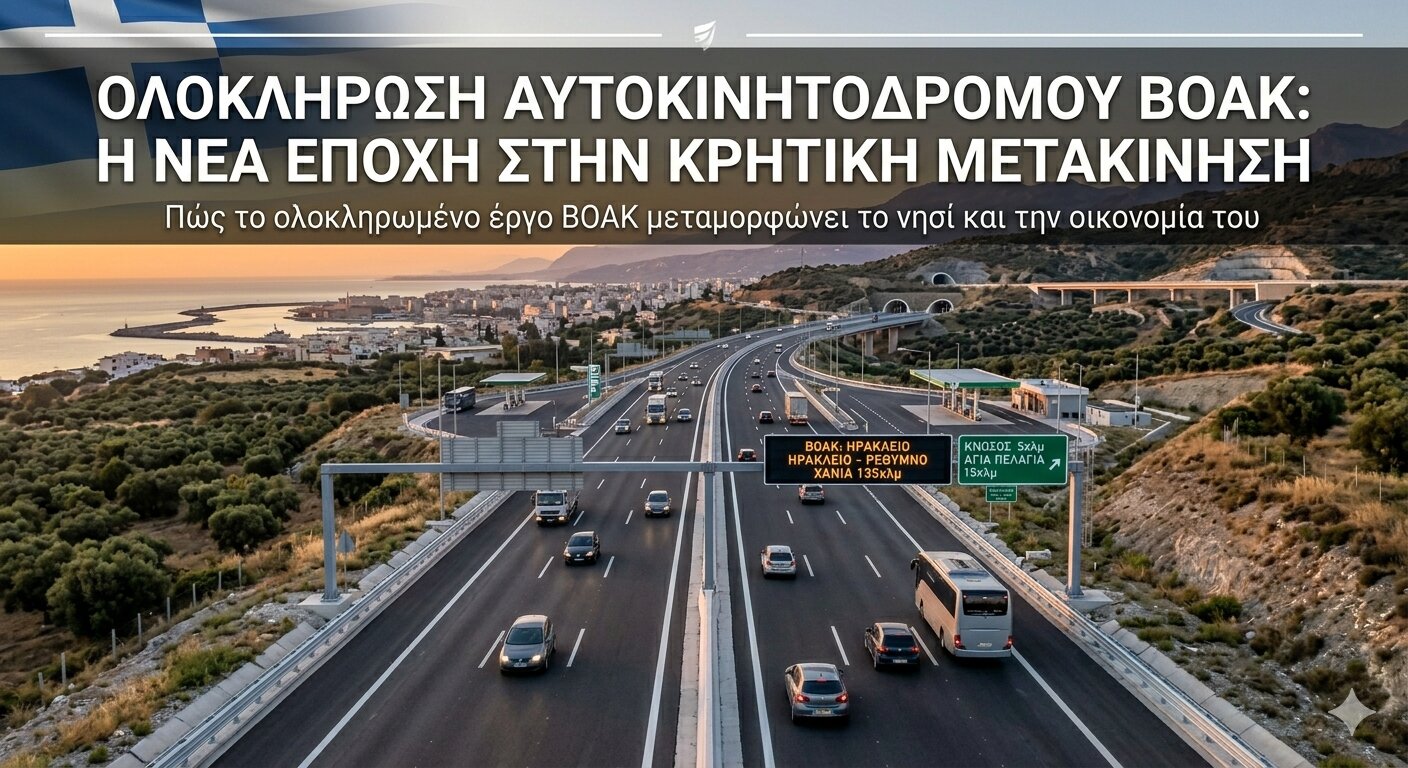
BOAK will introduce:
- Separate traffic directions.
- Modern safety barriers.
- New interchanges.
- Intelligent traffic management systems.
- Improved access to ports and airports.
Tourism benefits
Visitors will be able to travel much more efficiently across the island.
Examples include:
- Chania to Heraklion.
- Heraklion Airport to Rethymno.
- Souda Port to major tourist destinations.
The project is also expected to significantly strengthen the car rental industry, allowing tourists to explore more destinations comfortably and safely.
Thessaloniki Flyover: Northern Greece’s Largest Urban Mobility Project
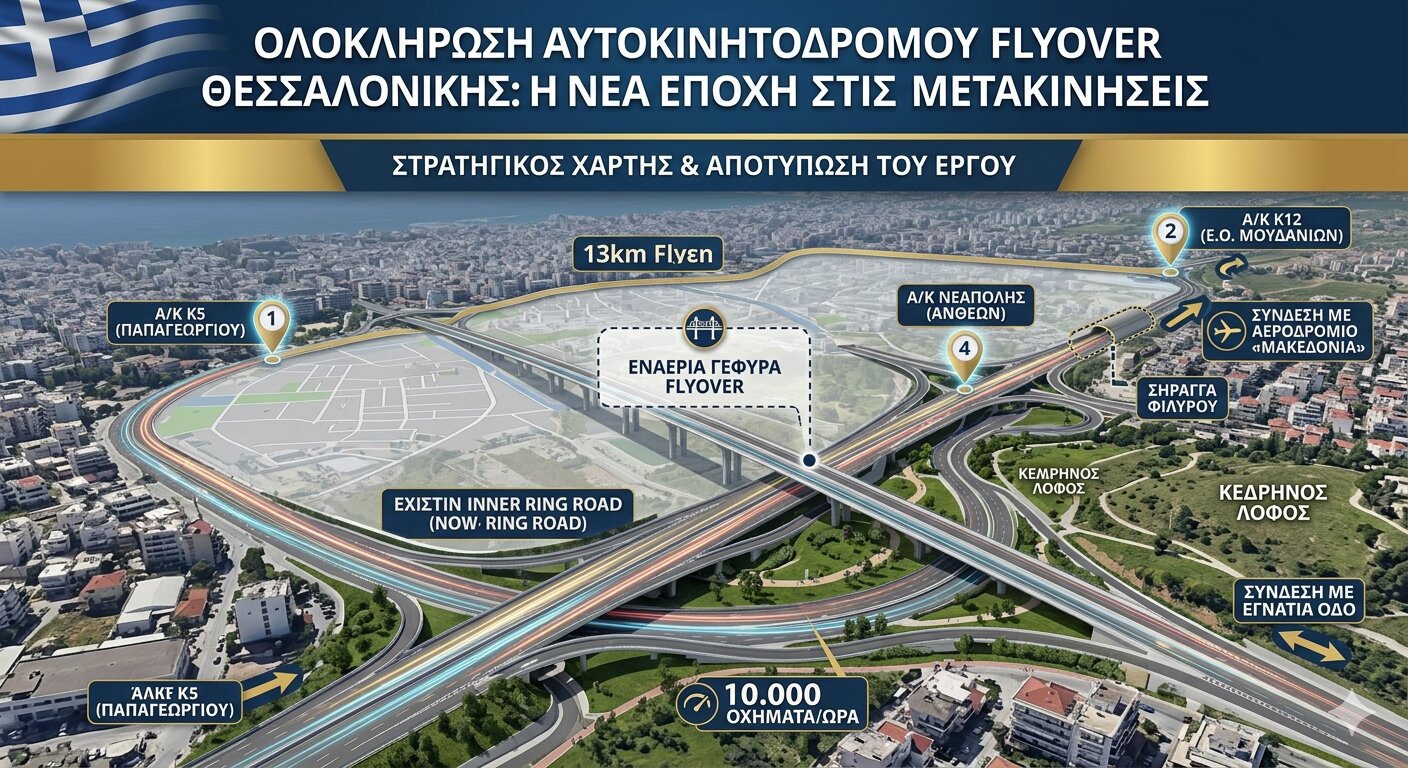
The Thessaloniki Flyover is arguably the most innovative infrastructure project currently under construction in Greece.
Unlike a traditional motorway, the Flyover is an elevated expressway built above Thessaloniki’s existing Inner Ring Road.
Technical characteristics
The project includes:
- Upgrade of approximately 13 kilometers of the existing ring road.
- Construction of a new 7.6-kilometer elevated expressway.
- A continuous bridge structure of nearly 4 kilometers.
- New tunnels.
- New interchanges.
Completion timeline
According to the official schedule, the project is expected to be delivered on 16 May 2027.
Construction is progressing according to plan and remains one of the country’s top infrastructure priorities.
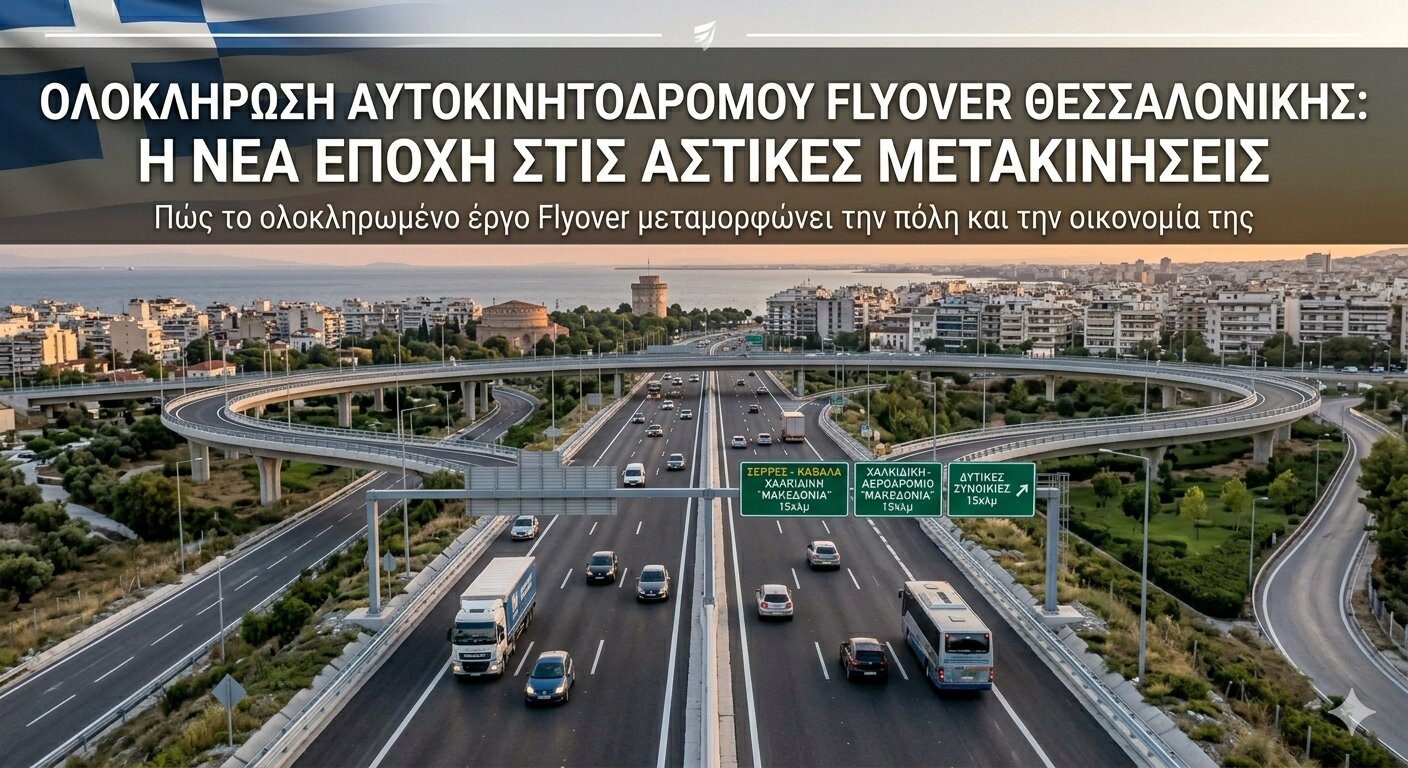
How will it operate?
The Flyover will primarily serve through traffic.
A significant portion of vehicles currently using the ring road will be redirected to the elevated section.
Traffic studies estimate that approximately 25% to 35% of daily traffic will be transferred to the new infrastructure.
Key benefits
The Flyover will provide:
- Reduced travel times.
- Lower traffic congestion.
- Improved road safety.
- Faster access to Macedonia Airport.
- Better connectivity to Chalkidiki.
- More efficient daily commuting for thousands of drivers.
Greece in 2027: A New Era of Mobility
The E65, BOAK and Thessaloniki Flyover represent far more than three large construction projects.
Together, they form the foundation of a new transportation ecosystem for Greece.
For the first time in decades, the country is building infrastructure that matches the needs of a modern economy, a thriving tourism industry and a growing demand for safer mobility.
Distances will become shorter, regions will be better connected and drivers will enjoy significantly safer journeys.
By mid-2027, Greece will not simply have more roads. It will possess an entirely new transportation network that will define its economic and tourism development for decades to come.