
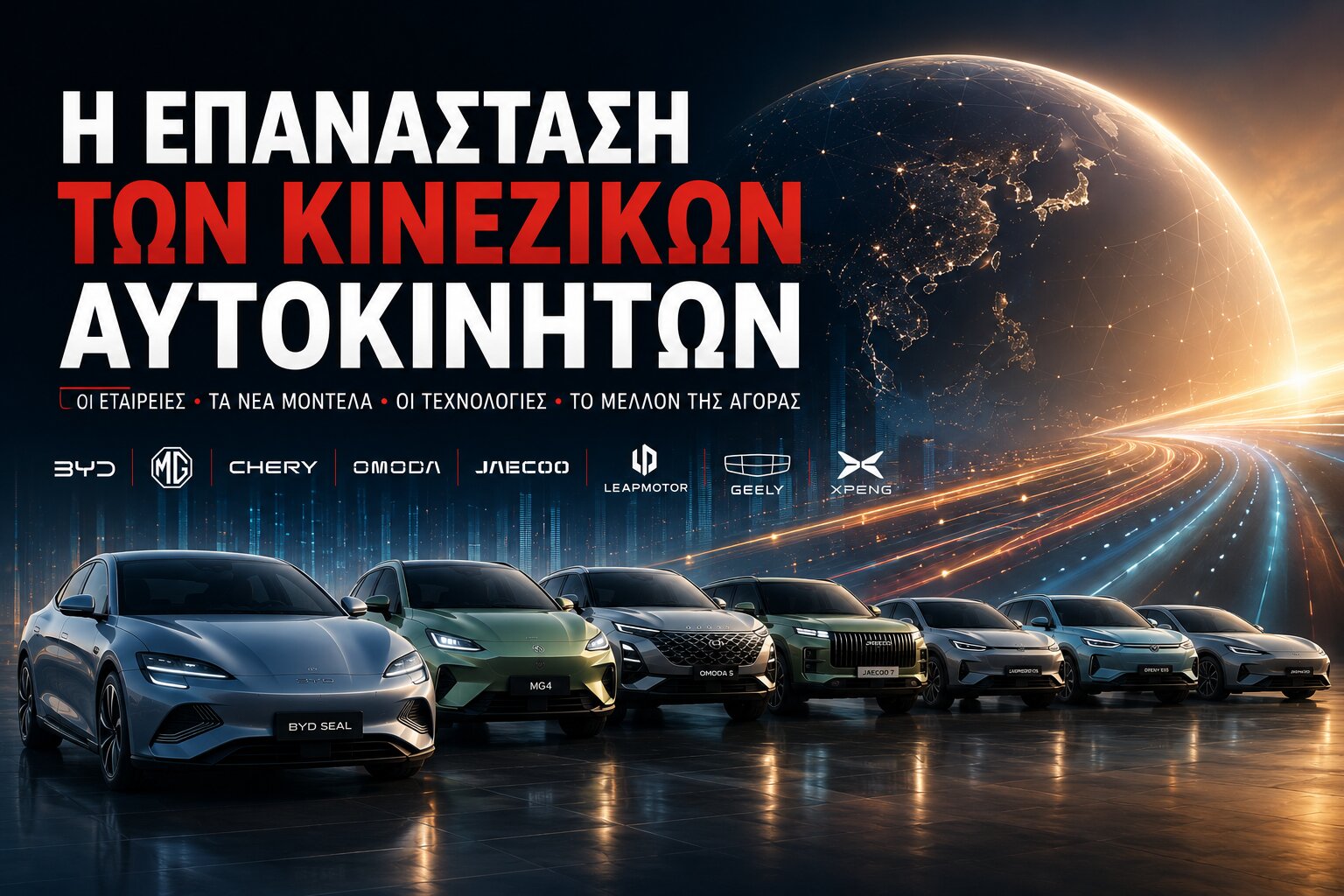
For more than a century, the global automotive industry was dominated by European, Japanese, and American manufacturers. These companies defined engineering standards, introduced groundbreaking technologies, and shaped consumer expectations around quality, performance, and innovation.
Today, however, the industry is experiencing one of the most significant transformations in its history.
China has emerged as a global automotive powerhouse, fundamentally changing the competitive landscape. What many consumers once associated with inexpensive, low-quality vehicles has evolved into a technologically advanced industry capable of challenging—and in many cases surpassing—traditional automotive giants.
This transformation is no longer limited to Asia. Across Europe, Chinese manufacturers are expanding at an unprecedented pace, launching vehicles that combine cutting-edge technology, attractive pricing, premium equipment, and increasingly refined design.
Greece is becoming one of the countries where this shift is most visible.
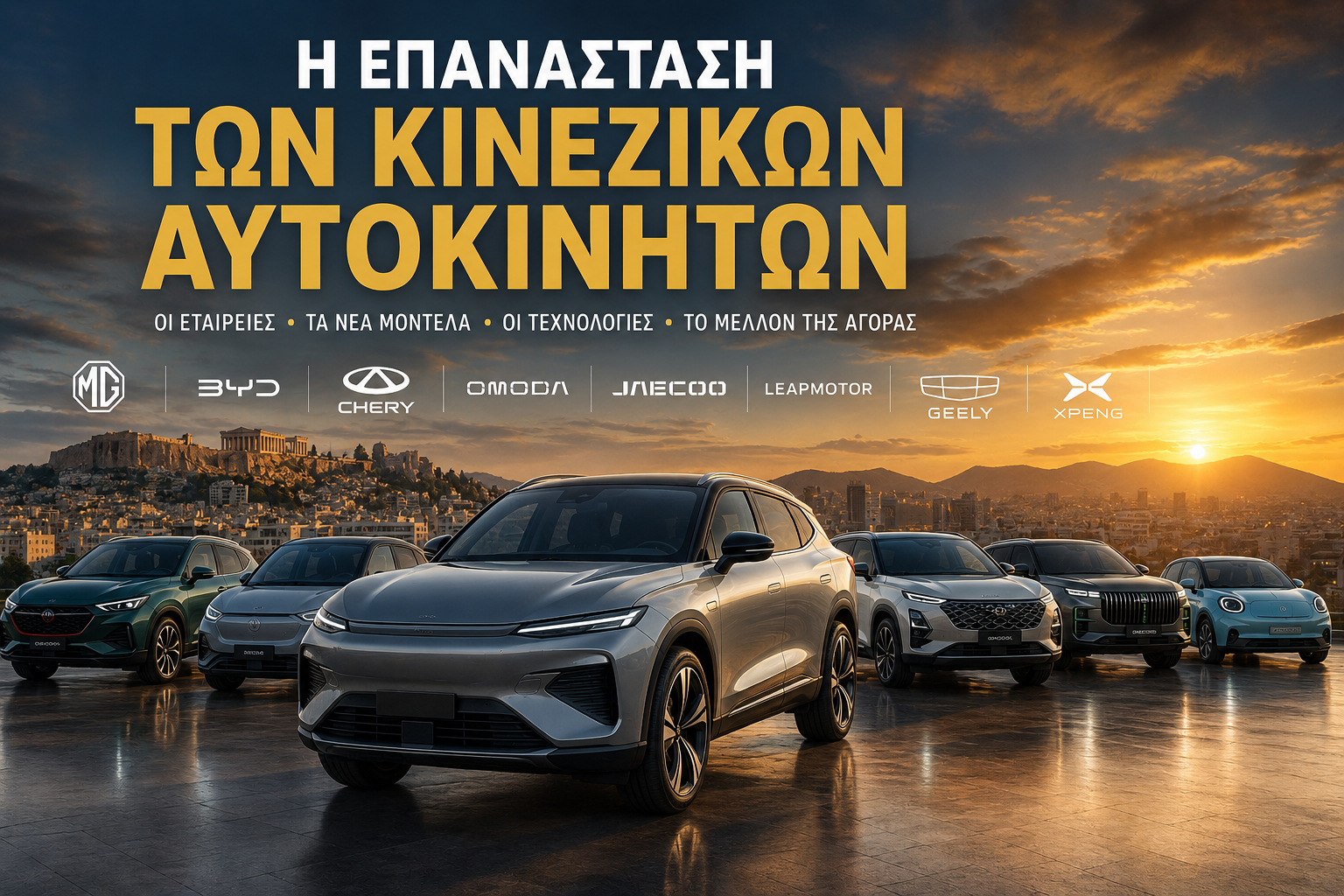
Over the last few years, brands such as MG, BYD, Chery, Omoda, Jaecoo, Leapmotor, Geely, and several others have established an official presence in the Greek market, while additional manufacturers continue preparing their European expansion. Their arrival has introduced a completely new level of competition, forcing long-established European, Japanese, and Korean brands to rethink pricing strategies, technology investments, and product positioning.
The Greek automotive market is entering a new era—and Chinese manufacturers are playing a central role in shaping its future.
The Rise of China’s Automotive Industry
Only two decades ago, few analysts believed that Chinese automakers would become serious global competitors.
Early Chinese vehicles exported to Europe often suffered from poor crash-test results, outdated engineering, limited reliability, and uninspiring design. European consumers generally viewed them as inexpensive alternatives rather than genuine competitors.
The situation today is dramatically different.
Chinese manufacturers have invested hundreds of billions of dollars in research and development, battery technology, artificial intelligence, software engineering, autonomous driving systems, and advanced manufacturing.
At the same time, they recruited experienced engineers, designers, and executives from some of Europe’s most prestigious automotive companies.
Former executives from BMW, Audi, Mercedes-Benz, Volkswagen, Volvo, Ferrari, and Jaguar Land Rover now occupy key leadership positions within several Chinese automotive groups.
The result is a completely different generation of vehicles.
Modern Chinese cars no longer compete solely on price—they compete on technology, quality, safety, efficiency, and innovation.
Why Electric Mobility Changed Everything
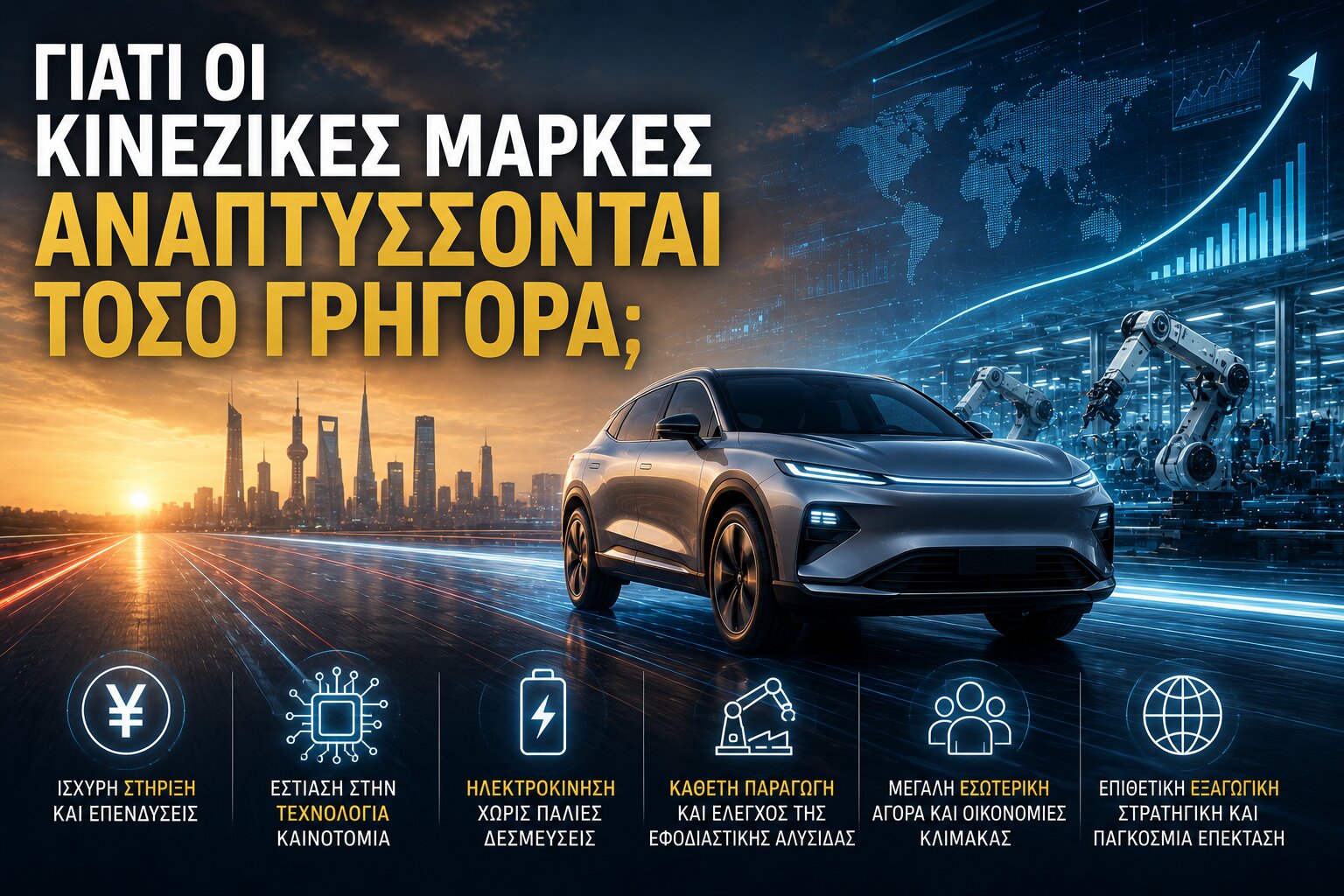
The transition toward electric mobility created an unprecedented opportunity for Chinese manufacturers.
Unlike traditional automakers, which had invested billions in internal combustion engine technology for decades, many Chinese companies started developing vehicles specifically for the electric era.
This allowed them to:
- develop dedicated EV platforms from scratch,
- optimize battery packaging,
- improve interior space,
- simplify production,
- reduce manufacturing costs,
- integrate software from the beginning.
Perhaps even more importantly, China became the world’s largest producer of lithium-ion batteries.
Companies such as CATL and BYD now supply battery technology to many international manufacturers, giving Chinese industry a strategic advantage that few competitors can match.
Greece: A Rapidly Changing Market
For decades, Greek consumers primarily chose vehicles from European, Japanese, and Korean manufacturers.
Toyota, Volkswagen, Peugeot, Opel, Hyundai, Kia, Renault, Fiat, and Nissan dominated the market.
Today, however, the landscape is evolving rapidly.
Chinese brands have begun securing an increasingly important position thanks to several factors:
- highly competitive pricing,
- generous standard equipment,
- long warranties,
- modern technology,
- growing dealership networks,
- attractive electric and plug-in hybrid models.
Greek automotive importers have also embraced this transformation by signing distribution agreements with major Chinese manufacturers, investing heavily in nationwide dealer networks, technical support, spare parts availability, and customer service.
As consumer confidence grows, Chinese brands are steadily increasing their market share.
Why Are Chinese Cars Becoming So Popular?
Many people assume that lower prices alone explain their success.
In reality, the picture is much more complex.
Chinese manufacturers have managed to create an exceptionally attractive value proposition by combining affordability with features that often require expensive optional packages in competing European models.
Typical advantages include:
- panoramic sunroofs,
- adaptive cruise control,
- 360-degree cameras,
- heated and ventilated seats,
- premium infotainment systems,
- large digital displays,
- advanced driver assistance systems,
- over-the-air software updates,
- premium interior materials.
In many cases, customers receive equipment levels comparable to luxury vehicles while paying prices closer to mainstream family cars.
This combination has proven extremely attractive, especially during a period of rising vehicle prices across Europe.
MG Motor: The Pioneer of Chinese Success in Greece
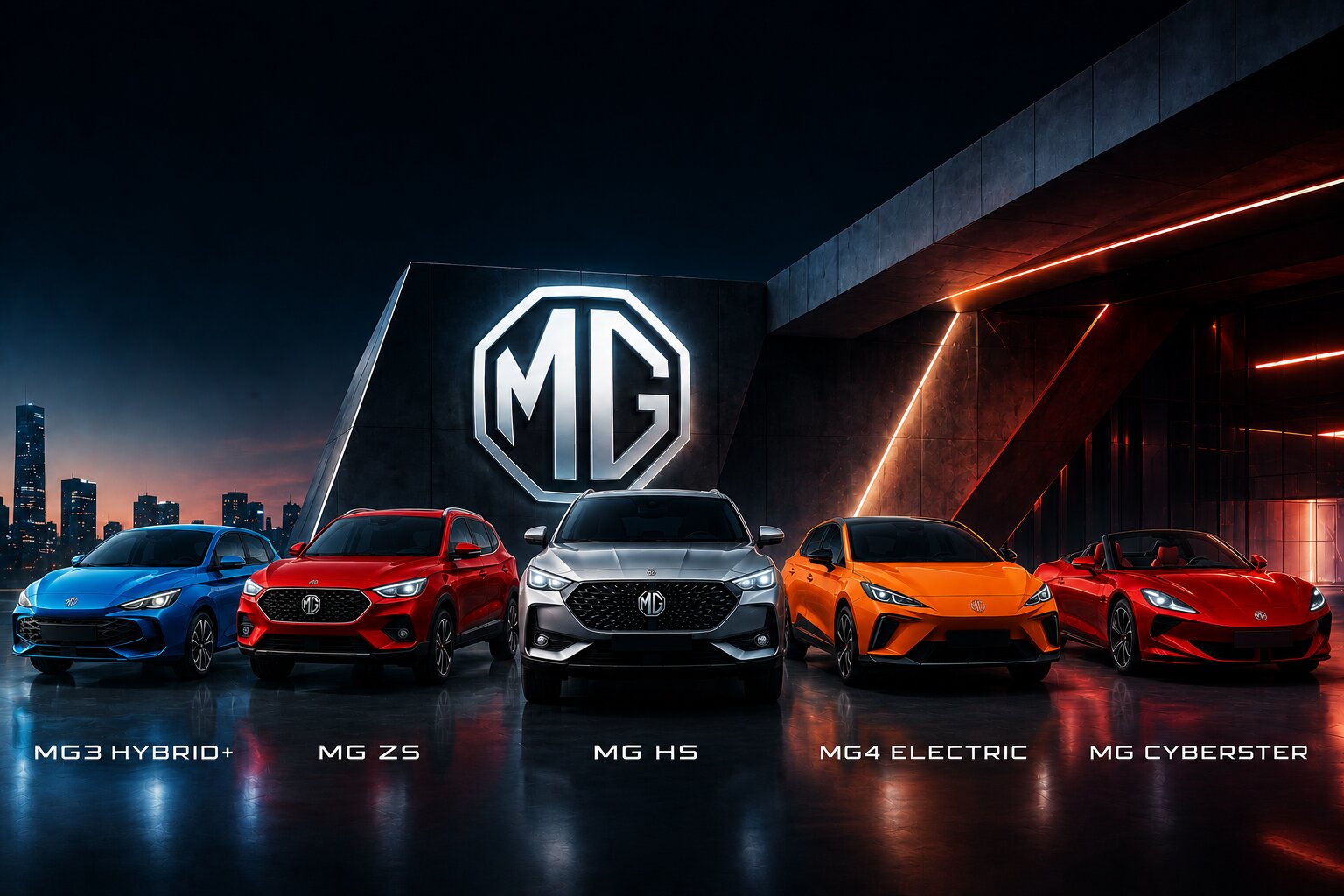
Among all Chinese automotive brands currently available in Greece, MG Motor has arguably achieved the greatest commercial success.
Although MG has historic British roots dating back to the early twentieth century, today’s company belongs to SAIC Motor, one of China’s largest automotive groups.
Rather than relying solely on competitive pricing, MG focused on delivering vehicles that feel familiar to European drivers.
Its products combine modern styling, practical interiors, efficient powertrains, high safety standards, and impressive equipment levels.
This strategy quickly earned consumer confidence.
Today, MG has become one of Greece’s fastest-growing automotive brands.
Popular Models
- MG3 Hybrid+
- MG ZS
- MG HS
- MG4 Electric
- MG Cyberster
The MG4 Electric deserves special attention.
Widely praised by automotive journalists across Europe, it has become one of the strongest competitors in the compact electric hatchback segment thanks to its excellent driving dynamics, competitive range, and attractive pricing.
Meanwhile, the new MG HS directly challenges established family SUVs such as the Hyundai Tucson, Nissan Qashqai, Volkswagen Tiguan, and Toyota RAV4.
MG’s rapid success demonstrates that Greek consumers are increasingly willing to judge vehicles based on quality rather than country of origin.
BYD: The Company Reshaping Global Electric Mobility
If one manufacturer symbolizes China’s technological rise, it is undoubtedly BYD.
Originally established as a battery manufacturer, BYD has evolved into one of the world’s largest producers of electric and plug-in hybrid vehicles.
Unlike many competitors, BYD manufactures most of its own critical components.
This includes:
- batteries,
- electric motors,
- semiconductors,
- electronic control systems,
- software,
- vehicle platforms.
This vertical integration allows the company to reduce production costs while maintaining strict quality control.
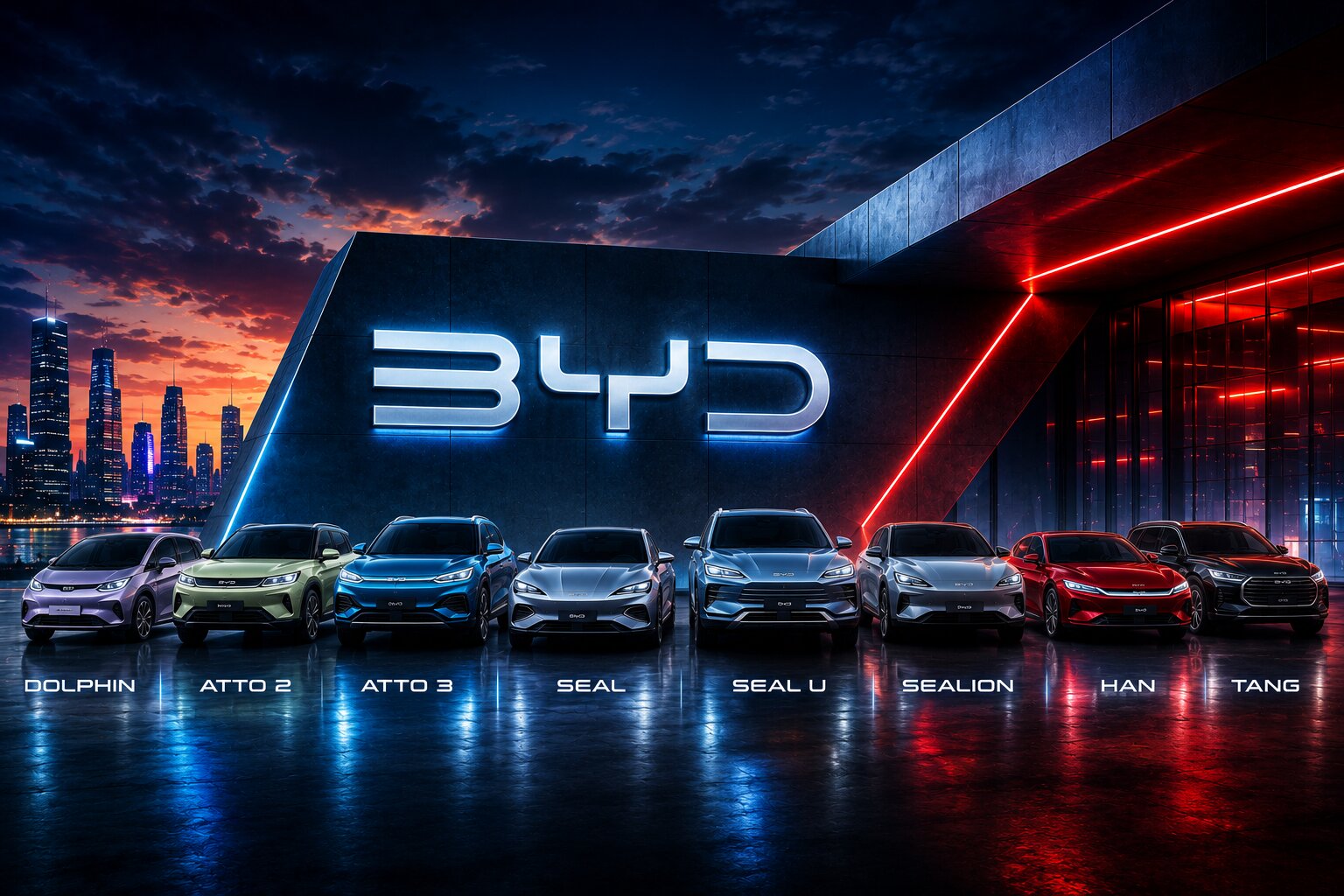
Popular Models Available in Greece
- Dolphin
- Atto 2
- Atto 3
- Seal
- Seal U
- Sealion
- Han
- Tang
One of BYD’s greatest technological achievements is its Blade Battery, considered among the safest battery technologies currently available.
Compared with conventional lithium-ion battery designs, the Blade Battery offers:
- improved thermal stability,
- enhanced safety,
- longer lifespan,
- higher structural strength,
- greater energy efficiency.
Combined with highly competitive pricing, these innovations have positioned BYD as one of the world’s fastest-growing automotive manufacturers.
Chery: China’s Global Export Champion
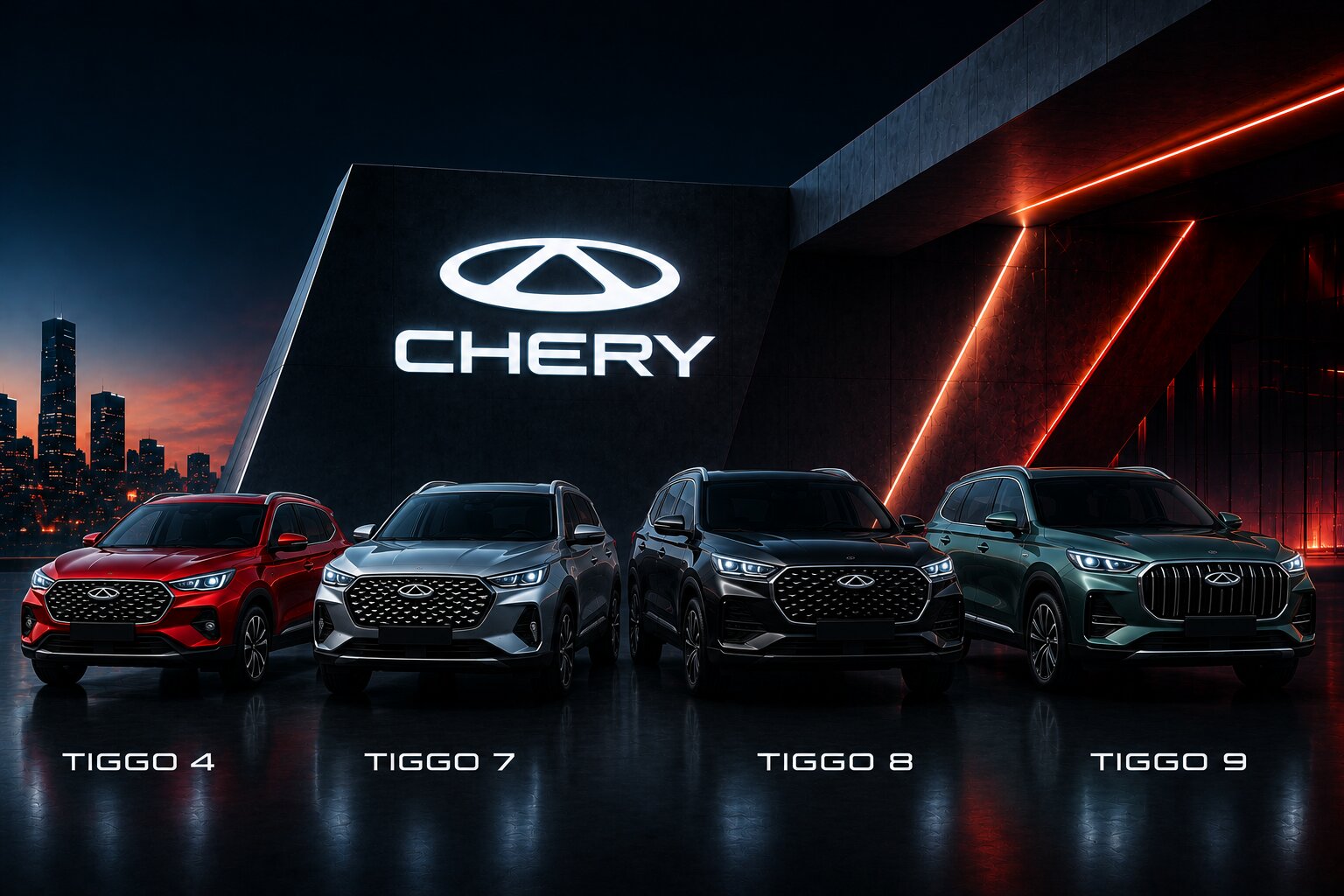
Among Chinese automotive groups, Chery has become one of the country’s most successful international exporters.
The company has spent years building manufacturing facilities, research centers, and international partnerships across multiple continents.
Its European expansion strategy differs from many competitors.
Rather than relying on a single brand, Chery has created multiple automotive identities targeting different customer groups.
This includes:
- Chery
- Omoda
- Jaecoo
Each serves a distinct market segment while sharing the same technological foundation.
As Chery continues expanding throughout Europe, Greece has become an increasingly important market within its long-term strategy.
Omoda: A New Generation of Smart Crossovers
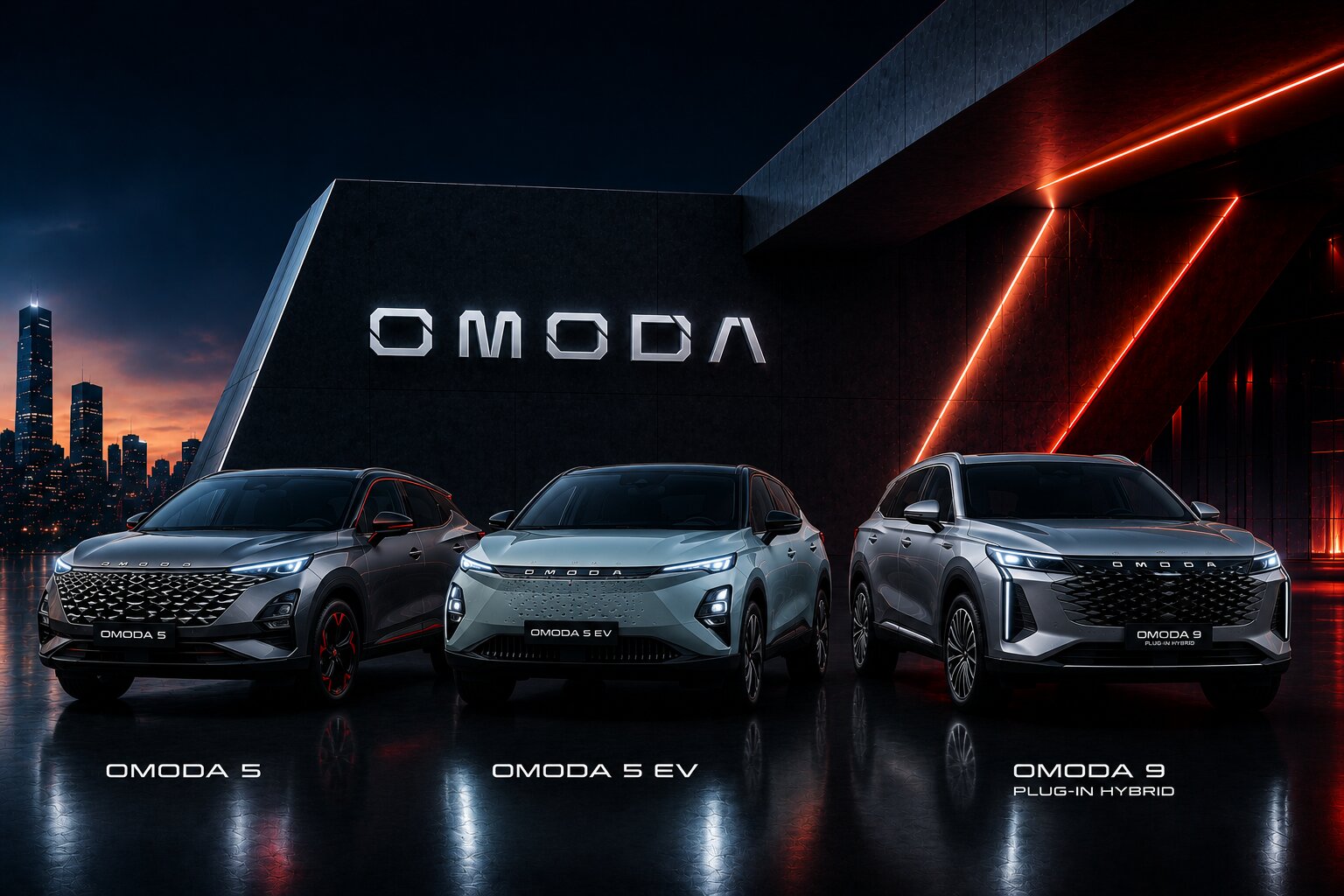
Omoda is one of the newest international brands created by the Chery Group. Rather than competing solely on affordability, Omoda has been designed to appeal to younger buyers looking for futuristic styling, advanced connectivity, and premium features.
Its design language immediately stands out with bold front grilles, sculpted body lines, LED lighting signatures, and large digital displays that create a modern, technology-focused cabin.
Unlike many traditional manufacturers that gradually adapted their vehicles for the digital era, Omoda developed its latest models with connectivity at the center of the driving experience.
Key Models
- Omoda 5
- Omoda 5 EV
- Omoda 9 Plug-in Hybrid
The Omoda 5 competes directly with popular European crossovers such as the Hyundai Kona, Kia XCeed, Toyota C-HR, Peugeot 3008, and Nissan Qashqai, while the upcoming Omoda 9 aims at customers looking for a more premium SUV experience without the premium price tag.
For Greek buyers, Omoda offers an appealing combination of modern design, advanced technology, and competitive pricing.
Jaecoo: Premium SUVs with Adventure in Mind
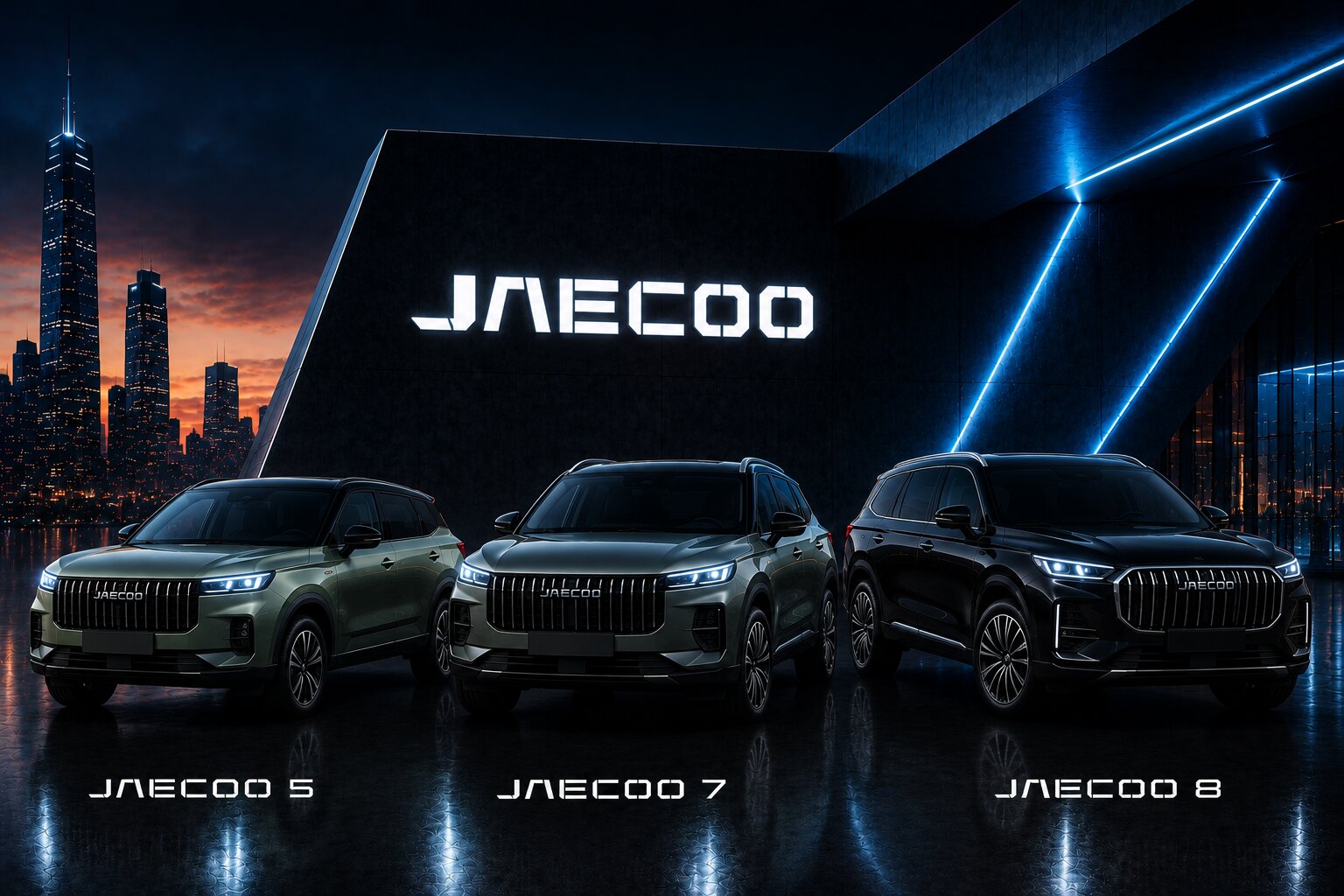
While Omoda targets urban lifestyles, Jaecoo focuses on customers seeking premium SUVs capable of handling both everyday driving and more demanding conditions.
Its design philosophy emphasizes:
- premium materials,
- sophisticated styling,
- spacious interiors,
- intelligent all-wheel-drive systems,
- advanced safety technologies.
The brand has quickly attracted attention across Europe by offering vehicles that visually compete with significantly more expensive premium SUVs.
Main Models
- Jaecoo 5
- Jaecoo 7
- Jaecoo 8
The Jaecoo 7 Plug-in Hybrid has become one of the company’s flagship models, combining long electric driving range with excellent fuel efficiency for longer journeys.
For countries like Greece—where drivers often combine city commuting with island trips, mountain roads, and long-distance travel—this flexibility represents an important advantage.
Leapmotor: Affordable Electric Mobility
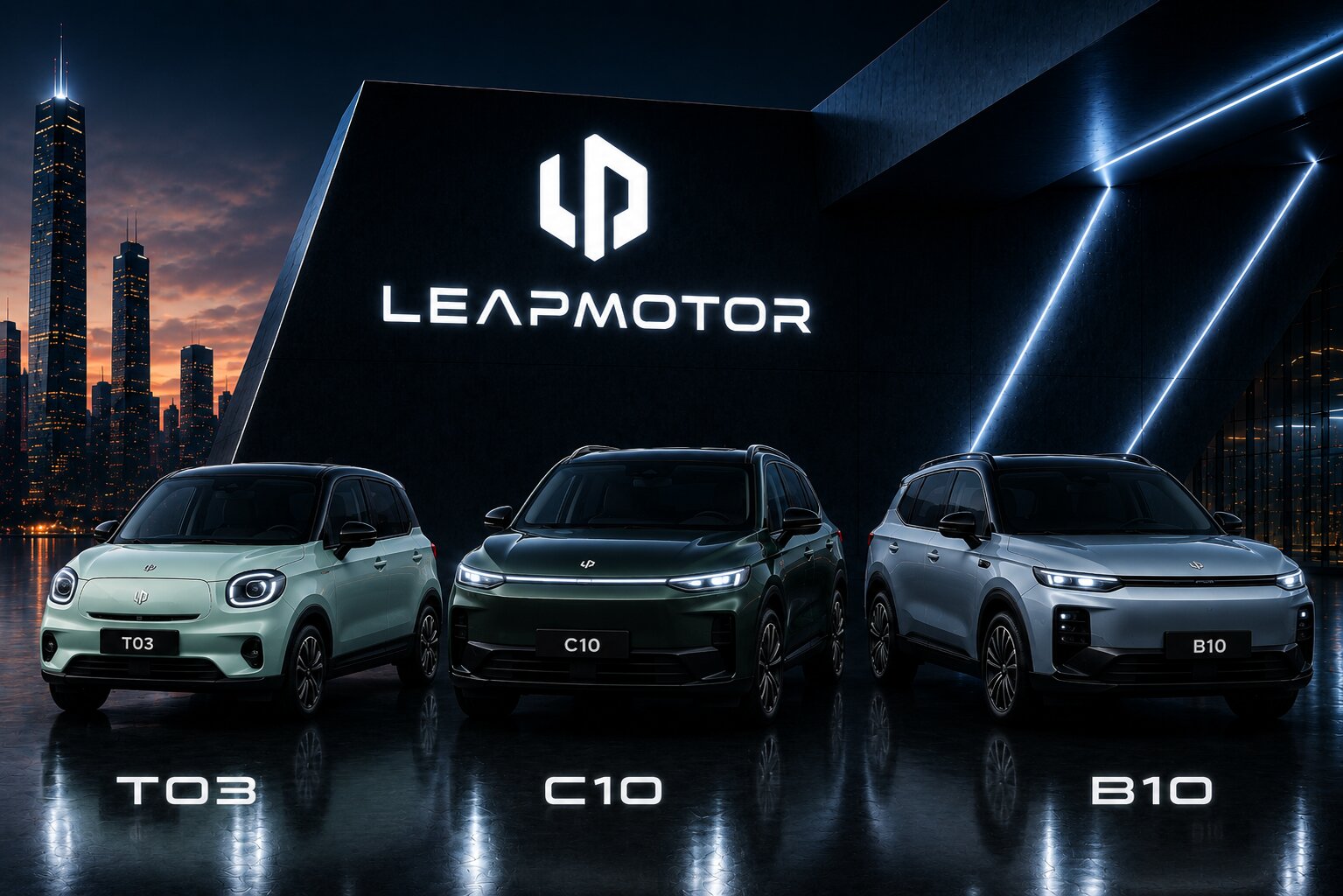
Another manufacturer rapidly expanding across Europe is Leapmotor.
Unlike many established automakers that are gradually increasing their electric offerings, Leapmotor was founded specifically as an electric vehicle company.
One of its biggest milestones came through its strategic partnership with Stellantis, giving the Chinese manufacturer access to one of Europe’s largest automotive distribution and service networks.
This collaboration significantly strengthens customer confidence regarding after-sales support and spare parts availability.
Popular Models
- Leapmotor T03
- Leapmotor C10
- Leapmotor B10
The compact T03 targets urban mobility with an affordable price and practical dimensions, while the larger C10 family SUV is positioned against mainstream European electric SUVs.
Geely: One of the World’s Most Powerful Automotive Groups
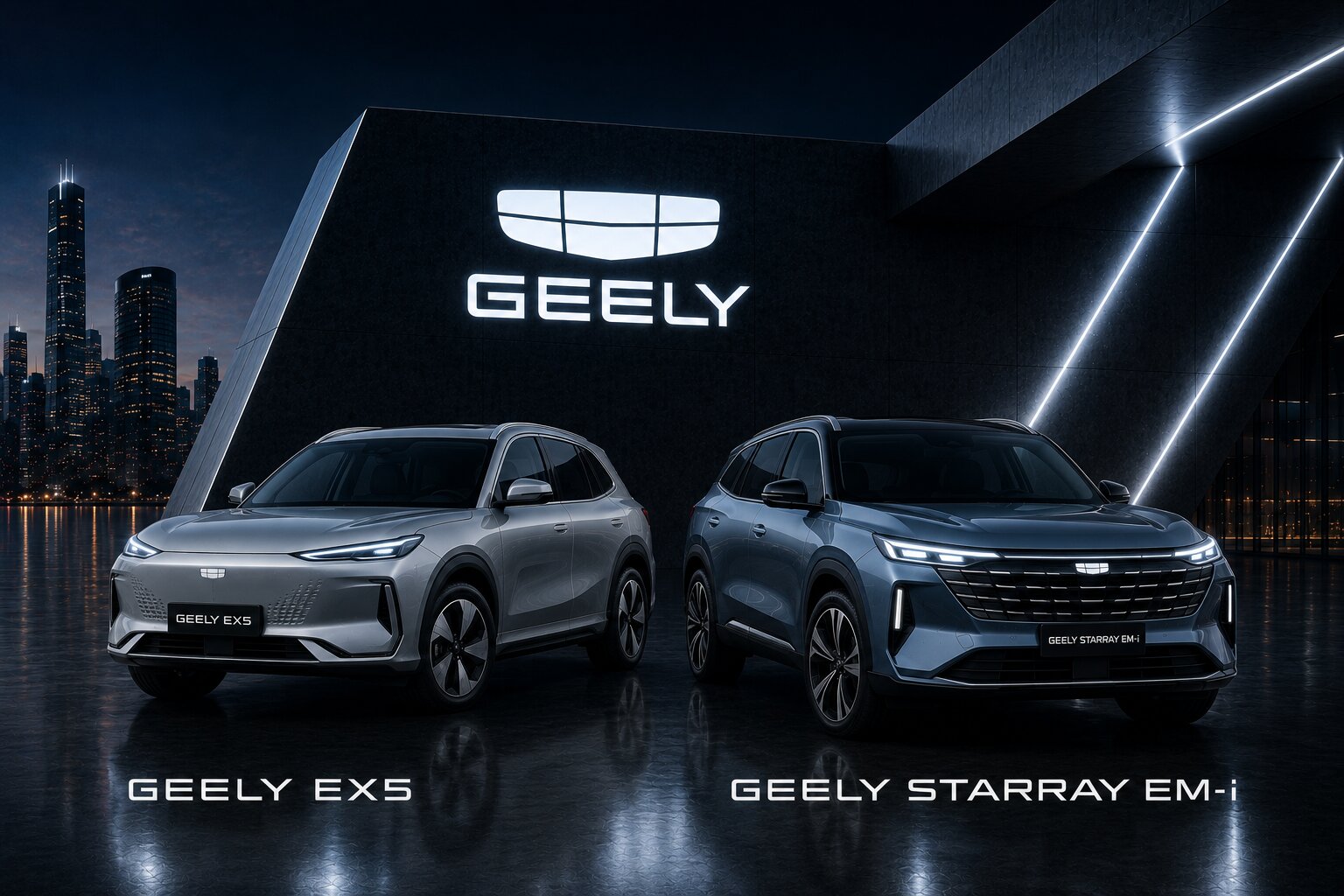
Although many European consumers may not immediately recognize the Geely name, the company has quietly become one of the most influential automotive groups in the world.
Over the past decade, Geely has invested heavily in internationally recognized automotive brands, including:
- Volvo Cars
- Polestar
- Lotus
- LEVC
- Lynk & Co
- Zeekr
- smart (joint venture with Mercedes-Benz)
These investments have given Geely access to world-class engineering expertise while simultaneously strengthening the technological capabilities of its own products.
Rather than simply manufacturing inexpensive vehicles, Geely has become one of the industry’s most diversified global automotive groups.
XPENG: Technology First
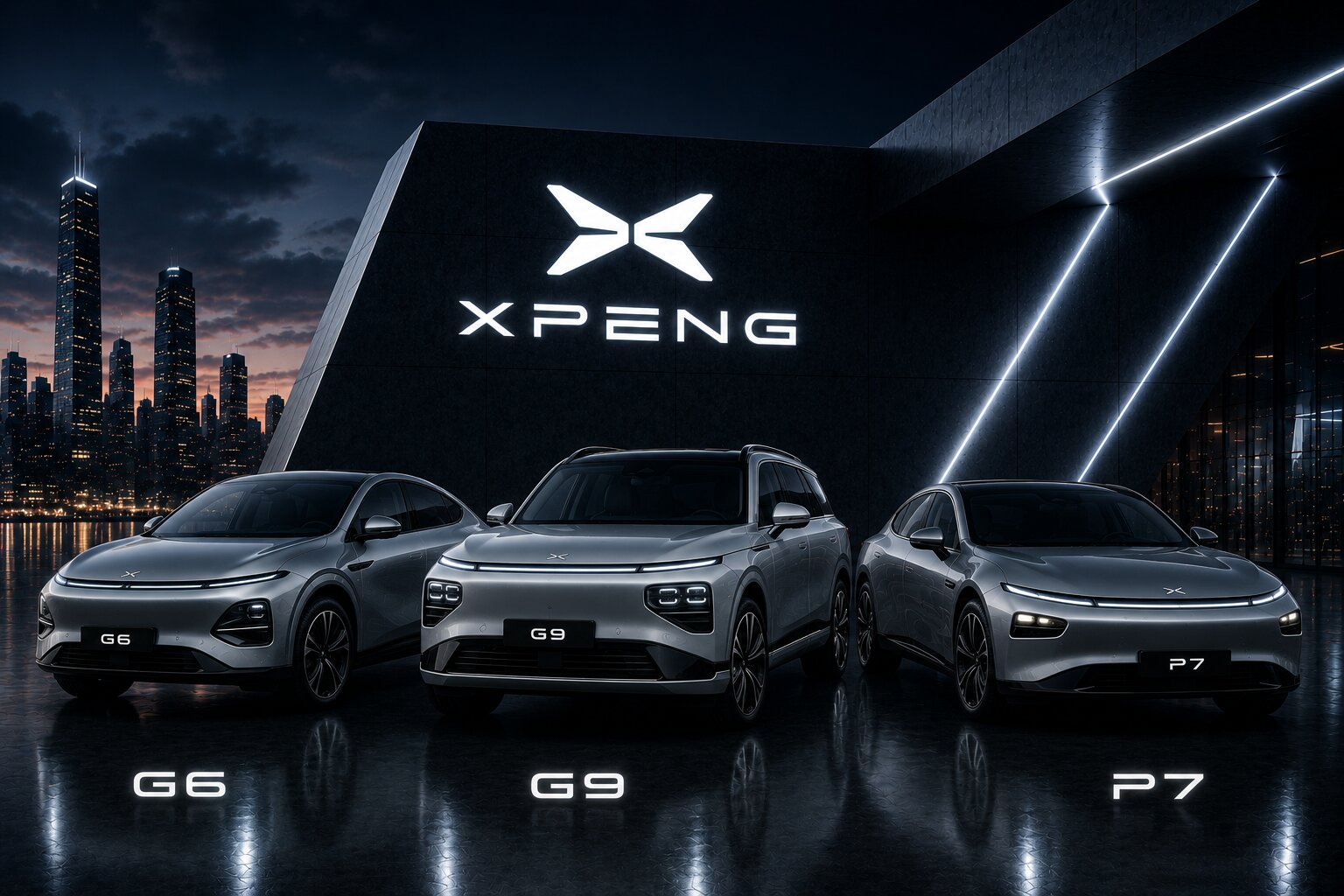
Among Chinese manufacturers, XPENG has developed a reputation as one of the industry’s technology leaders.
The company invests heavily in:
- artificial intelligence,
- autonomous driving,
- intelligent cockpit software,
- cloud connectivity,
- over-the-air updates.
Its philosophy resembles that of technology companies more than traditional automakers.
Main Models
- XPENG G6
- XPENG G9
- XPENG P7
The G6 and G9 SUVs have received particularly positive reviews across Europe thanks to their impressive driving range, charging capabilities, and advanced driver assistance systems.
As software becomes increasingly important in modern vehicles, XPENG represents one of China’s most technologically ambitious manufacturers.
Other Chinese Brands Entering the Greek Market
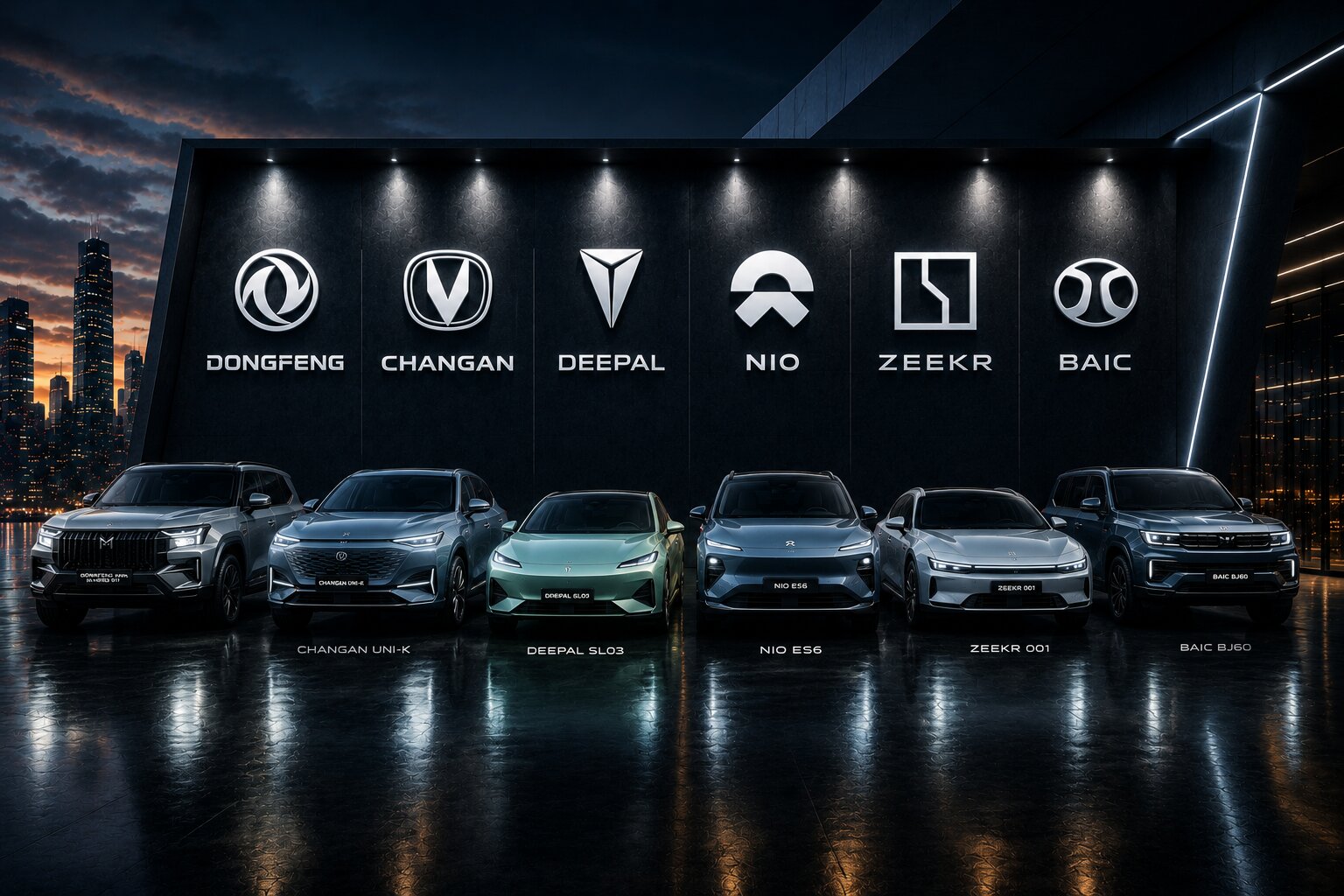
The transformation of the Greek automotive market extends beyond the brands already mentioned.
Several additional Chinese manufacturers are expanding across Europe and may strengthen their presence in Greece over the coming years, including:
- Dongfeng
- Changan
- Deepal
- Zeekr
- NIO
- BAIC
- Hongqi
Each company targets different customer segments, ranging from affordable family vehicles to premium electric luxury cars.
This growing diversity will provide Greek consumers with more choices than ever before.
Why Greek Consumers Are Embracing Chinese Vehicles
The growing popularity of Chinese brands is driven by several important factors.
Outstanding Value for Money
Perhaps their strongest advantage is the balance between price and equipment.
Vehicles that cost significantly less than many European competitors often include:
- panoramic glass roofs,
- premium audio systems,
- leather interiors,
- adaptive LED headlights,
- Level 2 driver assistance systems,
- digital instrument clusters,
- large infotainment displays.
For many buyers, this represents exceptional value.
Advanced Technology
Chinese manufacturers entered the electric era without the burden of legacy combustion-engine platforms.
As a result, many of their newest vehicles benefit from:
- optimized battery placement,
- spacious interiors,
- improved aerodynamics,
- highly efficient electric powertrains,
- sophisticated software ecosystems.
This modern engineering approach often gives them a competitive advantage in the EV segment.
Long Warranty Coverage
Most Chinese manufacturers entering Europe understand that consumer trust is essential.
For this reason, they frequently offer:
- extended vehicle warranties,
- long battery warranties,
- comprehensive roadside assistance,
- expanding service networks.
These policies help reduce concerns among first-time buyers.
Remaining Challenges
Despite their rapid progress, Chinese manufacturers still face several important challenges.
These include:
- long-term resale values,
- customer perception,
- brand recognition,
- availability of spare parts in some regions,
- long-term durability data.
Although these concerns continue to diminish as sales increase, they remain important considerations for prospective buyers.
What Does This Mean for Greek Car Rental Companies?
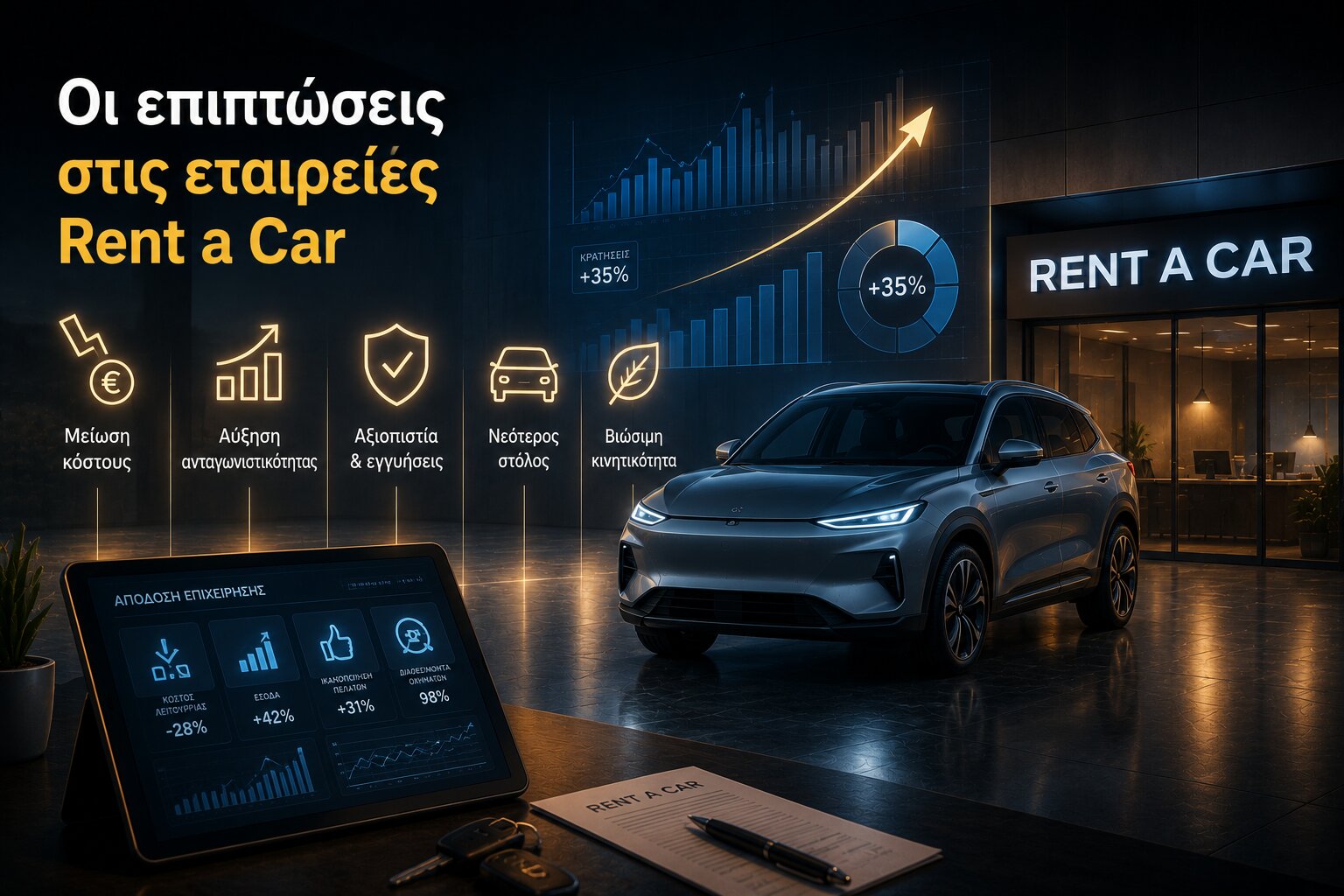
The rise of Chinese automotive brands is not only changing private car ownership—it is also influencing the vehicle rental industry.
For rental companies, Chinese vehicles present several potential advantages:
- lower acquisition costs,
- generous standard equipment,
- attractive warranty packages,
- modern safety technology,
- increasing availability of hybrid and electric models.
These characteristics can improve fleet value while offering customers newer technology and enhanced comfort.
However, fleet operators must also carefully evaluate:
- maintenance costs,
- repair times,
- spare parts logistics,
- resale values,
- long-term reliability.
Choosing the right models will remain essential for maximizing fleet profitability.
Looking Ahead: The Greek Market Towards 2030
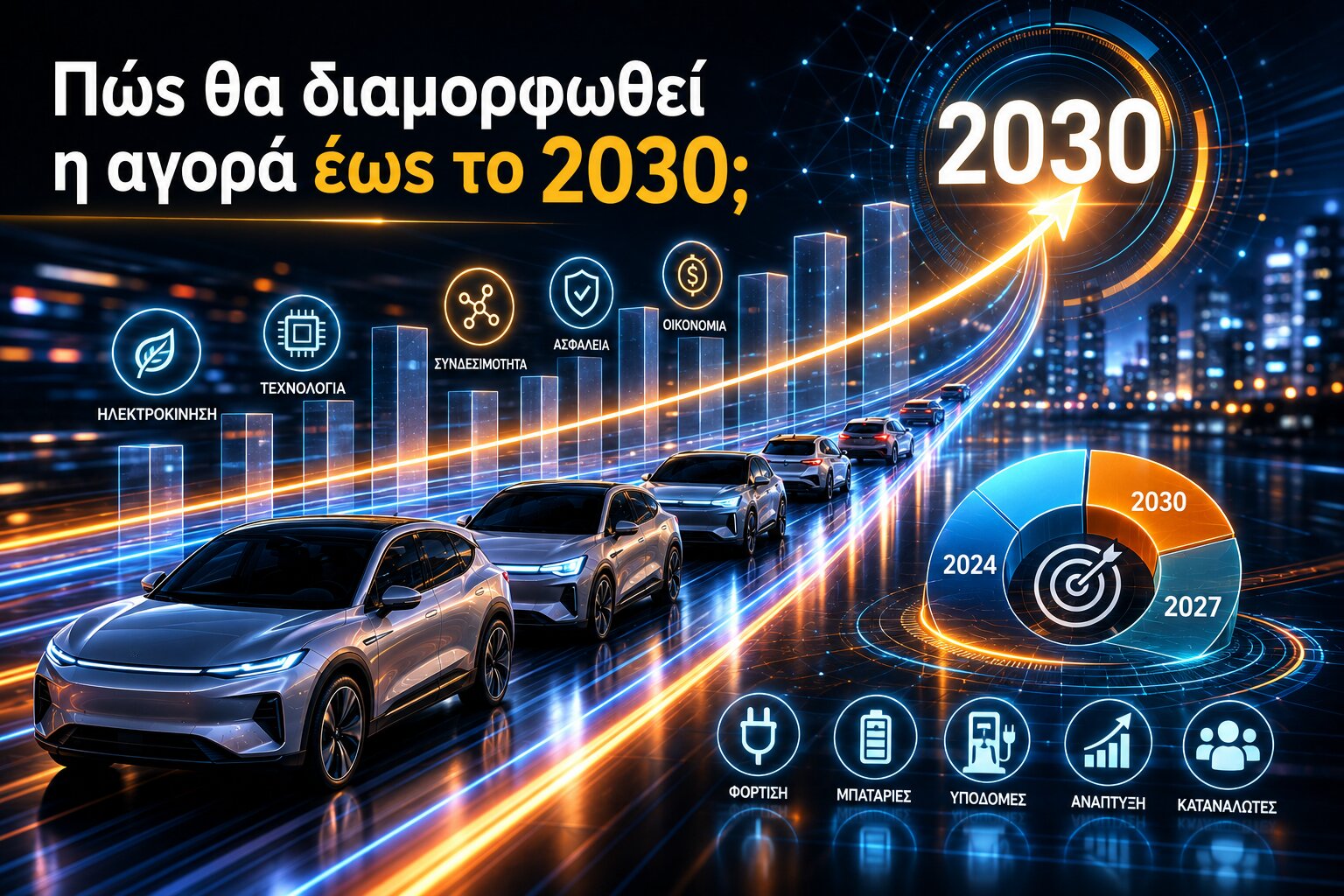
Everything suggests that Chinese manufacturers will continue expanding their presence throughout Greece during the remainder of the decade.
Several factors support this expectation:
- continued investment in electrification,
- stronger European dealer networks,
- improved customer confidence,
- broader model ranges,
- increasingly competitive pricing.
Meanwhile, traditional European manufacturers are responding by accelerating innovation, reducing production costs, and investing more aggressively in electric mobility.
For consumers, this growing competition is excellent news.
Greater competition generally leads to:
- better products,
- improved technology,
- lower prices,
- more choices,
- faster innovation.
Final Thoughts
The rise of China’s automotive industry is no longer a future prediction—it is today’s reality.
Companies such as MG, BYD, Chery, Omoda, Jaecoo, Leapmotor, Geely, and XPENG are reshaping the global automotive landscape through innovation, competitive pricing, and rapid technological development.
In Greece, their growing presence is already transforming consumer expectations and increasing competition across every major vehicle segment.
Whether purchasing a family SUV, an electric city car, or a plug-in hybrid crossover, Greek buyers now have access to a wider range of choices than ever before.
For private owners, businesses, and car rental companies alike, this new era offers exciting opportunities—but also requires careful evaluation of technology, service networks, long-term ownership costs, and resale value.
One thing is certain: Chinese automotive manufacturers are no longer newcomers. They are becoming key players in the future of mobility in Greece and across Europe.